
Health Law Requires Medicare To Cover Dementia Evaluation

Health Law Requires Medicare To Cover Dementia Evaluation
For the millions of seniors who worry that losing their keys may mean they鈥檙e losing their minds, the health law now requires Medicare to cover a screening for cognitive impairment during an annual wellness visit.
But in a recent review of the scientific research, an influential group said there wasn鈥檛 enough evidence to recommend dementia screening for asymptomatic people over age 65.
What鈥檚 a worried senior to think?
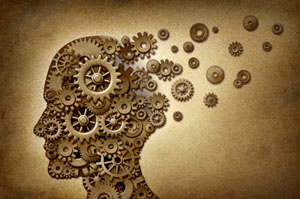
Dementia screening tests are typically short questionnaires that assess such things as memory, attention and language and/or visuospatial skills. One of the most common, the , consists of 30 questions (such as 鈥淲hat month is this?鈥� and 鈥淲hat country are we in?鈥�) and may be completed in about 10 minutes.
In its review, the U.S. Preventive Services Task Force, an independent panel of medical experts, of various screening instruments for cognitive impairment. It concluded that the evidence for routine population-based screening was insufficient. While declining to recommend the practice for everyone older than 65, the reviewers noted that some screening tools can be useful in identifying dementia.
鈥淐linicians need to use their judgment,鈥� says , professor and chair of geriatrics and palliative care at Mount Sinai School of Medicine in New York who was co-vice chair of the task force on dementia screening. 鈥淭he evidence聽isn鈥檛 clear that there is a net benefit to screening for individuals that are asymptomatic.鈥�
The risk of dementia increases with age: its prevalence is 5 percent in people aged 71 to 79, rising to 37 percent of those older than 90. Mild cognitive impairment has many definitions, but the term generally refers to people whose impairment isn鈥檛 severe enough to hamper their ability to manage their daily lives. By some estimates up to 42 percent of people older than 65 have it. Mild cognitive impairment is a warning sign, but it may not progress to Alzheimer鈥檚 disease, says Dean Hartley, director of science initiatives at the Alzheimer鈥檚 Association. 聽
Alzheimer鈥檚聽is the most , accounting for up to 80 percent of cases. Other types include vascular dementia, many cases of Parkinson鈥檚 disease and Huntington鈥檚 disease.
Someone without symptoms who does poorly on a screening test may have other medical conditions, such as depression or sleep apnea, that can cause memory or other problems, says Hartley. That鈥檚 why it鈥檚 important that people take the tests in a medical setting with a trained professional who can evaluate them and take a good medical history from patients and their family members, he says.
One-time screenings at shopping malls or health fairs should be avoided, experts agree. Taking a quick test without any accompanying medical evaluation may raise more questions than it answers.
But seniors may want to consider having an evaluation for cognitive impairment as part of their with their health provider. It is covered with no out-of-pocket charge.
The seniors undergo cognitive impairment screening and evaluation to establish a baseline for comparison, and then have regular follow-up assessments in subsequent years.
There is no cure for Alzheimer鈥檚 disease. , such as Aricept,聽may improve memory or other symptoms temporarily, but no medical treatment halts or reverses the disease.
That is a key argument against large-scale routine screening of people older than 65, says Ariel Green, a geriatrician at Johns Hopkins Bayview Medical Center. 鈥淲e don鈥檛 have studies that show that such a screening program improves the care of people with dementia,鈥� she says.
Still, if an individual has concerns about dementia because of a family history of Alzheimer鈥檚 or memory lapses, for example, a medical professional should evaluate the person and a screening test may be appropriate.
And although research hasn鈥檛 yet shown that large-scale screening is effective at improving dementia care overall, screening may help individuals and their families identify a cognitive impairment or dementia early on. The drugs that are available are most effective in the early stages of the disease. In addition, Green says, 鈥渋t鈥檚 helpful for people to hear a diagnosis of dementia, if it鈥檚 an accurate diagnosis, because it can help people anticipate their future needs and plan for that.鈥�
This article was produced by Kaiser Health News with support from .
Please send comments or ideas for future topics for the Insuring Your Health column to questions@kffhealthnews.org.


