
In Study, Questions About Who Should Perform In-Office Surgeries
This KHN story can be republished for free. (details)
One of the hopes embedded in the health law was to expand the role of nurse practitioners and physician assistants in addressing the nation鈥檚 shortage of primary care providers. But a new study questions whether that鈥檚 actually happening in doctors鈥� offices.
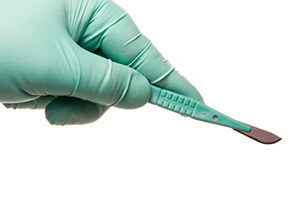
Of the more than 4 million procedures office-based nurse practitioners and physician assistants independently billed more than 5,000 times in a year to Medicare 鈥� a list including radiological exams, setting casts and injecting anesthetic agents 鈥� more than half were for聽 dermatological surgeries.
That鈥檚 not surprising, according to Ken Miller, president of the American Association of Nurse Practitioners, because when patients are older, skin problems such as 鈥渂oils, and warts鈥� are pretty聽 typical.
鈥淚 think that鈥檚 where you鈥檙e going to see the majority of procedures that are occurring both in primary care and in some of the other specialties like geriatric clinics,鈥� he said.
The , published in the JAMA Dermatology聽analyzing 2012 Medicare claims, is suggesting that nurse practitioners and physician assistants should face higher regulation if performing surgical procedures.
The study鈥檚 lead author, Dr. Brett Coldiron, a dermatologist and clinical assistant professor at the University of Cincinnati, said while the 鈥渋ntent for mid-level nurse practitioners was to give primary care,鈥澛� the level of surgical billing implies that may not necessarily be true.
He said those mid-level providers 鈥� PAs and NPs – 鈥渁re doing invasive procedures and surgery. I鈥檓 not sure they were trained to do that.鈥�
But practitioners who perform specialized procedures often have received additional training, according to Miller.
鈥淚f they find something that is out of their scope, they will refer 鈥� and it鈥檚 the same thing that primary care physicians do,鈥� he said.
The study鈥檚 analysis found that a majority of procedures billed by nurse practitioners and physician assistants relate to dermatology specifically, a trend Coldiron said could stem from the frequency of dermatological procedures being performed in offices rather than hospitals, along with the higher rate of skin cancer among the older patients Medicare covers.
The nurse practitioners performing specialized dermatological procedures often have received extra training, Miller said, and they often attend 鈥渢he same symposiums and conferences dermatologists actually attend.鈥�
鈥淚f they鈥檙e in the same subspecialty of dermatology, they may be doing these procedures because that鈥檚 how they鈥檝e been trained,鈥� he said.
He thinks no more than 3 or 4 percent of nurse practitioners actually end up specializing in a specific area of care.聽 But all nurse practitioners will often see patients with dermatological conditions, and the treatments they require are usually not 鈥渆xtraordinary,鈥� he said.
Coldiron said while the mid-level providers may have received extra training within a relevant specialty, many likely lack the expertise of doctors who have done a residency within the field. 鈥淚f nurses are going to practice surgery, that鈥檚 not [nursing] 鈥� that鈥檚 medicine,鈥� he said.
Nurse practitioners and physician assistants have been suggested as a potential solution to shortages in primary care physicians, providers whose roles were emphasized in the Affordable Care Act. But both Coldiron and Miller suggested that may not be the case in practice.
It would be a mistake to treat any one kind of health care provider as a silver bullet to fix primary care shortages, Miller said. Though he expressed concern that particular geographic areas may lack sufficient access to primary care, nurse practitioners or physician assistants can鈥檛 fill that gap, he said.
What 鈥渉ealth professionals are all trying to provide is quality care that is convenient and accessible,鈥� he said, adding that, 鈥渢here is not enough primary care out there, and there is not one discipline out there鈥� to meet patient needs.
The study cautioned that a boost in mid-level providers performing surgical procedures could lead to more cases of malpractice, a concern Coldiron said suggested a need for greater regulatory oversight of nurse practitioners and physician assistants.
But that kind of argument is a 鈥渞ed herring,鈥� Miller argued.
鈥淭here have been no real studies out there that show nurse practitioners are less safe than physicians,鈥� he said. 鈥淲hat we鈥檙e all trying to do,鈥� he added, 鈥渋s we鈥檙e trying to provide the best care and the best quality of care.鈥�


