Alec MacGillis, Author at 麻豆女优 Health News 麻豆女优 Health News produces in-depth journalism on health issues and is a core operating program of 麻豆女优. Thu, 16 Apr 2026 06:09:16 +0000 en-US hourly 1 https://wordpress.org/?v=6.8.5 /wp-content/uploads/sites/8/2023/04/kffhealthnews-icon.png?w=32 Alec MacGillis, Author at 麻豆女优 Health News 32 32 161476233 Uninsured And Unaware Of Supreme Court Case Against Health Law /news/uninsured-tennessee-clinic-supreme-court-health-law/ /news/uninsured-tennessee-clinic-supreme-court-health-law/#comments Sun, 17 Jun 2012 12:31:00 +0000 http://khn.wp.alley.ws/news/uninsured-tennessee-clinic-supreme-court-health-law/

This story was produced in partnership with 听补苍诲 .

SEWANEE, Tenn. – As Robin Layman, a mother of two who has major health troubles but no insurance, arrived at a free clinic here, she had a big personal stake in the Supreme Court’s imminent decision on the new national health care law.

Not that she realized that. “What new law?” she said. “I’ve not heard anything about that.”

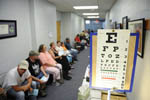
Layman was one of 600 people who on a recent weekend came from across southeastern Tennessee for the clinic held by , a Knoxville-based organization that for two decades has been providing free medical, dental and vision care in underserved areas. Most everyone had spent the night in their parked cars, to get a good spot in line. Daybreak found them massed outside the turreted stone gymnasium of the 150-year-old college, the University of the South, some still wearing pajamas or wrapped in blankets, waiting quietly for the 6 a.m. opening of the doors.

It was Remote Area Medical’s 667th clinic. But this one came at an unusual moment: as the Supreme Court deliberates whether to uphold the health care law that will have a disproportionate impact on the sort of people served by the organization.

Slideshow: Remote Area Medical Offers Free Care To Tennesseans
Uninsured And Unaware Of Supreme Court Case Against Health Law
  • On a recent weekend, 600 people came from across southeastern Tennessee for Remote Area Medical’s clinic. Watch the slideshow.

Layman was hardly the only patient unaware that the law aims to help people like her, by expanding health insurance beginning in 2014. And this gets to the heart of the political dilemma for Democrats: Despite spending tremendous political capital to pass the law, the party is unlikely to win many votes from the law’s future beneficiaries, most of whom live in Republican-dominated states in the . In fact, many at the clinic said they don’t vote at all.

And that assumes the law survives until 2014. The law’s design, with its major provisions kicking in four years after passage, was pragmatic politics at the time. The window would make the law’s price-tag lower and allow states time to set up new systems. But the delay’s result has been that the law has no natural constituency – its promises have not been clearly conveyed to the people it is designed to help.

This disconnect is seen in Tennessee, where about 15 percent of residents lack coverage – roughly the national average – but the state’s largely Republican political leadership has shunned the law. The state’s legislature has declined to pass legislation establishing聽 the new insurance “exchange” required by the law; even the Democratic聽 congressman representing the district that includes Sewanee voted聽 against the law, before losing his seat the following fall.

Tennessee’s uninsured includes middle class people who can’t afford insurance or are turned down for health reasons, but the need is particularly acute among the poor and near poor who don’t qualify for Medicaid. In Tennessee, the covers poor children, pregnant women and the disabled, as well as many parents below a set income threshold, about $28,000 for a family of four, but adults without children in their care are ineligible.

Under the law, Medicaid will expand in 2014 to cover anyone earning up to 138 percent of the poverty level, or about $31,000 for a family of four. Many people above that income who lack employer-provided coverage will receive subsidies to help them purchase private insurance.

Layman and her family offer a stark example of the law’s potential impact. Two years ago, her son, then 16, was hit head-on by a speeding driver high on drugs. Her son’s girlfriend was killed; he suffered severe internal injuries and recently underwent colon surgery. Now 18, he will soon age out of Medicaid coverage.

And Layman, a gregarious 38-year-old, recently lost coverage for her own considerable problems. She suffers high blood-pressure, for which she takes three medications, purchased at a discount from the county health office. She suffers sciatica stemming from the time eight years ago when a co-worker at a dollar store let slip a heavy box of wrapping paper Layman was handing up to her. Layman lunged for it and badly hurt her back, for which she takes the nerve-pain medication Lyrica.

She also suffers depression, and has been on Prozac for several years. But during a rough spell last fall, she came close to committing suicide. It was on her return home from a week in the psychiatric hospital that she found a letter from the state saying that, as a result of a bump up in her husband’s disability payments (he was caught in a front-end loader when he was eight years old), she was now ineligible for Medicaid.

Lacking coverage, she has not seen a psychiatrist since her hospital stay. She played this down: “I can recognize my craziness when it gets out of hand.”

State-by-state solutions?

Opponents of the Affordable Care Act, such as Mitt Romney, say it should be replaced with a state-by-state approach. Romney’s home state, Massachusetts, is the pioneer – Romney signed a 2006 law that has extended coverage to nearly all residents.

But many other states have demonstrated little political will to help people obtain health coverage. In some, such as Texas and Virginia, the threshold for Medicaid eligibility is so stringent that parents earning $10,000 a year are too well-off to qualify.

States that have made an effort to offer subsidized coverage, as Tennessee did in the 1990s, have typically found that costs became unsustainable when people in poor health enrolled at higher rates than healthier ones. It is that problem that the individual insurance mandate in the national law, the crux of the Supreme Court case, is meant to address.

As it stands, the safety net in southeastern Tennessee is a patchwork. The main hospital in the area, in Winchester, receives federal funding to reimburse it for some of the uncompensated care it provides. Hospital CEO Phil Young says it would be better for those patients to arrive with coverage, not least because their conditions would get attention before becoming acute. “It would certainly help us from a funding perspective,” Young said.

In 2008, several local physicians tackled the area’s lack of options for the uninsured by setting up a tiny clinic in a vacant Winchester school building. Nine doctors volunteered a total of about 900 hours last year, seeing people without insurance. But its capacity is limited – just two exam rooms plus a small office with boxes of donated medication. Appointments are booked for the next two months.

Dr. Thomas Smith, who helped set up the clinic, considered it a temporary fix. “We hope we are planned obsolescence,” he said. Smith is ambivalent about the law. But he acknowledges that things need to change in Tennessee:聽 “The current situation is not sustainable.”

The safety net is most threadbare in Grundy County, the hilly region to the east of Winchester, the poorest county in Tennessee with a poverty rate of 30 percent and the home to many of the Sewanee clinic visitors. There is only one doctor in the county of 13,000 people, plus five or six nurse practitioners.

Some local providers wonder how much the law will benefit places like this, if people aren’t inclined to seek out regular care. “In the mountains, they come see you when they’re sick, and then they go back up until they’re sick again,” said Dr. Stephen Sommerschield, a primary care physician in Winchester.

Needs will remain

At the Sewanee clinic, the biggest demand, as always, was for dental work. Rows of dental chairs were arrayed inside the gym’s indoor track with no dividers separating them. On a table sat a plastic jar labeled “TEETH” – the harvest was being saved for study by dental students.

Remote Area Medical founder , famous for his role co-starring in the TV show, “Wild Kingdom,” predicts the group will keep seeing demand under the new law – in Tennessee and many other states, Medicaid does not cover most adult dental or vision care, so people will still need help on those fronts.

But it was hard to find visitors to the clinic who would not benefit directly from the law. Barbara Hickey, 54, is a diabetic who lost her insurance five years ago when her husband was injured at his job making fiberglass pipes. She gets discounted diabetic medication from a charity, but came to the clinic to ask a doctor about blood in her urine.

Under the law, she would qualify for Medicaid. Her eyebrows shot up as the law was described to her. “If they put that law into effect, a lot of people won’t need disability,” she said. “A lot of people go onto disability because they can’t afford health insurance.”

Tom Boughan, 58, came to the clinic for glasses and dental work, with a sci-fi novel to pass the time. He’s been without coverage since being laid off from his industrial painting job last year, which means he’s paying $400 every few months for blood work for a thyroid problem.

Boughan knew about the debate over the insurance mandate, which puzzled him. “It’s like when I go get a driver’s license – I have to have auto insurance,” he said. “You got to make sure you get the money in the pool, so that things get covered. I hesitate about mandates, but the ironic thing is, [the idea] came from the Republicans and then they turn around and say this is Obama forcing us to do something, taking away our freedoms.”

Terry Bailey, 38, for years had insurance through his job, at a heavy-equipment manufacturer he commutes to in Georgia. But the company changed hands a few years ago and sharply reduced its health benefits. Bailey, who earns $40,000, decided he could not afford the new $6,240 per-year price tag. (His three children are covered by TennCare.)

It was an ill-fated choice. Bailey started having trouble with his knee, which had been injured in 2004 when he fell asleep at the wheel and crashed into a concrete barrier. One morning, it just locked up and he couldn’t go to work. The MRI cost $1,800, which he borrowed from the bank. He’s experiencing stiffness in his left hand, presumably from all the hours spent holding a paint spray-gun. And both he and his wife have been suffering staph infections. “I take care of it myself – just squeeze it and don’t let it get too bad,” said Kelly Bailey, 31.

Under the law, Bailey could opt out of his employer’s coverage if it costs more than 9.5 percent of his income – which it now does. In that case, he would receive to buy private coverage on his own and his employer would be assessed a $3,000 penalty. He said he could live with the insurance mandate, given the subsidies, which he hadn’t realized would apply to him before a reporter described the law. “As long as you get help, it ain’t that bad” of an idea, Bailey said. “If you don’t [have a mandate], you’re going to have freeloaders.”

A doctor’s view

After waiting all day with his kids for a dental filling, Bailey let Dr. Matthew Petrilla, the primary care doctor on duty, have a look at his hand and knee. Bailey emerged with two prescriptions – steroids for his knee and a device for his hand to wear while he sleeps 聽— and an invitation for a follow-up appointment at the $20 rate Petrilla charges those without coverage.

Petrilla said he had seen several people at the clinic in such dire condition they were “going to have a heart attack in the next month.” He would ask a local cardiologist if he might see them for free.

A 59-year-old Army veteran, Petrilla has developed a critical view of the country’s health care system after more than two decades of working in southeastern Tennessee. “In this country where we’re supposed to have health care, these people here don’t – they’re walking around on borrowed time,” he said. “No one in this country should not have coverage.”

He thinks he knows why some justices seem ready to overturn the law, regardless of the impact. “It’s because they’re not in the real world,” he said. “They’re up in Washington with their private insurance. 聽They should come down in the sticks and the foxholes, and see what it’s like.”

He acknowledged that some of his colleagues were less than thrilled about the law’s coverage expansion because Medicaid reimbursement rates are low (though the law brings them up slightly for primary care). But he said that doctors in rural Tennessee would have no choice but to see Medicaid patients, since so many patients would have that coverage. “I’m not going to starve to death,” he said. “I don’t know any doctors who’ve starved to death.”

Petrilla also saw Robin Layman, suggesting she try Xanax for her anxiety and cut back on one of her blood-pressure medications. And the chiropractor on duty gave her back a thrust. She emerged from his booth walking straighter than she had going in, with a smile on her face.

“Oh my God,” she said. “That man is an angel.”

This story was produced in partnership with , and Kaiser Health News.

麻豆女优 Health News is a national newsroom that produces in-depth journalism about health issues and is one of the core operating programs at 麻豆女优鈥攁n independent source of health policy research, polling, and journalism. Learn more about .

This <a target="_blank" href="/news/uninsured-tennessee-clinic-supreme-court-health-law/">article</a&gt; first appeared on <a target="_blank" href="">麻豆女优 Health News</a> and is republished here under a <a target="_blank" href=" Commons Attribution-NonCommercial-NoDerivatives 4.0 International License</a>.<img src="/wp-content/uploads/sites/8/2023/04/kffhealthnews-icon.png?w=150&quot; style="width:1em;height:1em;margin-left:10px;">

<img id="republication-tracker-tool-source" src="/?republication-pixel=true&post=23279&amp;ga4=G-J74WWTKFM0&quot; style="width:1px;height:1px;">]]>
/news/uninsured-tennessee-clinic-supreme-court-health-law/feed/ 9 23279
Book Excerpt: Why A Mandate Matters /insurance/washington-post-book-excerpt-why-a-mandate-matters/ /insurance/washington-post-book-excerpt-why-a-mandate-matters/#respond Mon, 10 May 2010 09:09:00 +0000 http://khn.wp.alley.ws/news/washington-post-book-excerpt-why-a-mandate-matters/ Landmark: The Inside Story of America's New Health Care Law and What It Means for Us All, by The Washington Post.]]> The thinking behind the individual mandate is that, in the absence of a government-run “single payer” insurance program like Canada’s, the only way to achieve universal health insurance is to require people to obtain coverage on their own, with government assistance for those who can’t afford it.

Insurance-whether for cars, homes or health-works by spreading the risk. For the tens of millions of Americans who receive health coverage through large employers, the costs are shared broadly: Older workers pay the same as younger workers, and the costs of care are spread across the pool.

Video: Health Reform And Its Implications

Washington Post staff writers discuss the new health care law and its implications.
Book Excerpt: Why A Mandate Matters

But in today’s individual insurance market where people without employer- provided coverage buy plans, the spreading of risk does not function so well. About one-third of people age 20 to 29 go without coverage, double the rate for those age 30 to 64. This leaves the individual insurance market dominated by older, sicker people who tend to use more medical care. As a result, rates in the individual market are high, and that, in a kind of vicious cycle, makes it even less likely that younger or healthier people will decide to buy coverage.

Meanwhile, when those without insurance need care, many of the costs end up being borne indirectly by those who are insured: Hospitals and doctors frequently make up the losses by charging other patients more and by relying on government money to help pay for uncompensated care. And because people without insurance often wait longer to seek treatment, the cost of tending to them is higher than it would have been if they had gone in earlier.

This is where the mandate comes in: One of the primary goals of healthcare reform is to keep insurance companies from refusing to cover people with preexisting conditions, or from covering them only at exorbitantly high rates. But insurers argue, with justification, that if they have to offer affordable coverage to people with serious medical conditions, then they need to have younger and healthier people in the pool. And the only way to make sure that those people obtain coverage is to require it.

麻豆女优 Health News is a national newsroom that produces in-depth journalism about health issues and is one of the core operating programs at 麻豆女优鈥攁n independent source of health policy research, polling, and journalism. Learn more about .

This <a target="_blank" href="/insurance/washington-post-book-excerpt-why-a-mandate-matters/">article</a&gt; first appeared on <a target="_blank" href="">麻豆女优 Health News</a> and is republished here under a <a target="_blank" href=" Commons Attribution-NonCommercial-NoDerivatives 4.0 International License</a>.<img src="/wp-content/uploads/sites/8/2023/04/kffhealthnews-icon.png?w=150&quot; style="width:1em;height:1em;margin-left:10px;">

<img id="republication-tracker-tool-source" src="/?republication-pixel=true&post=31024&amp;ga4=G-J74WWTKFM0&quot; style="width:1px;height:1px;">]]>
/insurance/washington-post-book-excerpt-why-a-mandate-matters/feed/ 0 31024
Book Excerpt: How The Individual Health Insurance Mandate Will Work /insurance/washington-post-book-excerpt-how-the-individual-health-insurance-mandate-will-work/ /insurance/washington-post-book-excerpt-how-the-individual-health-insurance-mandate-will-work/#respond Mon, 10 May 2010 09:08:00 +0000 http://khn.wp.alley.ws/news/washington-post-book-excerpt-how-the-individual-health-insurance-mandate-will-work/ Landmark: The Inside Story of America's New Health Care Law and What It Means for Us All, by The Washington Post.]]>

In a new book, Landmark: The Inside Story of America’s New Health Care Law and What It Means for Us All, the staff of writes about various provisions of the new health law. Here is the chapter on mandatory insurance coverage.

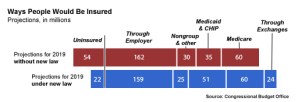
A simple rule lies at the heart of the Patient Protection and Affordable Care Act: Starting in 2014, almost every American will need to carry health insurance or pay a fine. That rule is known as the individual mandate.

What It Means for You

The mandate requires all citizens and legal immigrants to have “qualifying” health coverage. People eligible for employer coverage can satisfy the requirement by enrolling in their employer’s plan. Employer plans will need to meet certain standards-covering preventive care and disallowing lifetime limits-but will not need to have all of the minimum benefits that will be required of plans sold to individuals and small businesses.

People without insurance through their employer will be able to buy plans on new state-based insurance marketplaces called exchanges, where most will qualify for subsidies. The lowest-price conventional insurance plan for sale on the exchanges must meet the minimum standard for qualifying health coverage: It must cover 60 percent of costs, and out-of-pocket expenses must be limited to $5,950 for individuals and $11,900 for families.

Why A Mandate Matters

The thinking behind the individual mandate is that, in the absence of a government-run “single payer” insurance program like Canada’s, the only way to achieve universal health insurance is to require people to obtain coverage on their own, with government assistance for those who can’t afford it.


Read More

Video: Health Reform And Its Implications

Washington Post staff writers discuss the new health care law and its implications.

Book Excerpt: How The Individual Health Insurance Mandate Will Work

There is an important exception: People younger than 30 will be able to satisfy the mandate by buying low-cost, high-deductible plans. The plans will require about $6,000 in out-of-pocket spending before most benefits kick in, though they will cover certain screening tests and immunizations before the deductible, and may cover some primary-care visits as well. One advocacy group estimates that premiums for these plans will be $138 per month, compared with $190 per month for the least expensive conventional plan on the exchange. The thinking behind this option is that it will appeal to so-called young invincibles who believe they can do without broader coverage. Insurers argue, though, that if too many young people sign on to these plans, the risk pool in the conventional plans will be weighted too heavily toward older people.

What will happen if I choose not to obtain coverage?

You will be assessed a tax penalty that is the greater of a flat sum or a percent of income: $95 or 1 percent of income in 2014, $325 or 2 percent of income in 2015, and then the penalty’s full level in 2016, $695 or 2.5 percent of income. After 2016, the flat dollar amount increases by a cost-of-living adjustment.

For children, the per-person sum is half the adult one. The maximum family penalty is the greater of 2.5 percent of income or three times the per-adult penalty ($2,085 in 2016). All penalties are capped at the cost of the lowest-priced conventional plan on the exchanges.

What if I can’t afford coverage?

Hardship exemptions will be granted for those who are truly unable to afford insurance even with the subsidies that will be available-those for whom the least expensive plan option in their area exceeds 8 percent of their income. (See Chapter 1 for more on the subsidies.) People who qualify for the hardship exemption also will be allowed to buy the high-deductible plan through the exchanges, even if they are older than 30.

Are there any exemptions?

People who lack coverage for a short period-up to three months-will not have to pay a penalty.

Exemptions also will be granted to people who choose not to seek medical care because of their religion, to Native Americans who are covered by the Indian Health Program, to veterans who are covered through the Department of Veterans Affairs, and to people in jail or prison.

Illegal immigrants will not be subject to the mandate, nor will they be allowed to buy insurance through the exchanges. They will instead have to purchase coverage from companies that are still selling plans outside the exchanges, where government regulations and consumer protections will be lighter. They will be able to seek
care, as they do now, at federally funded community health clinics and in hospital emergency rooms.
Book Excerpt: How The Individual Health Insurance Mandate Will Work

Hospitals that treat large numbers of poor patients will receive less federal support than they do now, on the rationale that more of their patients will be covered. But they will still get some aid in recognition of the fact that many immigrants will remain uncovered, and that some of their other patients will, at least at the out-
set, not obtain coverage. Whether that aid proves adequate remains to be seen-particularly in states such as California and Texas, where as many as 25 percent of residents are uninsured and there are high numbers of illegal immigrants.

What will happen if I do not obtain coverage or pay the fine?

Some opponents of the legislation conjured images of the government rounding up people and sending them to jail. But the law expressly states that failure to pay the penalties will not result in criminal prosecution or even in property liens. Also, the government probably will enforce the mandate loosely because of the political sensitivity of the health-care law. In fact, those who wrote the legislation set the penalty for not carrying health coverage
lower than what many health-care experts believe is necessary for the mandate to work, precisely because they were worried about the political fallout from making the requirement seem too onerous.

Will It Work?

The relatively small penalty and the prospect of loose enforcement create a big potential problem: If many younger and healthier people decide to pay the fine instead of buying coverage, rates will increase for those who do buy it.

Some health-care experts argue that the government will need to adopt a different approach. One option: Encourage everyone to obtain insurance but present those who do not with a choice. They could pay a much larger penalty than the one in the new law, while still retaining the ability to seek subsidized coverage if they do become
sick; or they could sign a form on their tax return acknowledging that they were not insured and would therefore be ineligible for a fixed period-say, five years-for federal subsidies or for the protections in the law that allow people to buy coverage even if they have preexisting conditions. This would leave them facing a market with all the uncertainties of the current one. But creating an opt-out of this sort would address critics’ concerns about the propriety or political risk of requiring people to have insurance.

The Massachusetts experiment

Some of the law’s supporters take heart in Massachusetts’s experience with the individual mandate. Since that state adopted universal coverage in 2006, it has managed to get all but about 3 percent of its population insured. But Massachusetts started with a much higher percentage of the population covered than the rest of the country-9 percent of its residents were uninsured in 2006, compared with 15 percent in the entire United States now.

How did Massachusetts get to 97 percent coverage? The state government-working with hospitals, insurers and community groups-began an aggressive campaign to inform the public about the mandate and encourage compliance. The goal was to get people to think of having health insurance as a social norm, not unlike
wearing a seatbelt-something they would do because it was right and expected, regardless of the penalty for noncompliance.

The state made it easy to sign up: People who qualified for subsidized coverage received help filling out forms at hospitals and clinics, while others could use a Web site to determine whether they qualified for subsidies or could telephone the Health Connector, the state’s version of the exchanges in the new federal law.

Residents were deluged with publicity. The Boston Red Sox promoted the mandate, pharmacy loudspeakers intoned it, grocery store receipts carried reminders and churches coaxed congregants. The Health Connector held 200 meetings with employers and two dozen outreach sessions; community groups received funding to
help people sign up; and residents received red-lettered postcards in the mail.

It worked. A Health Connector board member said that a typical comment from young adults coming to apply for coverage was: “My mom said I had to sign up for health insurance or I would get into trouble.”

But Jon Kingsdale, the program’s executive director, says he worries about the prospects for duplicating the state’s success nationally.

He thinks the penalty in the federal law is insufficient-in Massachusetts, the fine started at $219 and rose above $1,000 in 2010.

In addition, Massachusetts residents are accustomed to an activist state government, and the mandate was part of a law that had bipartisan support. It was signed by a Republican governor, Mitt Romney, who wrote in 2006: “Some of my libertarian friends balk at what looks like an individual mandate. But remember, someone has to pay for the health care that must, by law, be provided: Either the individual pays or the taxpayers pay. A free ride on the government is not libertarian.”

Political challenges

The national mandate will be implemented in a far more toxic political environment, making it more difficult for the government to create a nationwide expectation of compliance. The administration plans to start a promotional campaign as 2014 nears, much as George W. Bush’s administration promoted the new Medicare drug benefit.

Within weeks of the signing several legal challenges were already in the works from state attorneys general arguing that it is unconstitutional to require people to buy a given product, in this case health insurance. Most constitutional law experts, including those with conservative leanings, say that the mandate is constitutional, falling under the powers granted the federal government to impose taxes and to regulate interstate commerce.

Whatever the lawsuits’ outcome, the momentum behind them suggests that come 2014, regardless of whether Democrats hold on to the White House, there will be deep pockets of resistance to the mandate. This could seriously complicate the implementation of a health-care program that relies so much on the premise that everyone obtain coverage.

From the book Landmark: The Inside Story of America’s New Health Care Law and What It Means for Us All by the staff of The Washington Post. Excerpted by arrangement with

, a member of the Perseus Books Group. Copyright 漏 2010.

麻豆女优 Health News is a national newsroom that produces in-depth journalism about health issues and is one of the core operating programs at 麻豆女优鈥攁n independent source of health policy research, polling, and journalism. Learn more about .

This <a target="_blank" href="/insurance/washington-post-book-excerpt-how-the-individual-health-insurance-mandate-will-work/">article</a&gt; first appeared on <a target="_blank" href="">麻豆女优 Health News</a> and is republished here under a <a target="_blank" href=" Commons Attribution-NonCommercial-NoDerivatives 4.0 International License</a>.<img src="/wp-content/uploads/sites/8/2023/04/kffhealthnews-icon.png?w=150&quot; style="width:1em;height:1em;margin-left:10px;">

<img id="republication-tracker-tool-source" src="/?republication-pixel=true&post=31014&amp;ga4=G-J74WWTKFM0&quot; style="width:1px;height:1px;">]]>
/insurance/washington-post-book-excerpt-how-the-individual-health-insurance-mandate-will-work/feed/ 0 31014
Alec MacGillis, Author at 麻豆女优 Health News 麻豆女优 Health News produces in-depth journalism on health issues and is a core operating program of 麻豆女优. Thu, 16 Apr 2026 06:09:16 +0000 en-US hourly 1 https://wordpress.org/?v=6.8.5 /wp-content/uploads/sites/8/2023/04/kffhealthnews-icon.png?w=32 Alec MacGillis, Author at 麻豆女优 Health News 32 32 161476233 Uninsured And Unaware Of Supreme Court Case Against Health Law /news/uninsured-tennessee-clinic-supreme-court-health-law/ /news/uninsured-tennessee-clinic-supreme-court-health-law/#comments Sun, 17 Jun 2012 12:31:00 +0000 http://khn.wp.alley.ws/news/uninsured-tennessee-clinic-supreme-court-health-law/

This story was produced in partnership with 听补苍诲 .

SEWANEE, Tenn. – As Robin Layman, a mother of two who has major health troubles but no insurance, arrived at a free clinic here, she had a big personal stake in the Supreme Court’s imminent decision on the new national health care law.

Not that she realized that. “What new law?” she said. “I’ve not heard anything about that.”

Layman was one of 600 people who on a recent weekend came from across southeastern Tennessee for the clinic held by , a Knoxville-based organization that for two decades has been providing free medical, dental and vision care in underserved areas. Most everyone had spent the night in their parked cars, to get a good spot in line. Daybreak found them massed outside the turreted stone gymnasium of the 150-year-old college, the University of the South, some still wearing pajamas or wrapped in blankets, waiting quietly for the 6 a.m. opening of the doors.

It was Remote Area Medical’s 667th clinic. But this one came at an unusual moment: as the Supreme Court deliberates whether to uphold the health care law that will have a disproportionate impact on the sort of people served by the organization.

Slideshow: Remote Area Medical Offers Free Care To Tennesseans

Uninsured And Unaware Of Supreme Court Case Against Health Law
  • On a recent weekend, 600 people came from across southeastern Tennessee for Remote Area Medical’s clinic. Watch the slideshow.

Layman was hardly the only patient unaware that the law aims to help people like her, by expanding health insurance beginning in 2014. And this gets to the heart of the political dilemma for Democrats: Despite spending tremendous political capital to pass the law, the party is unlikely to win many votes from the law’s future beneficiaries, most of whom live in Republican-dominated states in the . In fact, many at the clinic said they don’t vote at all.

And that assumes the law survives until 2014. The law’s design, with its major provisions kicking in four years after passage, was pragmatic politics at the time. The window would make the law’s price-tag lower and allow states time to set up new systems. But the delay’s result has been that the law has no natural constituency – its promises have not been clearly conveyed to the people it is designed to help.

This disconnect is seen in Tennessee, where about 15 percent of residents lack coverage – roughly the national average – but the state’s largely Republican political leadership has shunned the law. The state’s legislature has declined to pass legislation establishing聽 the new insurance “exchange” required by the law; even the Democratic聽 congressman representing the district that includes Sewanee voted聽 against the law, before losing his seat the following fall.

Tennessee’s uninsured includes middle class people who can’t afford insurance or are turned down for health reasons, but the need is particularly acute among the poor and near poor who don’t qualify for Medicaid. In Tennessee, the covers poor children, pregnant women and the disabled, as well as many parents below a set income threshold, about $28,000 for a family of four, but adults without children in their care are ineligible.

Under the law, Medicaid will expand in 2014 to cover anyone earning up to 138 percent of the poverty level, or about $31,000 for a family of four. Many people above that income who lack employer-provided coverage will receive subsidies to help them purchase private insurance.

Layman and her family offer a stark example of the law’s potential impact. Two years ago, her son, then 16, was hit head-on by a speeding driver high on drugs. Her son’s girlfriend was killed; he suffered severe internal injuries and recently underwent colon surgery. Now 18, he will soon age out of Medicaid coverage.

And Layman, a gregarious 38-year-old, recently lost coverage for her own considerable problems. She suffers high blood-pressure, for which she takes three medications, purchased at a discount from the county health office. She suffers sciatica stemming from the time eight years ago when a co-worker at a dollar store let slip a heavy box of wrapping paper Layman was handing up to her. Layman lunged for it and badly hurt her back, for which she takes the nerve-pain medication Lyrica.

She also suffers depression, and has been on Prozac for several years. But during a rough spell last fall, she came close to committing suicide. It was on her return home from a week in the psychiatric hospital that she found a letter from the state saying that, as a result of a bump up in her husband’s disability payments (he was caught in a front-end loader when he was eight years old), she was now ineligible for Medicaid.

Lacking coverage, she has not seen a psychiatrist since her hospital stay. She played this down: “I can recognize my craziness when it gets out of hand.”

State-by-state solutions?

Opponents of the Affordable Care Act, such as Mitt Romney, say it should be replaced with a state-by-state approach. Romney’s home state, Massachusetts, is the pioneer – Romney signed a 2006 law that has extended coverage to nearly all residents.

But many other states have demonstrated little political will to help people obtain health coverage. In some, such as Texas and Virginia, the threshold for Medicaid eligibility is so stringent that parents earning $10,000 a year are too well-off to qualify.

States that have made an effort to offer subsidized coverage, as Tennessee did in the 1990s, have typically found that costs became unsustainable when people in poor health enrolled at higher rates than healthier ones. It is that problem that the individual insurance mandate in the national law, the crux of the Supreme Court case, is meant to address.

As it stands, the safety net in southeastern Tennessee is a patchwork. The main hospital in the area, in Winchester, receives federal funding to reimburse it for some of the uncompensated care it provides. Hospital CEO Phil Young says it would be better for those patients to arrive with coverage, not least because their conditions would get attention before becoming acute. “It would certainly help us from a funding perspective,” Young said.

In 2008, several local physicians tackled the area’s lack of options for the uninsured by setting up a tiny clinic in a vacant Winchester school building. Nine doctors volunteered a total of about 900 hours last year, seeing people without insurance. But its capacity is limited – just two exam rooms plus a small office with boxes of donated medication. Appointments are booked for the next two months.

Dr. Thomas Smith, who helped set up the clinic, considered it a temporary fix. “We hope we are planned obsolescence,” he said. Smith is ambivalent about the law. But he acknowledges that things need to change in Tennessee:聽 “The current situation is not sustainable.”

The safety net is most threadbare in Grundy County, the hilly region to the east of Winchester, the poorest county in Tennessee with a poverty rate of 30 percent and the home to many of the Sewanee clinic visitors. There is only one doctor in the county of 13,000 people, plus five or six nurse practitioners.

Some local providers wonder how much the law will benefit places like this, if people aren’t inclined to seek out regular care. “In the mountains, they come see you when they’re sick, and then they go back up until they’re sick again,” said Dr. Stephen Sommerschield, a primary care physician in Winchester.

Needs will remain

At the Sewanee clinic, the biggest demand, as always, was for dental work. Rows of dental chairs were arrayed inside the gym’s indoor track with no dividers separating them. On a table sat a plastic jar labeled “TEETH” – the harvest was being saved for study by dental students.

Remote Area Medical founder , famous for his role co-starring in the TV show, “Wild Kingdom,” predicts the group will keep seeing demand under the new law – in Tennessee and many other states, Medicaid does not cover most adult dental or vision care, so people will still need help on those fronts.

But it was hard to find visitors to the clinic who would not benefit directly from the law. Barbara Hickey, 54, is a diabetic who lost her insurance five years ago when her husband was injured at his job making fiberglass pipes. She gets discounted diabetic medication from a charity, but came to the clinic to ask a doctor about blood in her urine.

Under the law, she would qualify for Medicaid. Her eyebrows shot up as the law was described to her. “If they put that law into effect, a lot of people won’t need disability,” she said. “A lot of people go onto disability because they can’t afford health insurance.”

Tom Boughan, 58, came to the clinic for glasses and dental work, with a sci-fi novel to pass the time. He’s been without coverage since being laid off from his industrial painting job last year, which means he’s paying $400 every few months for blood work for a thyroid problem.

Boughan knew about the debate over the insurance mandate, which puzzled him. “It’s like when I go get a driver’s license – I have to have auto insurance,” he said. “You got to make sure you get the money in the pool, so that things get covered. I hesitate about mandates, but the ironic thing is, [the idea] came from the Republicans and then they turn around and say this is Obama forcing us to do something, taking away our freedoms.”

Terry Bailey, 38, for years had insurance through his job, at a heavy-equipment manufacturer he commutes to in Georgia. But the company changed hands a few years ago and sharply reduced its health benefits. Bailey, who earns $40,000, decided he could not afford the new $6,240 per-year price tag. (His three children are covered by TennCare.)

It was an ill-fated choice. Bailey started having trouble with his knee, which had been injured in 2004 when he fell asleep at the wheel and crashed into a concrete barrier. One morning, it just locked up and he couldn’t go to work. The MRI cost $1,800, which he borrowed from the bank. He’s experiencing stiffness in his left hand, presumably from all the hours spent holding a paint spray-gun. And both he and his wife have been suffering staph infections. “I take care of it myself – just squeeze it and don’t let it get too bad,” said Kelly Bailey, 31.

Under the law, Bailey could opt out of his employer’s coverage if it costs more than 9.5 percent of his income – which it now does. In that case, he would receive to buy private coverage on his own and his employer would be assessed a $3,000 penalty. He said he could live with the insurance mandate, given the subsidies, which he hadn’t realized would apply to him before a reporter described the law. “As long as you get help, it ain’t that bad” of an idea, Bailey said. “If you don’t [have a mandate], you’re going to have freeloaders.”

A doctor’s view

After waiting all day with his kids for a dental filling, Bailey let Dr. Matthew Petrilla, the primary care doctor on duty, have a look at his hand and knee. Bailey emerged with two prescriptions – steroids for his knee and a device for his hand to wear while he sleeps 聽— and an invitation for a follow-up appointment at the $20 rate Petrilla charges those without coverage.

Petrilla said he had seen several people at the clinic in such dire condition they were “going to have a heart attack in the next month.” He would ask a local cardiologist if he might see them for free.

A 59-year-old Army veteran, Petrilla has developed a critical view of the country’s health care system after more than two decades of working in southeastern Tennessee. “In this country where we’re supposed to have health care, these people here don’t – they’re walking around on borrowed time,” he said. “No one in this country should not have coverage.”

He thinks he knows why some justices seem ready to overturn the law, regardless of the impact. “It’s because they’re not in the real world,” he said. “They’re up in Washington with their private insurance. 聽They should come down in the sticks and the foxholes, and see what it’s like.”

He acknowledged that some of his colleagues were less than thrilled about the law’s coverage expansion because Medicaid reimbursement rates are low (though the law brings them up slightly for primary care). But he said that doctors in rural Tennessee would have no choice but to see Medicaid patients, since so many patients would have that coverage. “I’m not going to starve to death,” he said. “I don’t know any doctors who’ve starved to death.”

Petrilla also saw Robin Layman, suggesting she try Xanax for her anxiety and cut back on one of her blood-pressure medications. And the chiropractor on duty gave her back a thrust. She emerged from his booth walking straighter than she had going in, with a smile on her face.

“Oh my God,” she said. “That man is an angel.”

This story was produced in partnership with , and Kaiser Health News.

麻豆女优 Health News is a national newsroom that produces in-depth journalism about health issues and is one of the core operating programs at 麻豆女优鈥攁n independent source of health policy research, polling, and journalism. Learn more about .

This <a target="_blank" href="/news/uninsured-tennessee-clinic-supreme-court-health-law/">article</a&gt; first appeared on <a target="_blank" href="">麻豆女优 Health News</a> and is republished here under a <a target="_blank" href=" Commons Attribution-NonCommercial-NoDerivatives 4.0 International License</a>.<img src="/wp-content/uploads/sites/8/2023/04/kffhealthnews-icon.png?w=150&quot; style="width:1em;height:1em;margin-left:10px;">

<img id="republication-tracker-tool-source" src="/?republication-pixel=true&post=23279&amp;ga4=G-J74WWTKFM0&quot; style="width:1px;height:1px;">]]>
/news/uninsured-tennessee-clinic-supreme-court-health-law/feed/ 9 23279
Book Excerpt: Why A Mandate Matters /insurance/washington-post-book-excerpt-why-a-mandate-matters/ /insurance/washington-post-book-excerpt-why-a-mandate-matters/#respond Mon, 10 May 2010 09:09:00 +0000 http://khn.wp.alley.ws/news/washington-post-book-excerpt-why-a-mandate-matters/ Landmark: The Inside Story of America's New Health Care Law and What It Means for Us All, by The Washington Post.]]> The thinking behind the individual mandate is that, in the absence of a government-run “single payer” insurance program like Canada’s, the only way to achieve universal health insurance is to require people to obtain coverage on their own, with government assistance for those who can’t afford it.

Insurance-whether for cars, homes or health-works by spreading the risk. For the tens of millions of Americans who receive health coverage through large employers, the costs are shared broadly: Older workers pay the same as younger workers, and the costs of care are spread across the pool.

Video: Health Reform And Its Implications

Washington Post staff writers discuss the new health care law and its implications.

Book Excerpt: Why A Mandate Matters

But in today’s individual insurance market where people without employer- provided coverage buy plans, the spreading of risk does not function so well. About one-third of people age 20 to 29 go without coverage, double the rate for those age 30 to 64. This leaves the individual insurance market dominated by older, sicker people who tend to use more medical care. As a result, rates in the individual market are high, and that, in a kind of vicious cycle, makes it even less likely that younger or healthier people will decide to buy coverage.

Meanwhile, when those without insurance need care, many of the costs end up being borne indirectly by those who are insured: Hospitals and doctors frequently make up the losses by charging other patients more and by relying on government money to help pay for uncompensated care. And because people without insurance often wait longer to seek treatment, the cost of tending to them is higher than it would have been if they had gone in earlier.

This is where the mandate comes in: One of the primary goals of healthcare reform is to keep insurance companies from refusing to cover people with preexisting conditions, or from covering them only at exorbitantly high rates. But insurers argue, with justification, that if they have to offer affordable coverage to people with serious medical conditions, then they need to have younger and healthier people in the pool. And the only way to make sure that those people obtain coverage is to require it.

麻豆女优 Health News is a national newsroom that produces in-depth journalism about health issues and is one of the core operating programs at 麻豆女优鈥攁n independent source of health policy research, polling, and journalism. Learn more about .

This <a target="_blank" href="/insurance/washington-post-book-excerpt-why-a-mandate-matters/">article</a&gt; first appeared on <a target="_blank" href="">麻豆女优 Health News</a> and is republished here under a <a target="_blank" href=" Commons Attribution-NonCommercial-NoDerivatives 4.0 International License</a>.<img src="/wp-content/uploads/sites/8/2023/04/kffhealthnews-icon.png?w=150&quot; style="width:1em;height:1em;margin-left:10px;">

<img id="republication-tracker-tool-source" src="/?republication-pixel=true&post=31024&amp;ga4=G-J74WWTKFM0&quot; style="width:1px;height:1px;">]]>
/insurance/washington-post-book-excerpt-why-a-mandate-matters/feed/ 0 31024
Book Excerpt: How The Individual Health Insurance Mandate Will Work /insurance/washington-post-book-excerpt-how-the-individual-health-insurance-mandate-will-work/ /insurance/washington-post-book-excerpt-how-the-individual-health-insurance-mandate-will-work/#respond Mon, 10 May 2010 09:08:00 +0000 http://khn.wp.alley.ws/news/washington-post-book-excerpt-how-the-individual-health-insurance-mandate-will-work/ Landmark: The Inside Story of America's New Health Care Law and What It Means for Us All, by The Washington Post.]]>

In a new book, Landmark: The Inside Story of America’s New Health Care Law and What It Means for Us All, the staff of writes about various provisions of the new health law. Here is the chapter on mandatory insurance coverage.

A simple rule lies at the heart of the Patient Protection and Affordable Care Act: Starting in 2014, almost every American will need to carry health insurance or pay a fine. That rule is known as the individual mandate.

What It Means for You

The mandate requires all citizens and legal immigrants to have “qualifying” health coverage. People eligible for employer coverage can satisfy the requirement by enrolling in their employer’s plan. Employer plans will need to meet certain standards-covering preventive care and disallowing lifetime limits-but will not need to have all of the minimum benefits that will be required of plans sold to individuals and small businesses.

People without insurance through their employer will be able to buy plans on new state-based insurance marketplaces called exchanges, where most will qualify for subsidies. The lowest-price conventional insurance plan for sale on the exchanges must meet the minimum standard for qualifying health coverage: It must cover 60 percent of costs, and out-of-pocket expenses must be limited to $5,950 for individuals and $11,900 for families.

Why A Mandate Matters

The thinking behind the individual mandate is that, in the absence of a government-run “single payer” insurance program like Canada’s, the only way to achieve universal health insurance is to require people to obtain coverage on their own, with government assistance for those who can’t afford it.


Read More

Video: Health Reform And Its Implications

Washington Post staff writers discuss the new health care law and its implications.

Book Excerpt: How The Individual Health Insurance Mandate Will Work

There is an important exception: People younger than 30 will be able to satisfy the mandate by buying low-cost, high-deductible plans. The plans will require about $6,000 in out-of-pocket spending before most benefits kick in, though they will cover certain screening tests and immunizations before the deductible, and may cover some primary-care visits as well. One advocacy group estimates that premiums for these plans will be $138 per month, compared with $190 per month for the least expensive conventional plan on the exchange. The thinking behind this option is that it will appeal to so-called young invincibles who believe they can do without broader coverage. Insurers argue, though, that if too many young people sign on to these plans, the risk pool in the conventional plans will be weighted too heavily toward older people.

What will happen if I choose not to obtain coverage?

You will be assessed a tax penalty that is the greater of a flat sum or a percent of income: $95 or 1 percent of income in 2014, $325 or 2 percent of income in 2015, and then the penalty’s full level in 2016, $695 or 2.5 percent of income. After 2016, the flat dollar amount increases by a cost-of-living adjustment.

For children, the per-person sum is half the adult one. The maximum family penalty is the greater of 2.5 percent of income or three times the per-adult penalty ($2,085 in 2016). All penalties are capped at the cost of the lowest-priced conventional plan on the exchanges.

What if I can’t afford coverage?

Hardship exemptions will be granted for those who are truly unable to afford insurance even with the subsidies that will be available-those for whom the least expensive plan option in their area exceeds 8 percent of their income. (See Chapter 1 for more on the subsidies.) People who qualify for the hardship exemption also will be allowed to buy the high-deductible plan through the exchanges, even if they are older than 30.

Are there any exemptions?

People who lack coverage for a short period-up to three months-will not have to pay a penalty.

Exemptions also will be granted to people who choose not to seek medical care because of their religion, to Native Americans who are covered by the Indian Health Program, to veterans who are covered through the Department of Veterans Affairs, and to people in jail or prison.

Illegal immigrants will not be subject to the mandate, nor will they be allowed to buy insurance through the exchanges. They will instead have to purchase coverage from companies that are still selling plans outside the exchanges, where government regulations and consumer protections will be lighter. They will be able to seek
care, as they do now, at federally funded community health clinics and in hospital emergency rooms.

Book Excerpt: How The Individual Health Insurance Mandate Will Work

Hospitals that treat large numbers of poor patients will receive less federal support than they do now, on the rationale that more of their patients will be covered. But they will still get some aid in recognition of the fact that many immigrants will remain uncovered, and that some of their other patients will, at least at the out-
set, not obtain coverage. Whether that aid proves adequate remains to be seen-particularly in states such as California and Texas, where as many as 25 percent of residents are uninsured and there are high numbers of illegal immigrants.

What will happen if I do not obtain coverage or pay the fine?

Some opponents of the legislation conjured images of the government rounding up people and sending them to jail. But the law expressly states that failure to pay the penalties will not result in criminal prosecution or even in property liens. Also, the government probably will enforce the mandate loosely because of the political sensitivity of the health-care law. In fact, those who wrote the legislation set the penalty for not carrying health coverage
lower than what many health-care experts believe is necessary for the mandate to work, precisely because they were worried about the political fallout from making the requirement seem too onerous.

Will It Work?

The relatively small penalty and the prospect of loose enforcement create a big potential problem: If many younger and healthier people decide to pay the fine instead of buying coverage, rates will increase for those who do buy it.

Some health-care experts argue that the government will need to adopt a different approach. One option: Encourage everyone to obtain insurance but present those who do not with a choice. They could pay a much larger penalty than the one in the new law, while still retaining the ability to seek subsidized coverage if they do become
sick; or they could sign a form on their tax return acknowledging that they were not insured and would therefore be ineligible for a fixed period-say, five years-for federal subsidies or for the protections in the law that allow people to buy coverage even if they have preexisting conditions. This would leave them facing a market with all the uncertainties of the current one. But creating an opt-out of this sort would address critics’ concerns about the propriety or political risk of requiring people to have insurance.

The Massachusetts experiment

Some of the law’s supporters take heart in Massachusetts’s experience with the individual mandate. Since that state adopted universal coverage in 2006, it has managed to get all but about 3 percent of its population insured. But Massachusetts started with a much higher percentage of the population covered than the rest of the country-9 percent of its residents were uninsured in 2006, compared with 15 percent in the entire United States now.

How did Massachusetts get to 97 percent coverage? The state government-working with hospitals, insurers and community groups-began an aggressive campaign to inform the public about the mandate and encourage compliance. The goal was to get people to think of having health insurance as a social norm, not unlike
wearing a seatbelt-something they would do because it was right and expected, regardless of the penalty for noncompliance.

The state made it easy to sign up: People who qualified for subsidized coverage received help filling out forms at hospitals and clinics, while others could use a Web site to determine whether they qualified for subsidies or could telephone the Health Connector, the state’s version of the exchanges in the new federal law.

Residents were deluged with publicity. The Boston Red Sox promoted the mandate, pharmacy loudspeakers intoned it, grocery store receipts carried reminders and churches coaxed congregants. The Health Connector held 200 meetings with employers and two dozen outreach sessions; community groups received funding to
help people sign up; and residents received red-lettered postcards in the mail.

It worked. A Health Connector board member said that a typical comment from young adults coming to apply for coverage was: “My mom said I had to sign up for health insurance or I would get into trouble.”

But Jon Kingsdale, the program’s executive director, says he worries about the prospects for duplicating the state’s success nationally.

He thinks the penalty in the federal law is insufficient-in Massachusetts, the fine started at $219 and rose above $1,000 in 2010.

In addition, Massachusetts residents are accustomed to an activist state government, and the mandate was part of a law that had bipartisan support. It was signed by a Republican governor, Mitt Romney, who wrote in 2006: “Some of my libertarian friends balk at what looks like an individual mandate. But remember, someone has to pay for the health care that must, by law, be provided: Either the individual pays or the taxpayers pay. A free ride on the government is not libertarian.”

Political challenges

The national mandate will be implemented in a far more toxic political environment, making it more difficult for the government to create a nationwide expectation of compliance. The administration plans to start a promotional campaign as 2014 nears, much as George W. Bush’s administration promoted the new Medicare drug benefit.

Within weeks of the signing several legal challenges were already in the works from state attorneys general arguing that it is unconstitutional to require people to buy a given product, in this case health insurance. Most constitutional law experts, including those with conservative leanings, say that the mandate is constitutional, falling under the powers granted the federal government to impose taxes and to regulate interstate commerce.

Whatever the lawsuits’ outcome, the momentum behind them suggests that come 2014, regardless of whether Democrats hold on to the White House, there will be deep pockets of resistance to the mandate. This could seriously complicate the implementation of a health-care program that relies so much on the premise that everyone obtain coverage.

From the book Landmark: The Inside Story of America’s New Health Care Law and What It Means for Us All by the staff of The Washington Post. Excerpted by arrangement with

, a member of the Perseus Books Group. Copyright 漏 2010.

麻豆女优 Health News is a national newsroom that produces in-depth journalism about health issues and is one of the core operating programs at 麻豆女优鈥攁n independent source of health policy research, polling, and journalism. Learn more about .

This <a target="_blank" href="/insurance/washington-post-book-excerpt-how-the-individual-health-insurance-mandate-will-work/">article</a&gt; first appeared on <a target="_blank" href="">麻豆女优 Health News</a> and is republished here under a <a target="_blank" href=" Commons Attribution-NonCommercial-NoDerivatives 4.0 International License</a>.<img src="/wp-content/uploads/sites/8/2023/04/kffhealthnews-icon.png?w=150&quot; style="width:1em;height:1em;margin-left:10px;">

<img id="republication-tracker-tool-source" src="/?republication-pixel=true&post=31014&amp;ga4=G-J74WWTKFM0&quot; style="width:1px;height:1px;">]]>
/insurance/washington-post-book-excerpt-how-the-individual-health-insurance-mandate-will-work/feed/ 0 31014