GPS apps in your handheld may lead you back to the right path, but keeping track of your pills is another matter. 聽Only of patients take their medications as prescribed. And , according to the , in 2010 almost 40 percent of adults older than 65 were taking five or more prescriptions a day.
Managing real and potential medication conflicts and confusions is more pressing as 10,000 baby boomers turn sixty-five every day, and 90 percent suffer at least one chronic illness. are now swallowing a cocktail of medications prescribed by various specialists: pain medicines for aching backs, antidepressants, proton pump inhibitors to control gastric distress, vitamins and other over-the-counter supplements.
With families sometimes far away and many older people unable to afford personal caregivers, companies have searched for a technological solution to monitoring medicine.
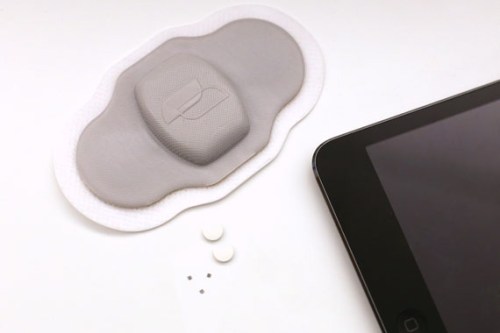
Forget armband monitors like Fitbit, the newest body monitors are as tiny as BBs. These so-called nanomeds,聽miniscule sensors embedded in a placebo pill that you swallow, set up shop in your gut. As they slowly work their way through your system, these “ingestibles” – which are actually not digested聽– are switched on by contact with saliva and/or gastric juices. The signal is picked up by another sensor which looks like a Band-Aid and is worn on your chest.
This system records medicine intake as well as other measures, such as heart rate. The information shows up on your smartphone or tablet, via Bluetooth and can automatically go to your doctors, family members or caregivers, with your permission.
“We are entering the commercial era of the (IoT)聽鈥� your car, your clothes and increasingly your personal care products are going to be connected,” says Andrew Thompson, CEO of Proteus Digital Health, which makes these “ingestibles.”
He adds that the goal is to connect major health systems to consumers “to allow them to switch on their own health care, creating critical information that can be used to ensure they and their doctors make positive decisions about use of medicines and personal health choices.”
Proteus was named after the聽submarine Proteus, in the 1966 sci-fi classic .聽 A super-miniaturized sub and its a crew were injected聽into a blood vessel聽to fix a brain clot.聽And that was named after the Greek sea god Proteus, resulting in聽the adjective protean聽which has “.”
The Food and Drug Administration approved these devices in 2012, but they’re not on the open market yet. They’re still being tested in pilot projects,聽including with England’s National Health Service.
Proper use of powerful, sophisticated meds aimed at keeping the elderly active and out of institutional care, Bill Satariano of the UC Berkeley’s School of Public Health believes, will depend increasingly on these “indigestible chips.”
He says it’s part of the field of “techno-wayfinding” or relying on newer and newer information technologies to help us keep track of where we go, what we eat or drink and increasingly whether we’re following doctor’s orders in our pill consumption.
Satariano’s Berkeley colleague, David Lindeman, noted in a published this year 聽that these and other forms of info-tech will play critical roles in what is broadly described as “connected health.”聽That relies on Internet-based technologies to help provide care in people’s homes or other non-clinical settings. “One dimension of these technologies is that they can be used to monitor individuals with chronic conditions to detect, and thus prevent, complications and crises that can lead to acute episodes. To maintain their health and well-being, it is just as important to provide individuals with automated health coaching, based on monitoring vital signs, activity, and behavior,” the report says.
For example, if an aging baby boomer has elevated blood sugar levels, her medical team can find out about it (information that comes into the boomer’s own cellphone and is then distributed to whomever she’s designated) and correct the problem before the levels get dangerous, even if she doesn’t even notice.
Separate monitoring devices聽are, however, just the beginning of indigestible medicine.聽 Coming soon, according to one senior executive at Proteus Digital, will be the implantation of these nearly invisible chips in the actual prescription pills themselves, relieving the patient of even having to remember to take the monitoring pill, because the pills could send back the message that they’re now in the system.
All these new “wayfinding” health technologies could improve both medication usage and effectiveness for elders aging at home, and helping them have a better quality of life. And, these could reduce or eliminate expensive critical care in hospitals.
All good, but some raise a possible dark side: is this the ultimate Orwellian Big Brother technology, like an electronic bracelet attached to your gut?
Satariano’s answer? “Without question. We always have to ask what is the cost to each technological advance.”
Research for this article was supported by a Journalists in Aging Fellowship, a collaboration of New American Media and the Gerontological Society of America, sponsored by the Silver Century Foundation.
麻豆女优 Health News is a national newsroom that produces in-depth journalism about health issues and is one of the core operating programs at 麻豆女优鈥攁n independent source of health policy research, polling, and journalism. Learn more about .This <a target="_blank" href="/aging/next-step-for-tech-savvy-aging-boomers-belly-robots-to-monitor-health/">article</a> first appeared on <a target="_blank" href="">麻豆女优 Health News</a> and is republished here under a <a target="_blank" href=" Commons Attribution-NonCommercial-NoDerivatives 4.0 International License</a>.<img src="/wp-content/uploads/sites/8/2023/04/kffhealthnews-icon.png?w=150" style="width:1em;height:1em;margin-left:10px;">
<img id="republication-tracker-tool-source" src="/?republication-pixel=true&post=510913&ga4=G-J74WWTKFM0" style="width:1px;height:1px;">]]>
It’s just that I didn’t know it. Here’s what happened:
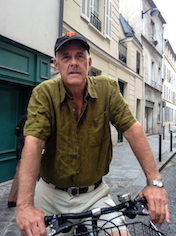
Only after three days of flashing, floating visual squiggles — commonly known as ocular migraines that usually last 20 minutes — do I email my old friend Dr. John Krakauer, who helps run stroke recovery at Johns Hopkins Hospital in Baltimore.
After a few questions he told me to get an MRI scan as soon as possible. In the U.S. that could involve the emergency room (with its hours-long wait) or a complicated process of getting the referral — and then finding a radiologist who would take my coverage. Here in France, it is so much simpler.
But even here, such a lot of bother, I think. My doctor’s away on vacation. Whom do I call? But since I’m now into my fourth day of rainbow hieroglyphics, I bike down to the renowned emergency eye service at Hospital Hotel Dieu, across from Notre Dame cathedral. It has historically served Paris’ poorest residents.
I offer my national health card, and the receptionist brushes it off. All they want is something with a picture ID. Three hours later I’ve been examined by four separate specialists. “You have no serious eye problem,” the retina specialist advises me, “but I agree with your friend at Hopkins. You should get a brain scan,” which they can’t do there. She scrawls out a note to one of France’s top neurology centers.
Back to the bike. I peddle to the Hopital Ste-Anne, a multi-specialty neurology center close to where France’s last guillotine stood.
Sweating, I climb the stairs directly to the glass reception door on the second floor. The head of the clinic smiles, reads the note I’ve brought from the eye doctor and immediately begins some simple tests to be sure I’m not an emergency case.
She taps my elbow, then asks me extend my hands and slowly draw each index finger to my nose. I pass. She asks me when the rainbow squiggles began as she scrolls down her computer screen. It’s 1:15, but I have a lunch appointment at 1:30.
“Go have lunch and come back at 2:30 for your MRI,” she tells me. “Oh yes,” she adds, “you really ought to check in downstairs first.”
At 3:15, I climb onto a gurney and they stuff me into the MRI tube.
At 3:45, I go back upstairs to the nurse’s station. The neurologist is gone. A nurse points to a room across the hall. “You’ll need to spend the night,” she says.
“But I can’t,” I say.
A new neurologist arrives. He’s busy with other patients, but he stops to talk with me for 10 minutes. “I have a flight to Naples tomorrow,” I explain.
“You’ll have to cancel it. You’ve had a cerebral infarctus.” I look at him like a puzzled puppy. “A stroke. You’ll have to stay at least 24 hours. Maybe until next week.”
“Can I go home and get my glasses? I don’t have my phone charger.”
He shakes his head. “We need to run tests to find out why this happened.”
I obey. An hour later I’m attached to a drip, and a half dozen cardiac monitors. Aside from the day of my birth, I’ve never spent a night in a hospital.
At 6:30 a yellow soup and a piece of fish arrive. My roommate, an old man on the other side of the curtain who’s had a bad stroke, gurgles. At 9:00 Christophe, my other, brings my daily pills, my glasses, a toothbrush, and Marguerite Duras’s wartime diaries, but not my phone charger. I’m a journalist, a news junkie — the Malaysian airplane has just been shot down in Ukraine. I fight off panic about being cut off from who and what matters. And it’s hot. Hospitals here don’t have air conditioning.
At 3 a.m. the moon is up; out the window I try to count the number of balconies on the far building.
Biking Home
The next day another neurologist comes in. “We’ll do another kind of MRI this morning,” the neurologist tells me. “If that one is OK, you can go home this afternoon.” Morning turns to afternoon, then to dusk. New emergency cases delay everything. And it’s vacation season.
At 6:30 p.m., I pull on my jeans, decline the evening’s yellow soup and piece of turkey, and ask again about my new MRI scan.
Within a half hour, I’m being told: “It will take an hour to get the readout.” I must return to a new room and wait.
At 9, the night shift nurse comes in: good news. The second scan is clear. I can go home, but wouldn’t I rather stay the night? Merci, mais non. I’m biking home.
No one has asked for a single centime. I won’t have to file paperwork or worry about what I’ll have to pay: the deductibles and the coinsurance and the separate doctor and hospital and radiology fees and how to fill in all the forms.
A week later, neurologists sent me a full write-up along with the brain scan pictures to send to my friend Krakauer at Hopkins. There will be no extra charges for anything. All covered by my health card.
The verdict: Nobody knows why it happened, and it likely won’t happen again. Medicine? One baby aspirin every day at noon. The visual squiggles are probably forever.
麻豆女优 Health News is a national newsroom that produces in-depth journalism about health issues and is one of the core operating programs at 麻豆女优鈥攁n independent source of health policy research, polling, and journalism. Learn more about .This <a target="_blank" href="/news/if-you-have-a-stroke-better-it-should-be-in-paris/">article</a> first appeared on <a target="_blank" href="">麻豆女优 Health News</a> and is republished here under a <a target="_blank" href=" Commons Attribution-NonCommercial-NoDerivatives 4.0 International License</a>.<img src="/wp-content/uploads/sites/8/2023/04/kffhealthnews-icon.png?w=150" style="width:1em;height:1em;margin-left:10px;">
<img id="republication-tracker-tool-source" src="/?republication-pixel=true&post=316550&ga4=G-J74WWTKFM0" style="width:1px;height:1px;">]]>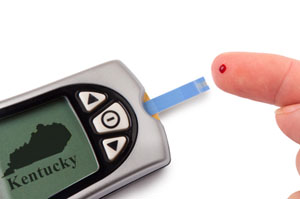
Kentucky health workers fear that many of those with the disease don’t know they have it. Gilbert Friedell, who spent his life as a nationally known cancer specialist before founding a statewide health reform committee in Kentucky, has helped bring a focus to the issue. The 25-member Friedell Citizens Committee two years ago launched the Tri-County Diabetes Partnership in Magoffin, Johnson and Floyd counties to form an alliance of doctors, nurses, dietitians, teachers, church people, local health departments and even USDA farm extension agents to fight the debilitating disease.聽
Friedell rejects the conventional wisdom that diabetes prevention and care is a “health” issue.
“We used to say with cancer control in Eastern Kentucky that if we were to apply what we now know about cancer, we could cut mortality by half in 10 to 15 years,” he says. “The same thing is true with diabetes.聽 We know what we have to do to prevent Type II diabetes and how to maintain a reasonable level of personal performance.聽 We know these things.聽 But, if we’re so smart, how come we haven’t fixed the diabetes problem?聽 The answer is we’re still relying on individual approaches where it really requires community action and support.”
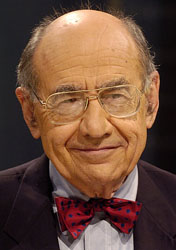
Friedell recently spoke with Frank Browning for Kaiser Health News. Here is an edited excerpt of that conversation.
Q. Diabetes is a fairly easy disease to understand and to combat, yet the problem continues to grow. What brought about the idea for the Tri-County Diabetes Program?
A. If you ask people about diabetes, they say, “Oh yeah, we all in our family have a touch of sugar.” This is the colloquial way of saying it. People actually do know that diet is important and maybe exercise is important, but they don’t do it.聽 And what we’re talking about, if you’ll forgive me for lapsing away from medical science, I think what I’ve been doing with the Friedell Citizens Community for the past 25 years, is community development.聽 This is really what we’re talking about.聽 When the community wants to do something it can do wonders — no matter what the economy is of the community.
Q. But aren’t there lots of options for people to get tested for diabetes in community settings and few people participate?
A. Well, I would suggest that is a consequence of focusing on individuals alone and asking them to do what’s good for themselves. Telling people that they can do good things for themselves in terms of health is remarkably inefficient.聽 What we are trying to say is that, we will take this screening capability to the churches and senior centers and other social centers, such as Wal-Mart, which will generate information about the program and people will come in and get screened. You have to have community awareness. The public has to acknowledge that diabetes in the community is a problem.
Q. How big is the problem?
A. There are something like 80,000 people in the three counties.聽 Of those, 10,000 are probably over 65 and maybe 2,800 or so of them have diabetes and know they have diabetes, but another 800 or so, don’t know they have diabetes.聽 And based on national statistics, of those 10,000 people over 65, 5,000 of them have pre-diabetes because so many are overweight.聽 And we also know that if you approach pre-diabetes and get people to lose 7 percent of body weight and begin exercising, you can prevent the development of diabetes in pre-diabetes patients.
Q. People stress the importance of community a lot, but we’re not talking about tight ethnic communities here in Kentucky. Some of these areas are very isolated. They don’t have newspapers, television or radio and few churches. How do you rely on a community to help get the message out?
A. You may be overstating what they don’t have or understating what they do have. The definition of community that I would use would start with geography.聽 We’re talking about counties.聽 And we’re recognizing the heterogeneity of people in the county and yet people in counties can unite about some things, they can unite about their high school football teams, their basketball teams. But if you’re going to do community development, there’s got to be a win-win.聽 There’s got to be something in it for the people, so the Tri-County Diabetes Program has to develop a real concern about diabetes in the community. We point out that half of the cases of new blindness in the country, in the state, are the result of micro-vascular problems related to uncontrolled diabetes. And we can talk about amputations and people see other folks with amputations.聽 So it would be up to the diabetes program, plus volunteers, people who are interested, to find ways to inform everybody.
Q. What kind of policy changes have to be put in place to galvanize this kind of community response?
A. Communities differ in what they are, who they are and how they approach things and so there has to be room for flexibility. You don’t want to prescribe the process. In policy, you have to deal with connecting people in the community. It’s obvious that physical inactivity and obesity are factors. So you have to begin working as early as possible.聽 And to be very direct about it, your policy has to affect the schools.聽 That’s the place where there is a captive audience.聽 If you get children familiar with the idea of proper nutrition and exercise, you’ll be a long way ahead.聽 But in terms of policy you have to convince the Department of Education, which feels that funding and making time for physical education takes away from some other educational purpose.聽 Secondly, you have to do something about the in-school lunches and the vending machines. If we really want to do something about diabetes we have to start working the schools.
Q. And seniors?
The interesting thing about people over 65 is that they all have Medicare, so you ask yourself or you ask the Medicare people, what will you pay for? If somebody has diabetes they will pay for the care of this individual through professional offices and so forth, provide the supplies and everything.聽 So then I say, what do you do if they have pre-diabetes? And the Medicare response is if somebody has pre-diabetes, we will check them twice a year to see if they’ve developed diabetes. We won’t do anything about their pre-diabetes, but when they get diabetes we’ll be all over their case.聽 This boggles the mind. So we’ve approached the Lexington YMCA to come to Prestonsburg and develop a rural diabetes wellness program, which is of interest, because I don’t think there are many YMCAs in rural areas.聽 So now the effort has been to screen people over 65 and if they find people with diabetes to get them into care, if they find people with pre-diabetes, to get them into a program.
麻豆女优 Health News is a national newsroom that produces in-depth journalism about health issues and is one of the core operating programs at 麻豆女优鈥攁n independent source of health policy research, polling, and journalism. Learn more about .This <a target="_blank" href="/news/kentucky-public-health-diabetes/">article</a> first appeared on <a target="_blank" href="">麻豆女优 Health News</a> and is republished here under a <a target="_blank" href=" Commons Attribution-NonCommercial-NoDerivatives 4.0 International License</a>.<img src="/wp-content/uploads/sites/8/2023/04/kffhealthnews-icon.png?w=150" style="width:1em;height:1em;margin-left:10px;">
<img id="republication-tracker-tool-source" src="/?republication-pixel=true&post=22414&ga4=G-J74WWTKFM0" style="width:1px;height:1px;">]]>This story was produced in collaboration with
LOUISVILLE — This city of 570,000 people is generally recognized as the home of the Kentucky Derby, mint juleps and bourbon. But few outsiders know it also hosts the largest concentration of nursing-home and extended-care companies in the nation.
The city didn’t start out with a central plan to win over the long-term care industry, says Ted Smith, Louisville’s director of economic development and innovation. He attributes the growth, which helped spark the city’s turnaround, to one of the buzz phrases in urban economic development: clustering.
The home-grown company was Humana, which has been headquartered in Louisville for a quarter century. As its influence grew, the health insurance giant created spinoffs and attracted like-minded businesses, including a .
Among the long-term care companies with headquarters here now are at least seven key players: Kindred Healthcare (the nation’s single largest operator of extended-care facilities), Trilogy Health Services, Atria Senior Living Group, Elmcroft Senior Living, ResCare, and Signature.
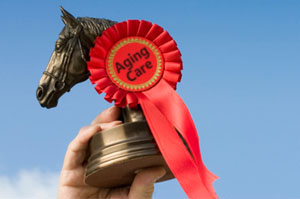
These big names have attracted related firms such as RecoverCare, which supplies medical equipment for aging patients, PharMerica, a pharmaceutical supply company, and small innovators, working on a variety of products and conveniences for the growing number of aging Americans.
In a recent , Mayor Greg Fischer said the city’s nursing home, assisted living, home health and Medicare management companies employ more than 4,000 people and produce $28 billion in revenue. “Add to this a skilled workforce, the presence of world-class suppliers, ground-breaking research and firms catering to the lifestyle changes of an aging demographic, and you have a key are of economic growth for the city and the nation,” he wrote.
Those companies claim nationwide revenues of $44 billion, opening 350 jobs in the last year alone, according to Kelly Armstrong, economic development director of the Chamber of Commerce’s Lifelong Wellness & Aging Care initiative.
“It’s been an evolution,” says Christian Furman, a gerontologist at the University of Louisville medical school, who noted that the movement helped spur the addition of a geriatrics fellowship program at the university.
“What we ended up with was, first, luck of the draw, good talent, people who like each other and maybe most important people who were very good at facilities administration,” says Vickie Yates Brown, ht the president and CEO of . Nucleus was created by the University of Louisville in 2008 to help launch innovative health and high-tech industries, many on its own downtown land. “Slowly, everybody started noting there was this niche area incubating, growing,” Brown says.
One of the key moves was luring ,聽operates 73 long-term care facilities in seven states, away from South Florida. The enticement of up to $4 million of corporate income tax credits over 10 years helped, but CEO Joe Steier says “access to talent was most important. There’s an incredible amount of expertise here.”
The clincher, he says, was “the whole alignment of public and private support including the University of Louisville that has made the city into a national and international center for aging care companies.” Steier added that every year at least 20 new start-up companies are created in the aging field in Louisville.
One of those is聽 (for long-term care), headed by John Reinhart, who came home to Louisville in 2010 to work for Signature when the company relocated. Reinhart, whose father was a nursing home administrator, has been seeking what he calls “disruptive” innovations-everything from a shock-absorbent floor covering to protect elderly people from breaking bones during a fall to a Dutch-developed walking and balancing device.
InnovateLTC is financed by Nucleus and Signature. Aside from identifying and market-testing aging care devices and service procedures, he has joined with a local venture capital group to raise $25 million to help aging care inventors launch their products.
Reinhart and his band of geriatric innovators like to say they’re readying themselves for the “silver tsunami” as baby boomers hit retirement age.
“We have 16,000 nursing homes in the U.S. with 1.6 million beds, but we’re looking at 71 to 75 million boomers who either hate the perception or the reality of what they see in conventional aging care services and nursing homes,” he notes. That perception is rattling the nursing home industry across the country.
A report by the Ohio-based architecture and health group makes the same argument, emphasizing that the emerging world of aging care will include gardening, artists’ and musicians’ studio and home-like living rooms and bedrooms — if they want to capture baby boomers’ dollars.
Similar movements are underway from New England to California. While he’s not connected with it, Reinhart points to a new $40 million renovation of Louisville’s largest continuing-care facility, the 82-acre Masonic Homes of Kentucky, originally designed by Frederick Law Olmsted on the grounds of what was a residence for widows and orphans just after the Civil War.
Lori Hess, Masonic’s executive director, regularly takes visitors through the main building. There are no standard alarm lights in the carpeted hallways; instead, patients can call caregivers on cell phones. In addition to dining rooms there are café bars, and residents can pick the times they’d like to eat and bathe.
“What we’re aiming for is resident-directed service instead of traditional care-giver directed programs,” she says, and adds that extended-care facilities that do not make that change may not survive.
Hess predicts the next wave of patient-clients to demand more innovation and amenities. “They expect a private room. They expect to have Wi-Fi in the room. They expect to have cable TV. A lot of facilities can’t provide that, or they don’t have the money.”
“You have to plan for that, but a lot of facilities don’t have that vision. They haven’t thought through that. You have to have that forethought,” Hess says.
This article was produced by Kaiser Health News with support from .
麻豆女优 Health News is a national newsroom that produces in-depth journalism about health issues and is one of the core operating programs at 麻豆女优鈥攁n independent source of health policy research, polling, and journalism. Learn more about .This <a target="_blank" href="/news/louisville-long-term-care/">article</a> first appeared on <a target="_blank" href="">麻豆女优 Health News</a> and is republished here under a <a target="_blank" href=" Commons Attribution-NonCommercial-NoDerivatives 4.0 International License</a>.<img src="/wp-content/uploads/sites/8/2023/04/kffhealthnews-icon.png?w=150" style="width:1em;height:1em;margin-left:10px;">
<img id="republication-tracker-tool-source" src="/?republication-pixel=true&post=24250&ga4=G-J74WWTKFM0" style="width:1px;height:1px;">]]>Videos: Profiles of Hazard, Ky. Residents
- Gerry Roll
- Beverly May
- Annie Fox
- Cathy Nance
Yet Hazard, which for 40 years was a coal boomtown, rests at the center of the worst life expectancy in America, according to a 2008 by the American Human Development Project. Diabetes, asthma, lung cancer and emphysema, heart disease and life-long obesity are all problems encountered in the waiting rooms of these facilities.
Very little is likely to change under any of the current initiatives focusing on health care reform, say some experts like Dr. Forest Callico, former director of the Appalachian Regional Hospitals and a rural health advisor to both the Clinton and second Bush administrations. “It’s not all about the money,” says Callico. “We have to transform the way we take care of people.”
Bad as most health measures appear in lower Appalachia, Callico says, there are enduring models in places like Hazard that could prove instructive to rebuilding healthy communities across the nation, both rural and urban. He cites the work of two women who have dedicated much of the last 20 years to building community health programs in two adjoining counties, Perry — where Hazard is 聳 and Harlan.
‘We’re out here dying’
Gerry Roll, who reached adulthood as a homeless, single mother, helped organize Hazard-Perry County Community Ministries, which despite its name has no religious mission. She wants to “create a community that values good health,” a vision that goes well beyond the cluster of hospital resources perched on the hill above her offices. It requires building a system that addresses everything from exercise and diet to regular medical screening, and includes services that support good health.
“We’re out here dying and we’re showing up in the emergency room when we’re half dead, instead of saying, you know what, I live in this community. I want sidewalks,” she says. “I want ambulance services. I want grocery stores convenient, (so) that all of my neighbors can get there. I’d like to see some form of public transportation,” much needed by people without cars in steep mountain country.
She advocates a community boot-strap approach in which residents come together as health consumers and pressure the system to meet their specific needs. As an example of how the agency works, Roll cites the area’s leading health problem: Type II or adult onset diabetes, largely linked to bad diet and a lack of exercise.
“We’ll have a patient who sees the doctor and the doctor says you need to change your diet, and here’s a diet and (the doctor) will hand them a sheet of paper, and will tell them to exercise more, to walk or go to the gym, will tell them everything to do,” she says. “And the person will sit there and say yes, yes, I’ll do that, I’ll do that. They may not do any of that. They may not be able to get to the store. May not know how to prepare the food. They may not want to exercise. And there’s no one to encourage them to do that.”
So Community Ministries “lay health workers” go into patients’ homes once or twice a week, call them on the phone, drive them to the grocery or even organize regular walks with their neighbors-in short , taking an “interest in their life.”
The health workers are almost always local people. Frequently they are previous clients of community health outreach projects who first became volunteers and then were trained on the job. During visits, they evaluate patients’ living conditions to see if they qualify for housing and medical care under an array of federal programs, and then complete oral inventories of each client’s health history. Afterwards they bring the clients into one of the community clinics established in the two counties, and then when necessary refer them to private practitioners who offer limited free consultations in the evenings.
Plenty of government programs,聽little knowledge of how to use聽them
Family nurse-practitioner Beverly May works with Roll at the Little Flower Clinic down by the Kentucky River in one of Hazard’s poorer neighborhoods. It and two clinics in Harlan County serve some 2,500 homeless or poorly housed people. She tells the story of an itinerant Baptist preacher whom she calls Charlie to protect his privacy. He had come in for a regular health screening, which always includes a blood sugar test for diabetes.
“Charlie said, ‘Oh no, I don’t have diabetes, you don’t have to stick my finger.'” A tall, robust, courtly black man-a descendant of the segregated coal camps set up in the 1920s-Charlie was always well dressed, usually wearing a freshly pressed white shirt even with his overalls. He had no health insurance, but he was sure he was perfectly healthy.
May insisted on the test, and found he had a dangerously high blood sugar level. “It didn’t take much medication, it didn’t take much health care” to fix Charlie’s problem, she said, but by doing that “you have greatly reduced someone’s risk of getting kidney disease, blindness, heart disease down the line. So by a dramatic drop like that, we have changed his picture entirely for his future. We do that every day.”
May says her patients typically come in without having had any care for years 聳 they may not have a job or insurance and can’t afford a doctor’s fee. Half the population of the two counties falls below the poverty line, and are covered by Medicaid or Medicare, but May says they frequently don’t know how to use those government programs for the poor and elderly.
Health care as a ‘joint enterprise’
The approach taken by Roll and May is at the heart of a statewide commission examining health care reform in Kentucky. It’s led by Dr. Gilbert Friedell, a crusty 82-year-old who taught at Harvard and the University of Massachusetts Medical School, and ran the University of Kentucky’s Markey Cancer Center after spending 12 years directing the National Cancer Institute’s bladder cancer project. He is a doctor’s doctor. But he believes that too often doctors are a major problem in creating healthy communities. “Health care,” Friedell argues, “has to be a joint enterprise between patients, families and physicians.”
In operation for about a year, the Friedell Committee, as it is known, has organized a series of working groups aimed at generating citizen activism on local health issues. One group is targeting a half dozen counties where citizens will be encouraged to challenge local boards of health on what they’re doing to improve local health markers. Another is targeting three counties where diabetes is prevalent, urging local leaders to press their health services to develop a coherent plan of coordinated care-from monitoring to diet to exercise to long-term treatment. A third group is focusing on how well-or poorly-counties are following a new law to enroll every child in a state-mandated health care program.
The objective is not only to evaluate current health care assets and deficits, but, more importantly, to create “citizen tools” that can be employed across the state to hold doctors, hospitals and county health boards accountable.
Nationally, Friedell believes, the health reform debate has to be transformed.
“Currently the issues are framed as insurance or not insurance,” he says. “Having insurance gives you financial access to a system, assuming there is a system. It gives you nothing more than that. And getting into the system, if there is one, doesn’t tell you anything about the quality of care, the availability of services, the way the patients and families are treated.”
Lowest life expectancy
Kentucky’s Fifth Congressional District, which includes Harlan and Perry counties, has the lowest life expectancy of any district in America: 72.6 years for men and 76.4 for women. Many factors contribute to those numbers and they聽would be little changed, Friedell says, by either a government-run system or a requirement that all people have insurance. Substantive change, he says, will only arrive built on a basis of re-ordered health values founded on programs like the one Gerry Roll and her colleagues have tried to build in Hazard.
An hour away from Hazard, across the corkscrew roads of Pine Mountain, is Kentucky’s second most famous coal town, Harlan-known for a half century of militant miners’ activism. Coal’s fortunes have declined sharply since the 1960s when more than 60 coal trains a day rumbled alongside the Cumberland River in downtown Harlan. In those days the United Mine Workers union established one of the region’s landmark hospitals to deal with miners’ growing health problems.
The UMW hospitals were long ago converted into non-profit hospitals known as the Appalachian Regional Hospital system. Today, the biggest health problem is diabetes and its associated cardio-vascular problems. As in Perry County, half the population qualifies for Medicare or Medicaid. But simply qualifying for public insurance hasn’t helped much, says Annie Fox, who about a decade ago helped organize a citizens’ committee to address local health problems.
The group, Harlan Countians for a Healthy Community (HCHC), took the same approach as Gerry Roll’s organization in Perry County-targeting everything from walking trails to clinical care to adolescent drug abuse prevention.
“As with so many issues,” Fox says, “we have this myopic kind of vision of what health is, or what housing is, or what drug abuse is: well, hey, they’re all utilized by the human body, and unless you deal with the whole issue, there’s going to be tons of fallout. That’s why it’s important that you get people in decent housing that they can have a refrigerator, they can have potable water, they can have decent sanitation.”
‘We’re planted where the need is’
It’s been a rough road keeping HCHC alive with ever-changing financing mechanisms, but gradually Fox’s group collaborated with community leaders to buy a house in a low-income neighborhood that has become part community center and part clinic. “We’re planted where the need is,” she says. “This is a very comfortable place for our clients. They say, ‘Wow, I’d love to be able to have a home like this.’ Part of our work is to help people realize that dream.”
Cathy Nance lives in one of 10 houses maintained by HCHC. Perched on Pine Mountain, the highest in the area, the small home has anchored her once troubled life.
Outreach worker Tracy Grubbs recalls the time they were working for the county and Nance came into work right after open heart surgery, with “big staples in her chest.” When Grubbs asked why she had come in, Nance said she had no place to live and couldn’t afford to stop working.
“I had no choice,” Nance says now. “I’m divorced and I didn’t have no other way but to go back to work. And then [when I had] the kidney cancer, it was the same thing. But my health just kept declining and the doctor took me off work.”
Unable to pay her rent, she was evicted from her apartment and moved in with friends. Then HCHC intervened. The program paid her rent on the house where she now lives until she qualified for Social Security disability, helped her buy new furniture using federal funds and filed requests with pharmaceutical companies for free medications. “If it hadn’t been for Tracy and her program, it’s no telling what would have happened to me,” Nance says.
Bringing diabetes under control
Fox estimates HCHC’s approach has saved Harlan’s Appalachian Regional Hospital at least a half a million dollars a year in non-compensated emergency room visits and other care. Though no countywide health statistics are available, both the Hazard and Harlan clinics also report that they have brought their 2,500 patients’ diabetes indicators down to very near the national norms.
Even so, that kind of success hasn’t ensured that organizations like HCHC and Perry County Community Ministries would find secure funding. HCHC, which won national acclaim for its community-driven approach, was funded as a model research program through the University of Kentucky’s Center for Rural Health. But the flow of dollars ended when the study was finished, which meant that Fox and her colleagues had to scramble to keep the program alive.
Currently, HCHC’s services result from a collaboration: Fox and Hazard’s Gerry Roll sat down to look at how they could gain access to longer-term state and federal support by joining forces. They creatively applied for money from a variety of sources 聳 and even enlisted a Rotary Club’s help.
The programs they run are the sort that former federal rural health advisor Forest Callico says will be essential to any national reform effort that takes actual care seriously. “The debate about health care transformation has always started with the assumption that it’s all about the money. I think that people in my profession abdicated leadership in health care a long, long time ago to the economists and the attorneys,” he says.
Financing alone will solve few of the problems of rural or urban health care, Callico says. He argues that the community initiatives stitched together like those in Harlan and Perry Counties provide solid bottom-up models for a profound shift in the overall health policy debate. “We can figure out from people who know each other saying, here’s how we can make these moving parts actually work together in a systemic way.”
This <a target="_blank" href="/health-industry/rural-health-care-kentucky/">article</a> first appeared on <a target="_blank" href="">麻豆女优 Health News</a> and is republished here under a <a target="_blank" href=" Commons Attribution-NonCommercial-NoDerivatives 4.0 International License</a>.<img src="/wp-content/uploads/sites/8/2023/04/kffhealthnews-icon.png?w=150" style="width:1em;height:1em;margin-left:10px;">
<img id="republication-tracker-tool-source" src="/?republication-pixel=true&post=21771&ga4=G-J74WWTKFM0" style="width:1px;height:1px;">]]>