This story was produced in collaboration withÌý
President Obama is fighting to save his signature health law on two fronts: in the Supreme Court and on the campaign trail, where Republican candidates are promising to kill the Affordable Care Act.
Yet even if the president prevails, he faces another daunting challenge: implementing the law in a seamless, timely manner. The Centers for Medicare & Medicaid Services is charged with making the health law work, drafting regulations, setting up new programs and providing oversight. But for years Congress has undermined the agency’s leadership and potential effectiveness, raising questions about its capabilities and resources even as the health law ramps up its responsibilities.
For starters: consider the revolving door leadershipÌýat CMS.
Since its creation in 1977 as the Health Care Financing Administration, the agency has had Ìýin 35 years – an average tenure of just 14 months. The longest-serving administrator held the job for four years and five months. The shortest: two months.
The most recent CMS administrator, Dr. Donald Berwick, resigned in December after 16 months. His replacement, Marilyn Tavenner, currently holds the title of acting administrator. That’s hardly uncommon.
Acting administrators have run the agency 20 percent of the time. And the trend appears to be increasing: the Senate hasn’t confirmed a full-time CMS administrator since 2006, when Mark McClellan resigned midway through the second Bush administration.
“Imagine if somebody went two years without a Secretary of Defense,” Thomas A. Scully, who was CMS administrator under President George W. Bush, told the journal Ìýin April 2010.
For decades, government and private researchers have pointed to a widening gap between the agency’s responsibilities and resources. As the largest purchaser of health care in the world, with a budget of $820 billion, CMS pays for the care of one in three Americans, and interacts daily with thousands of hospitals, doctors and other providers.
4,900 vs. 62,000 Employees
The number of Medicare and Medicaid beneficiaries has soared since the programs started in 1966, with tens of millions of Baby Boomers and uninsured expected to swell the rolls even more in coming years. Yet today the agency has the same number of employees it had during the during the Carter administration – about 4,900.
By comparison, the Social Security Administration, with a smaller budget, has 62,000 employees. Even including work that CMS outsources to private contractors – bill-paying, coverage decisions and quality oversight – the agency operates with about half as many employees as Social Security.
The shortages have hurt the agency’s ability to implement crucial reforms, ensure adequate oversight of hospitals and other providers and find ways to stem spiraling medical costs, researchers say. For years, CMS executives weren’t even sure if they could consider cost as part of their coverage decisions, paying high-quality and low-quality providers the same amount.
In 1999, a bipartisan group of former administrators and health policy experts wrote an Ìýto Congress decrying “the mismatch” between the agency’s resources and its “mammoth assignment.”
Three years later, the nonprofit National Academy of Social Insurance , “This mismatch has grown worse in recent years as CMS’ responsibilities have increased dramatically.”
“Really, when you consider what they have to work with, they do a fairly remarkable job,” adds Robert A. Berenson, a former CMS administrator, and now a health researcher at the Urban Institute. “Assuring adequate staff at CMS has not been a priority for Congress even though it might more than pay for itself in more efficient programs.”
‘What’s Missing Is … A Consolidated Strategic Vision’
Berwick, a physician and national expert on health quality, said he was “impressed and gratified” by the way senior staff rallied around his calls to implement the sprawling health law. But much of staff time is taken up writing rules and regulations.
Career executives “perform these core components well,” said Berwick. “What’s missing is a kind of coherence and consolidated strategic vision of where to head next.”
In recent years, Congress has added more programs and complex legislation to the agency’s plate, including overseeing a 2003 prescription drug benefit for seniors, ensuring patient privacy, helping to weed out waste and fraud and developing a system for grading hospitals and nursing homes.
The Obama administration’s nearly two-year-old health law adds yet more duties: helping to oversee insurance exchanges in 50 states, operating a program to spur ways of delivering care more efficiently, and guiding big expansions of Medicare and Medicaid, the agency’s core programs.
CMS will be expected to do so even as “frequent changes” at the top “have inhibited the implementation of long-term Medicare initiatives or the pursuit of a consistent management strategy,” according to a 2000 study by the U.S. General Accounting Office.
For years, the agency was criticized for focusing more on getting checks out to hospitals and doctors than ensuring quality or finding ways to trim health spending. Part of that had to do with Medicare’s unique history. For the first 11 years of its existence, the program was housed in the Social Security Administration, which issues monthly income support checks to retired Americans.
But even after the Medicare and Medicaid programs were put under one roof in 1977, the agency continued to struggle, facing criticism from Congress and medical providers. “It’’s almost paradoxical the extent to which Medicare is so important and valued in the lives of so many families and communities, and the overwhelming communication the people running the program get is hostility,” said Bruce Vladeck, an administrator in the Clinton administration.
Not Just A Check-Writing Agency
Gail Wilensky, who ran the agency for two years under President George H.W. Bush, said CMS has evolved into a much more sophisticated operation. “It’s not just a check-writing agency anymore,” she said. But the turnover at the top sends the wrong message to employees, who respond by being “more inward and protective.”
The CMS administrator’s position is a political appointment requiring Senate confirmation. Berwick’s name surfaced as a potential CMS leader shortly after Obama’s election. A pediatrician by training, Berwick gradually shifted his focus to quality improvement, steering the nationally recognized Institute for Healthcare Improvement, a nonprofit based near Boston.
The Obama administration waited to submit his name for the CMS position until April 2010, one month after it won passage of the Affordable Care Act. By then, Republicans were openly attacking the legislation as unduly burdensome and costly. Berwick never did get a Senate hearing and was appointed by the president during the congressional recess that July.
The recess appointment avoided what many predicted would be a losing battle with Senate Republicans. Some of them accused Berwick of promoting rationing, based on favorable comments he had made in the past about the British National Health System. Sen. Pat Roberts, R-Kan., said Berwick’s focus on cutting costs would lead to a rural health system consisting “of a Band-Aid and a bed pan.”
In an interview, Berwick said Republicans “twisted and distorted” his words and used the agency as “a political football. It’s a game to them,” he said. Berwick added that the churn in administrators “demoralizes and confuses” senior staff and hurts the agency’s ability to develop a consistent long-term vision. “What happens, I think, when you have a lot of turnover is senior staff loses its confidence and is less willing to take risks.”
Wilensky said she was “especially frustrated” with what happened to Berwick. “I like Don Berwick. I don’t always agree with him but I have a lot of respect for what he has done and for his passion for the great issues he takes on.”
Berwick had little choice except to resign. His acting term was set to expire at the end of 2011 and 42 Republican senators had already announced their intentions to block his confirmation as a full-time administrator. The administration nominated Tavenner, a former Virginia health official and executive with the for-profit Hospital Corporation of America, just days later.
Several prominent Republicans, including Republican House Majority leader, Eric Cantor, said Tavenner was “eminently qualified” to run the agency. But months later Tavenner still hasn’t gotten a hearing and, with the heated politics of an election year, some wonder if she will.
This article was produced by Kaiser Health News with support from .
Â鶹ŮÓÅ Health News is a national newsroom that produces in-depth journalism about health issues and is one of the core operating programs at Â鶹ŮÓÅ—an independent source of health policy research, polling, and journalism. Learn more about .This <a target="_blank" href="/medicaid/cms-chief-job/">article</a> first appeared on <a target="_blank" href="">Â鶹ŮÓÅ Health News</a> and is republished here under a <a target="_blank" href=" Commons Attribution-NonCommercial-NoDerivatives 4.0 International License</a>.<img src="/wp-content/uploads/sites/8/2023/04/kffhealthnews-icon.png?w=150" style="width:1em;height:1em;margin-left:10px;">
<img id="republication-tracker-tool-source" src="/?republication-pixel=true&post=23840&ga4=G-J74WWTKFM0" style="width:1px;height:1px;">]]>This story was produced in collaboration with
Last October, executives from some of the largest and most prestigious children’s hospitals gathered in Philadelphia to talk about the future of children’s care. Panel topics ranged from the impact of the federal health overhaul law on children’s hospitals to the nation’s debt crisis and the significant role that health spending plays in it.
In the past, the mood at such gatherings was largely upbeat, reflecting the exceptional market power of children’s hospitals, which were enjoying strong profits and record growth. But now, confronted with a rapidly shifting landscape for children’s care and a battering economy, the leaders were worried.
“There was a lot less arrogance in the room than I’ve seen before,” said Marc A. Bard, a health care expert with Navigant Consulting. “There was a lot more humility. They were saying they don’t have all of the answers.”
After years of being largely immune to concerns about costs, children’s hospitals are being buffeted by powerful economic and political forces. Chief among them: state lawmakers are slashing Medicaid payments to children’s hospitals as part of their efforts to close budget gaps. The federal-state health plans account for about half of children’s hospitals’ revenues. Even small cuts, like the 3 percent payment reduction Florida lawmakers enacted this spring, will severely strain budgets, advocates say.

Day ThreeÌý
Facing A Leaner Future
Executive CompensationÌýÌý
Big Salaries And Rich Benefits | Chart
Data ChartÌý
The Growth Of Children’s Hospitals
Day TwoÌý
One City, Three Hospitals
Day OneÌý
The Rise of Children’s Hospitals
“In past years, children’s hospitals have been held harmless in state budget negotiations,” said Tony Carvalho, president of the , which includes children’s hospitals. “This year, with the size of the budget deficit, the mood in the legislature was everybody had to participate.”
In California and Florida, lawmakers are shifting Medicaid populations into more restrictive managed care plans. Hospital officials estimate the moves will cost them millions in lower payments. Cindy Ehnes, president of the , said children’s hospitals are suffering “from death by a thousand cuts. This year is no exception, just worse.”
Meanwhile, cuts to physician training programs have some children’s advocates worried that there won’t be enough pediatricians and specialists to provide care. That’s particularly true in Texas, where the children’s population is growing and hospitals already struggle to fill slots. Conversely, Ohio, California and other states with aging populations are seeing a decline in the number of children, even as hospitals invest billions in new facilities and payments are trimmed.
At Florida Hospital for Children, regional vice president for government affairs Rich Morrison worries that Medicaid cuts could undercut children’s hospitals’ ability to cover their debts. “That’s the question I have. Can you really sustain your capital infrastructure given what you’re going to get paid by Medicaid?”
Children’s Hospital Colorado CEO James Shmerling also worries about paying the bills even as his hospital undergoes a second expansion in five years. “Will there come a time when the demand slacks off. I ask myself that question every night,” he said.
More Growth But At A Slower Rate
Two factors will continue to help drive demand, Shmerling said. As small community hospitals abandon the pediatric business, those patients will gravitate toward large regional centers like his. Medical research will also lead to new treatments, drawing more patients. In effect, large, independent children’s hospitals will act as super providers with regional and national bases.
“We still think there’s going to be demand for children’s hospitals,” he said. “Maybe not at the same rate, but we will continue to grow.”
But even as patient volume increases, Shmerling expects revenues to decline, “squeezing margins.” To adjust, children’s hospitals will have to become even more efficient. “If the staff says we’re operating at 95 percent efficiency, that still leaves 5 percent. In our case, 5 percent equals roughly $35 million in [potential] savings.”
Some experts say it is time for children’s hospitals to share in the sacrifices. “For a long time the mentality has been we’ll do anything for any kid and costs be damned,” said Terry Dougherty, a former executive at Children’s Hospital Boston, who until recently oversaw Massachusetts’ Medicaid program.
“At the end of the day, folks have to be more realistic. We have to be thinking about things we do and how to do that in the best fashion.”Ìý
Although some hospital leaders say they’re heeding that message, changing may be difficult. “For years, the attitude of children’s hospitals was that they had a monopoly,” Bard said. “Everyone else had to change but they didn’t. That’s a very dangerous strategy, especially with everything that is going on.”
The 2010 federal health law promises to further reshape the way children’s hospitals provide care, offering incentives for hospitals and doctors to operate efficiently, reduce fragmented care and improve communications among all those that see patients.
Doing so requires an emphasis on primary care, with a goal of avoiding expensive hospital stays for asthma, diabetes and other costly but manageable chronic diseases.
“Most serious policy experts would say to improve child health it’s about treating asthma, getting kids into early education; it’s about exercise, about nutrition, a lot of care that sometimes gets overlooked,” said , a physician and prominent health researcher at Dartmouth Medical School.
That could require a shift in thinking for some children’s hospitals, Fisher added, with less emphasis on “over-investing in costly hospitals” and more attention paid to “patients and communities.”
Many children’s hospitals say they are already moving in this direction, shifting as much care as they safely can to less-costly outpatient settings. Only the sickest children are admitted to the hospital, they add.
“Children’s hospitals are very much aware of the need to provide more for less,” said Larry A. McAndrews, until last week the head of the National Association of Children’s Hospitals and Related Institutions, an industry group. “Some of that focus is on quality. The focus is also to find innovative ways of delivering care by working with their physicians, providing more ambulatory care. The hope is there will be some way of controlling costs.”
The impact of all these challenges will vary from hospital to hospital, depending on geography, poverty levels and other factors, experts said.
Finding More Patients And Revenue Abroad
Elite hospitals such as Children’s Hospital of Philadelphia (CHOP) and Children’s Hospital Boston dominate their markets and enjoy national reputations.Ìý They have continued to post profits during the economic downturn. Now, CHOP executives are looking to extend their geographic horizons, traveling to Hong Kong and Singapore as part of an ambitious plan to build international referrals of well-heeled patients.
“CHOP isn’t immune to economic pressures,” CEO Steven M. Altschuler said. “We’re looking at ways to diversify our revenue. Most of these patients tend to have generous insurance paid for by their governments.”
On the other hand, children’s hospitals treating large numbers of poor patients may struggle as Medicaid budgets are cut, patients are moved into managed care and employers and insurers apply increased pressure to lower rates. That will limit the ability of hospitals to charge private insurers more to cover some of the cost of treating poor patients. It’s a common industry practice called cost-shifting.
In some areas of Texas, California and Arizona, up to three-fourths of all children are covered by Medicaid, hospital officials say, leaving little margin for error financially.
“We have hospitals in the South, especially along the border, where most of the patients are Medicaid. Those hospitals are definitely getting squeezed,” said Bryan Sperry, president of the .ÌýÌý
“Medicaid is already grossly underfunded, so even a small cut can have a big impact.”
This spring, Texas lawmakers voted to slash Medicaid payments for outpatient services by 8 percent at children’s hospitals. Those payments currently cover just 84 percent of the hospitals’ costs, Sperry said.Ìý A fund that helps to pay for training doctors and to cover Medicaid shortfalls also was cut by about $35 million a year, according to Sperry.Ìý
“Out inpatient reimbursement was not cut,” Sperry said. “We did manage to protect that. That’s one piece of good news.”Ìý
In June, Phoenix Children’s Hospital opened a new 11-story hospital with 478 beds and the potential to grow to 621 beds. Including new ambulatory clinics and other construction, the project cost $538 million.
About 55 percent of the hospital’s patients are covered by Medicaid. The program has cut payments each of the last three years, CEO Robert Meyer said, leaving Phoenix Children’s with a shortfall of $52 million. Management has tried to cover the cuts by trimming expenses and charging commercial insurers higher rates.
“No doubt we’re cost-shifting,” Meyer said. “But it’s getting harder and harder to do. I’d like to say Aetna, United Healthcare and the rest will give me 20 percent cost increases to offset the Medicaid losses, but I don’t think that’s going to happen.”
California’s budget plan calls for changes large and small in its Medicaid program, called Medi-Cal, which covers nearly three million children. According to advocates for children’s hospitals, the moves range from increasing hospital co-pays for families to shifting nearly 1 million children from California’s separate low-income Healthy Families plan into Medicaid managed care.
Mandatory co-pays for Medi-Cal beneficiaries of up to $200 for hospital stays and $50 for emergency room visits are “a backdoor cut in reimbursement for providers,” said Ehnes. Low-income patients won’t be able to come up with the money and hospitals will be stuck.
Advocates worry that children shifting from Health Families to Medicaid will have to switch doctors. Not all Healthy Families physicians participate in the state’s Medicaid plan because of its low fees.
“We’re worried whether the access to care will be there,” said Kelly Hardy, director of health policy for Children Now, a nonprofit. “That’s critical. Will kids be able to keep their doctors?”
A far different issue pressing California children’s hospitals is the state’s aging population. USC researchers recently reported that the number of five- to nine-year-old children in California declined by 8.1 percent in the last decade. Even more surprising, the number plummeted by 21 percent, from 802,047 to 633,690, in Los Angeles County.
Hospital officials and advocates say the decline reflects the severe housing and budget crisis that has pummeled California for several years now. Families have moved out of state or relocated inland to areas that are still growing.
Children’s hospitals say they will continue to draw patients even with the population shift.
“It is true that because of the downturn of the economy families are leaving California for states where the cost of living is less,” said Ehnes. “However, there will always be a need for children’s hospitals because we take care of the sickest of the sick children – children that other providers and community hospitals don’t have the expertise or equipment to care for.”Ìý
But to be on the safe side, some children’s hospitals are looking beyond their traditional borders. Cincinnati Children’s Hospital Medical Center markets its specialized services in Kentucky and Indiana, among other states. The children it attracts often suffer from complicated, expensive conditions, said Scott Hamlin, the hospital’s chief financial officer. While only a small percentage of overall admissions, they account “for a great portion of the revenue. Just shy of 50 percent of our inpatient revenue comes from kids outside of our primary referral region.”
Ìýis setting its sights even farther, to the Middle East and Asia. Revenue from CHOP’s International Program has climbed from $6 million to $30 million in 18 months, CEO Steven Altschuler said in an interview. That’s a fraction of the hospital’s estimated $1.8 billion in revenue. However, the figure could swell to “100 to $150 million in a few years,” he said. “That’s real money.”
The income represents a buffer against “a lot of negative headwinds in terms of reimbursements.” Currently, most of the patients come from Dubai, Kuwait, Saudi Arabia and other oil governments with generous health insurance. The plans pay “10 to 20 percent higher than you get from the best insurers here,” Altschuler said.
In April, Altschuler and several other CHOP executives flew to Hong Kong and Singapore to meet with doctors and hospital officials to highlight CHOP’s services. That followed a series of “house calls” to Embassy Row in Washington over the last 18 months.
“We’re knocking on doors and meeting with medical attaches,” Altschuler said. “These days you can’t do too much. Even if you are as big and sophisticated as Children’s Hospital of Philadelphia, you need to be looking for an edge.”
Â鶹ŮÓÅ Health News is a national newsroom that produces in-depth journalism about health issues and is one of the core operating programs at Â鶹ŮÓÅ—an independent source of health policy research, polling, and journalism. Learn more about .This <a target="_blank" href="/health-industry/childrens-hospitals-part-three/">article</a> first appeared on <a target="_blank" href="">Â鶹ŮÓÅ Health News</a> and is republished here under a <a target="_blank" href=" Commons Attribution-NonCommercial-NoDerivatives 4.0 International License</a>.<img src="/wp-content/uploads/sites/8/2023/04/kffhealthnews-icon.png?w=150" style="width:1em;height:1em;margin-left:10px;">
<img id="republication-tracker-tool-source" src="/?republication-pixel=true&post=29371&ga4=G-J74WWTKFM0" style="width:1px;height:1px;">]]>This story was produced in collaboration with
Most CEOs at the largest and richest children’s hospitals are paid more than $1 million in salary and benefits annually, an analysis of hospital tax records shows.
Including retirement payouts and bonuses, three CEOs collected $5 million or more in 2009, the most recent year for which compensation figures were available, public tax returns show. Three others received $2 million. In all, 22 of 25 CEOs collected at least $1 million.
Some CEOs received bonuses and perks more commonly associated with the private sector, including cars, first class travel, country club memberships and special retirement packages worth millions.

Zechman
As the head of Children’s National Medical Center in Washington, D.C., Edwin K. Zechman Jr., who retired in June, was “entitled” under his employment contract to take his spouse “on up to 7 trips per year for conferences,” according to the hospital’s tax return. The hospital said in a statement that Denise Zechman’s “presence at national business and association meetings supported her ability to represent and advocate for the needs of children generally and for Children’s National specifically with national child health and health policy advocates and leaders.” Zechman received nearly $2 million in compensation in 2009, including the value of any trips on which his wife accompanied him.
The pay packages have continued to climb even as the economy has languished and millions of Americans struggle to pay their health care bills. For some, the generous compensation raises questions about the mission of children’s hospitals, which operate as tax-exempt charities.

Day ThreeÌý
Facing A Leaner Future
Executive CompensationÌýÌý
Big Salaries And Rich Benefits | Chart
Data ChartÌý
The Growth Of Children’s Hospitals
Day TwoÌý
One City, Three Hospitals
Day OneÌý
The Rise of Children’s Hospitals
“Hospital CEOs, including those at children’s hospitals, are among the most lavishly compensated executives in the nonprofit field,” said Daniel Borochoff, president of the American Institute of Philanthropy, a charity watchdog group based in Chicago.
“These seven-figure CEO pay packages make it hard for nonprofit hospitals to justify their tax-exempt status,” he added. “If hospital CEO compensation were more in line with other large nonprofits then there could be more funding for community benefits such as free or discounted health care or important medical research.”
An advocacy group for nonprofit hospitals and other health care groups warned its members in 2009 that the pay packages were coming under increasing scrutiny from lawmakers and regulators. “Boards would be wise to streamline their executive compensation programs to make them less tempting targets,” a report prepared for the Alliance for Advancing Nonprofit Health Care advised.
The report pointed to cars, bonuses, generous retirement payouts and country club memberships as also likely to attract criticism. “Many nonprofit organizations have been pressing their luck by imitating patterns in the for-profit sector,” it noted.
In 2009, CEO compensation at the 25 largest independent children’s hospitals ranged from a high of nearly $6 million to a low of $686,125, records show.
In all, CEOs collected more than $49 million, including deferred income and supplemental retirement awards, for an average of nearly $2 million each.
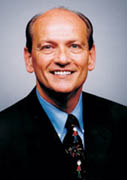
O’Donnell
The highest compensated CEO was Randall L. O’Donnell of Children’s Mercy Hospital in Kansas City. The longtime executive received compensation totaling $5,987,194, records show. The figure included a special payout based on his years of service of nearly $4.1 million. Excluding the payout, O’Donnell received $1.9 million.
O’Donnell earned the supplemental pay over a 15-year period, according to David Oliver, chairman of the hospital’s compensation committee. In that time, O’Donnell transformed Children’s Mercy from a small, local hospital with 159 beds to a children’s care network with 314 beds, 20 regional clinics and more than 6,000 employees. “We are in fact a regional and at times national destination,” Oliver said.
A spokesman for Children’s Medical Center of Dallas also pointed to hospital growth numbers in defending CEO Christopher J. Durovich’s compensation package. “Under Chris’ exceptional leadership, Children’s has become a world class pediatric health care organization, grown its total patient volume by 73 percent and created more than 2,000 new jobs,” said the hospital’s chairman, Robert A. Chereck.

Durovich
Durovich ranked among the highest-compensated CEOs in 2009 at $2.8 million, according to the hospital’s tax return. That included $1,291,245 in deferred income. Chereck said Durovich’s compensation arrangement was unique in that half of his potential earnings are contingent on the hospital meeting selected goals. “We expect exceptional performance from our chief executive officer. When we get it we expect to pay for it,” Chereck said.
Hospital officials say CEO compensation reflects the size and complexity of modern children’s hospitals with operating budgets of up to $1 billion in some cases. They add that their pay is set by independent committees and often reviewed by outside benefits consultants.

Altschuler
“It’s a very rigorous process,” said Steven M. Altschuler, CEO of Children’s Hospital of Philadelphia, whose total compensation is about $2 million annually. “I think our results speak for themselves. We’ve had a very good financial performance.”
Under Altschuler, CHOP has more than doubled in size in the last decade and expects to report $1.8 billion in revenue this year. “Charity or no charity, it is certainly a complex business that has to be run here,” said the 57-year-old physician-executive.
The pay packages of children’s hospitals’ CEOs rank among the top of nonprofit organizations, records show. In some cases, they are more generous. The head of the American Red Cross, Gail J. McGovern, is paid about $450,000 annually. That charity has a $3.3 billion budget.
Pay isn’t always linked to size. Children’s Hospital/Medical Center in Akron, Ohio, ranked 22nd in revenue in 2009, taking in $435 million. Its president, William H. Considine, was the 7th-highest paid CEO.
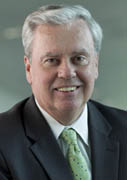
Considine
Considine’s total compensation package was $5.1 million. That included a special payout of nearly $4 million based on years of service. Excluding the payout, Considine received nearly $1.6 million. The hospital also paid for a country club membership and car for Considine, but declined to provide details.
Laurie Schueler, a spokeswoman for Akron, said Considine is “currently the longest serving CEO of a children’s hospital in the country,” at 31 years. Under his leadership, she added, Akron has experienced “phenomenal growth” and is “the largest pediatric provider in Northeast Ohio.”
The IRS does not limit salaries or perks for charity executives. Rather, it looks at whether an executive appears to be enriching himself at the charity’s expense. One measure is if compensation accounts for an inordinately large percentage of the overall budget.
“Given their size, I don’t think that would be an issue with the children’s hospitals,” said Marcus Owens, former head of the agency’s exempt organizations division and currently an attorney with Caplin & Drysdale in Washington, D.C.
Â鶹ŮÓÅ Health News is a national newsroom that produces in-depth journalism about health issues and is one of the core operating programs at Â鶹ŮÓÅ—an independent source of health policy research, polling, and journalism. Learn more about .This <a target="_blank" href="/health-industry/childrens-hospitals-ceo-compensation/">article</a> first appeared on <a target="_blank" href="">Â鶹ŮÓÅ Health News</a> and is republished here under a <a target="_blank" href=" Commons Attribution-NonCommercial-NoDerivatives 4.0 International License</a>.<img src="/wp-content/uploads/sites/8/2023/04/kffhealthnews-icon.png?w=150" style="width:1em;height:1em;margin-left:10px;">
<img id="republication-tracker-tool-source" src="/?republication-pixel=true&post=29354&ga4=G-J74WWTKFM0" style="width:1px;height:1px;">]]>This story was produced in collaboration with
With strict limits on medical facilities and equipment, Florida seems to set a high bar for building costly new hospitals. Among other criteria, organizations are required to show they won’t duplicate existing services and drive up costs.
In 2006, regulators twice rejected applications from the Nemours Foundation to build a children’s hospital in Orlando, concluding it wasn’t needed. The area already had two large children’s hospitals, they noted. Adding another could fuel health inflation and hurt quality by cutting into the business at the existing hospitals.
But Nemours refused to accept no as an answer. The powerful Jacksonville-based health charity, one of the largest and richest in Florida, started marshaling political and civic support. Among benefits it touted was the economic impact of a new hospital, including thousands of high-paying jobs. Backers rallied around the plan, deluging the state capital with more than 1,000 letters of support.
“Nemours has an outstanding national medical reputation, and prodigious financial resources,” the local League of Women Voters wrote.

Day TwoÌý
One City, Three Hospitals
Regional ReportsÌý
Arizona
Chicago
Denver
Ohio
Pittsburgh
Texas
Day OneÌý
The Rise of Children’s Hospitals
The two existing children’s hospitals opposed Nemours’ plan. So, too, did some of Nemours’ doctors, who left to join other hospitals. The Florida Health Care Coalition, an employer group aiming to lower health costs, also questioned the need for it.
“There is this idea in health care that if you build it they will come,” said Becky Cherney, then head of the coalition. “That’s never a good thing in health care. It’s very egotistical…and drives up costs.” Ìý
But the appeal of children’s hospitals as caregivers for sick kids is powerful and unique. Even as regulators continued to say another children’s hospital wasn’t needed, they approved Nemours’ plan in February 2008 to build a seven-story, $400 million children’s hospital and outpatient clinic complete with healing gardens and nature trails.
The story of how Orlando got a third new children’s hospital when most cities only have one is more than a tale of wealthy health care providers pressing their case. It is also about the pressures facing state regulators charged with restraining spiraling health costs. Attempts to limit expensive new hospitals, MRIs and other technologies have been under attack almost since the first laws requiring “certificates of need” were passed in the early 1970s.
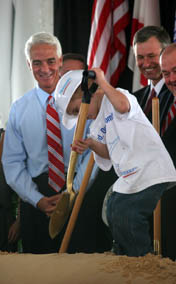
In 2009,Ìý at a ceremony attended by then Gov. Charlie Crist, local politicians and civic leaders.Ìý

Gov. Charlie Crist attended the groundbreaking of Nemours Children’s Hospital in Feb. 2009 (Photo by Jason Greene/Orlando Sentinel).
Ìý“The third time was the charm, I guess,” said Richard Morrison, vice president of government relations for Florida Hospital, which operates a 200-bed children’s hospital in Orlando. “They spent a lot of money making their case, and they were effective doing it.”
After they gained approval, several Nemours officials contributed a total of $4,500 to the re-election campaign of state Rep. Dean Cannon, a Republican from Winter Park who helped to negotiate the final agreement with the state and other two children’s hospitals. A Nemours spokeswoman said at the time that its executives were free to support whomever they liked. Cannon’s office did not return e-mails or phone calls for comment.
Florida regulators declined to discuss their decisions in the Nemours case saying they didn’t have time for detailed questions. Nemours officials turned aside repeated interview requests to discuss why they insisted on building in Orlando instead of a less developed area of the state, or why they weren’t willing to merge their plans with one of the existing children’s hospitals.
In bond filings and other reports, Nemours’ officials have said that they will be providing much needed care to a growing community. “A key objective of the new hospital is to establish Central Florida as a leading health care region in the country through pediatric research, advocacy, and training,” Nemours wrote as part of a $300 million bond offering to fund its new hospital.
Like most large, powerful nonprofits, Nemours has its own institutional ambitions. An internal vision statement notes that Nemours seeks to be recognized as one of the nation’s leading health care systems. In its various state applications, Nemours officials said they aspire to be ranked among the nation’s elite children’s hospitals.
The foundation serves as an umbrella organization for all of Nemours’ health operations. In addition to the new Orlando children’s hospital, scheduled to open next year, Nemours owns and operates a 200-bed children’s hospital in Wilmington, Del., and several clinics. In 2009, the foundation reported $662 million in revenue, including $94 million from the $3.1 billion trust of the late industrialist Alfred I. DuPont, who directed his estate to create the charity.
Nemours’ decision to build its own children’s hospital in Orlando evolved over time. In 1996 Nemours started to share its specialist physicians with the 160-bed Arnold Palmer Hospital for Children, named after the legendary golfer and benefactor. “For a number of years we worked really well with Nemours,” recalled Arnold Palmer’s longtime CEO, John Bozard. “It was a real partnership. Some of our best physicians were from Nemours.”
But in the mid-2000s the relationship began to sour. Bozard said there were disputes over money, physicians and plans for a new hospital that Nemours and Arnold Palmer officials were discussing building together at the time.
“They never mentioned anything about a separate inpatient facility, Bozard recalled. “But things started to get strange after that. They wanted to negotiate everything.”
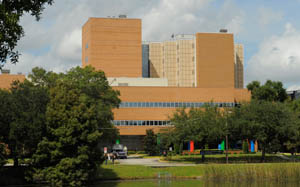
Arnold Palmer Hospital for Children first opened in Sept. 1989 (Photo by Scott A. Miller for KHN).
At one point, Bozard said, Nemours representatives offered to buy the Arnold Palmer Hospital. “We actually told them it was not for sale. They wanted to know if they could buy in as a partner. We told them we would entertain a 50-50 partnership. They turned that down. They said it had to be 51 percent.”
Cherney attempted to get the two sides to work out their differences, arranging meetings with doctors and top executives. “We said why don’t you two combine? It’s supposed to be about the kids.”
After a while, the meetings collapsed. “When you meet with docs it becomes a very egotistical thing, a turf war,” Cherney said. “They both just said we can’t get along. We each have to be the boss.”
In 2005, Nemours informed Arnold Palmer that it intended to file a “certificate of need” with state health planners to build its own children’s hospital about four miles from downtown Orlando. Foundation executives stressed that their hospital would be devoted solely to children, unlike the other two hospitals, which are part of larger adult systems.
Executives of the two other children’s hospitals were upset by the proximity of the Nemours’ site. They also said they were offended by the implication that Nemours would provide superior care. “Arnold Palmer and Florida Hospital are both large, well-respected children’s hospitals,” Morrison said. “It turned into a slugfest after that.”
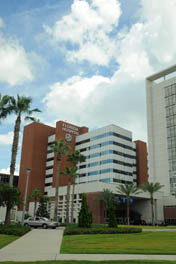
Florida Hospital in Orlando is part of a 2,188-bed hospital system with seven locations (Photo by Scott A. Miller for KHN).
The application was submitted to the Florida Agency for Health Care Administration in Tallahassee, where health planners reviewed it. TheÌý that the Orlando market already had a surplus of pediatric beds; the two existing children’s hospitals were operating below capacity and could accommodate future growth.
Most cities have enough children to support a single children’s hospital, said Larry A. McAndrews, until last week the head of the National Association of Children’s Hospitals and Related Institutions. “That’s what the market will support. There are exceptions. But Orlando stands out. I can see how people might have some questions.”
Undeterred, Nemours officials filed a second application. They stressed that their hospital would provide more complex, cutting edge care than the two other children’s hospitals. “Among the applicant’s expectations is being recognized nationally as a ‘top tier’ children’s hospital.”
There is no official top tier designation for children’s hospitals. The reference apparently was to an annual survey published by U.S. News & World Report ranking children’s hospitals according to selected criteria.
The state health planners noted that Nemours had operated the Alfred I. DuPont Hospital for Children in Delaware for decades without achieving an overall top ranking. They rejected the second application. “Need is not demonstrated,” they wrote.
By this point, in 2006, Nemours officials had started to scramble. They initiated anÌý reaching out to politicians, civic leaders and media outlets.
They also set up a website and polled Orlando area residents, reporting that 95 percent of those surveyed favored their plan.
“There was a lot of community support because they were bringing in new money,” said Morrison. “It was all about jobs.”
Nemours looked at a new location near the airport called Lake Nona. The site includes the University of Central Florida’s new medical school, the Burnham Research Institute and a VA center. A new children’s hospital would nicely fit the vision of local politicians of making Orlando a medical destination.
“Nemours selected central Florida as the location for a new facility in order to participate in the region’s development into a leader in medical care and research,” Nemours said in a 2009 bond document.
Belle Isle Mayor William G. Brooks echoed that theme in a . “What Nemours brings is not just more beds,” he wrote, “but a global resource and name in medical research and treatment.”Ìý
Florida regulatorsÌý the hospital wasn’t needed. But this time they approved Nemours’ plan, linking it to the larger efforts to develop Orlando’s medical hub.ÌýÌý
“A new administration had come in,” Morrison said, referring to Crist. “I think the new administration had a general attitude of more is better.”

The construction of Nemours Children’s Hospital is expected to finish some time next year (Photo by Joe Burbank).
The two other children’s hospitals challenged the ruling. But rather than fight a long, expensive legal battle, theyÌý in February 2008.Ìý Nemours officials agreed to a series of conditions, including not competing for two years with the other two children’s hospitals in the lucrative areas of open heart surgery, angioplasty and organ transplants. Nemours also agreed to provide much-needed mental health and rehabilitative care, and to accept a large number of patients with Medicaid.
Some question if the agreement will hold. The Orlando region has struggled in the recession, losing jobs and population. “We’re actually getting smaller,” Cherney said. “That’s going to make it challenging.”
In order for Nemours to succeed, it will need to attract patients from across the state, not just the Orlando region, says Aaron Liberman, chairman of the health management department at the University of Central Florida. “If on the other hand they serve as a competitor for the same services provided by Florida Hospital or Arnold Palmer, then this could spell a real problem for all three institutions.”
Â鶹ŮÓÅ Health News is a national newsroom that produces in-depth journalism about health issues and is one of the core operating programs at Â鶹ŮÓÅ—an independent source of health policy research, polling, and journalism. Learn more about .This <a target="_blank" href="/health-industry/childrens-hospitals-part-two/">article</a> first appeared on <a target="_blank" href="">Â鶹ŮÓÅ Health News</a> and is republished here under a <a target="_blank" href=" Commons Attribution-NonCommercial-NoDerivatives 4.0 International License</a>.<img src="/wp-content/uploads/sites/8/2023/04/kffhealthnews-icon.png?w=150" style="width:1em;height:1em;margin-left:10px;">
<img id="republication-tracker-tool-source" src="/?republication-pixel=true&post=29407&ga4=G-J74WWTKFM0" style="width:1px;height:1px;">]]>This story was produced in collaboration with
In Texas, everything is bigger, including the children’s hospitals.
Driven by a sharp increase in demand, a surplus of cash and their own outsized ambitions, children’s hospitals in Texas are expanding furiously, investing billions in new facilities and services and reshaping the geography of children’s care in the state.
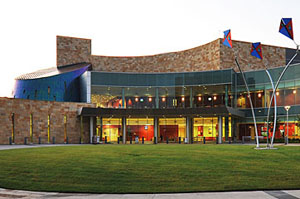
Children’s Medical Center in Plano
The 487-bed Children’s Medical Center in Dallas opened a second pediatric hospital in Plano in 2008, part of an ambitious plan to expand operations in the growing, well-to-do suburbs north of the city. Children’s Medical Center Legacy, a 72-bed facility with an ICU, MRI and ambulatory care, is located on the site of a former family farm and, with 155 acres, has plenty of room to grow.
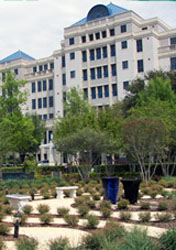
Cook’s Children’s Medical Center
Cook Children’s Medical Center in nearby Fort Worth is also adding beds and services as part of a $250 million expansion. Started as the Fort Worth Free Baby Hospital in 1918, Cook expects to position itself among the nation’s largest children’s medical centers, with 428 licensed beds, when its expansion is completed early next year.
Texas Children’s Hospital in Houston already ranks as one of the nation’s largest children’s facilities. With 639 beds, almost 7,000 employees and a 20-story hospital, it is a key destination in the city’s sprawling downtown medical complex, which includes other hospitals and research facilities. And with plenty of money available, it is looking to get even bigger.

Texas Children’s Hospital during a 1999 expansion
In 2006, Texas Children’s announced a $1.5 billion campaign, Vision 2010: Excellence to Eminence, with a stated goal of enhancing the health and well being of children worldwide. Officials said then their planned expansion would be the largest ever by a single children’s hospital. It includes a new maternity center and a second, 96-bed children’s hospital west of Houston near affluent suburbs.
“Texas is different,” said Bryan Sperry, president of the Texas Children’s Hospital Association. “The hospitals are struggling to keep up with the population growth. We’re heading toward 7 million kids.”
With millions in profits and ample investments, the hospitals appear positioned to handle the growth spurt, financial records show. Cook Children’s reported nearly $100 million in profits on its 2009 tax return, the most recent publicly available. Texas Children’s had $1.9 billion in stocks and other investments as of 2010.
Children’s Medical Center in Dallas measures its imprint another way. It recently hired researchers at the University of North Texas to study the hospital’s economic impact. The researchersÌý that it generates $1.6 billion in yearly economic activity, including millions for goods and services, ongoing construction and salaries. “There is no question it is one of the regional economic drivers,” said economist Terry Clower, one of the study’s authors. “Even during the downturn, [Dallas] Children’s was continuing with their capital expenditures.” The hospital paid the university about $17,000 for the report, Clower said.
Like the Dallas hospital, Cook Children’s has also followed its population as it moves northward. It competes with Dallas Children’s for patients in Plano, Southlake and Grapevine, among other growing communities. Cook’s $250 million expansion, the largest in the hospital’s history, includes a larger neonatal intensive care unit, expanded emergency room and an outpatient surgery center.

Day TwoÌý
One City, Three Hospitals
Regional ReportsÌý
Arizona
Chicago
Denver
Ohio
Pittsburgh
Texas
Day OneÌý
The Rise of Children’s Hospitals
“Some may ask, ‘how can we begin this project while our country is in an economic challenge,'” Cook Children’s CEO, Rick Merrill, asked in May 2009 as the expansion was starting. He then answered his own question. “I think anyone who walks through our halls knows we are bursting at the seams. … We have to take action.”
In Houston, Texas Children’s officials are pushing their services out to the so-called Energy Corridor along I-10, one of the fastest-growing areas in the state.
In 2007, it took over the maternity service of another hospital. Since then, it has acquired some of the largest and busiest OB-GYN practices in the region. To house the new business, Texas Children’s is building a $575 million maternity hospital in a former hotel. When The Pavilion for Women opens later this year, officials predict, they will handle more than 1,500 deliveries annually.
Delivering babies is a natural extension of its mission, Texas Children officials have said. It will also help to secure a steady flow of pediatric patients requiring everything from primary care to complex surgical procedures.
“It’s cradle to grave care,” said Jerry Katz, a health care consultant and former children’s hospital CEO. “A number of elite children’s hospitals are doing this. It’s very smart of them; they’re locking up their book of business.”
Â鶹ŮÓÅ Health News is a national newsroom that produces in-depth journalism about health issues and is one of the core operating programs at Â鶹ŮÓÅ—an independent source of health policy research, polling, and journalism. Learn more about .This <a target="_blank" href="/health-industry/childrens-hospitals-texas/">article</a> first appeared on <a target="_blank" href="">Â鶹ŮÓÅ Health News</a> and is republished here under a <a target="_blank" href=" Commons Attribution-NonCommercial-NoDerivatives 4.0 International License</a>.<img src="/wp-content/uploads/sites/8/2023/04/kffhealthnews-icon.png?w=150" style="width:1em;height:1em;margin-left:10px;">
<img id="republication-tracker-tool-source" src="/?republication-pixel=true&post=29375&ga4=G-J74WWTKFM0" style="width:1px;height:1px;">]]>This story was produced in collaboration with
Many states have one or two large children’s hospitals. Then there is Ohio, with its growing number of seniors and shrinking children’s population. It has seven.
There are four large freestanding children’s hospitals in Akron, Cincinnati, Columbus and Dayton. In addition, the Cleveland Clinic operates a 114-bed children’s unit as part of its adult system. University Hospitals, also based in Cleveland, has its 244-bed Rainbow Babies and Children’s Hospital. Toledo Children’s Hospital, a 151-bed unit, is affiliated with Toledo Hospital.

President Obama talks to people near a now completed Nationwide Children’s Hospital, on the left in the picture, in Columbus, Ohio in June 2010. President Obama touted theÌýstimulus at the siteÌýthat he said created jobs to improve the roads around the new hospital.Ìý(White House Photo by Chuck Kennedy).
All told, the seven children’s hospitals have more than 1,900 beds and revenues of about $3 billion annually, records show. Only Delaware, Rhode Island, South Dakota and the District of Columbia have more children’s hospital beds per capita than Ohio, according to industry and Census data. New York has double the number of children (4.4 million) as Ohio (2.7 million) yet about 400 fewer pediatric beds, according to industry figures.
The number of children in Ohio is shrinking at the same time children’s hospitals are expanding. Since 1970, the number of children under the age of 18 has plummeted by one million, to 2.7 million, according to Census data and the Ohio Department of Development. Children now account for 24 percent of the state’s 11.5 million residents, down from 35 percent in 1970.
Hospital officials note that Ohio’s children’s hospitals attract patients from out of state. In addition, as smaller community hospitals retreat from the pediatric business, their patients have shifted to children’s hospitals.
There are no industry or government standards for what is an appropriate number of children’s hospital beds. Nationally, there is about one bed for every 2,490 children, industry data show. But the figures vary. Ohio has one bed for about every 1,426 children, which hospital officials contend is just right.
The Ohio Children’s Hospital Association did not respond to requests for comment. The group’s website notes that “Ohio is the only state in the nation with a flagship children’s hospital within two hours drive of every child.” That ensures easy access for even the rural parts of the state, according to the group.
But the shifting demographics inevitably raise questions about the duplication of costly services and technology, especially in older industrial areas such as Cleveland, where there are three large children’s hospitals within miles of one another. The city reported a sharp decline in overall population, while a number of surrounding counties reported shrinking or stagnant children’s populations, according to 2010 Census data. In contrast, the number of Ohio residents 65 or over is growing. Ohio ranks 15th nationally in the number of elderly, at 1.6 million, Census data show.
One area where the pediatric population is growing is Columbus, home to Nationwide Children’s Hospital. Formed more than a century ago, the hospital serves as the pediatric department for nearby Ohio State University. In 2007, it announced an $800-million expansion, with plans to build a 12-story patient tower scheduled to open next year.

Day TwoÌý
One City, Three Hospitals
Regional ReportsÌý
Arizona
Chicago
Denver
Ohio
Pittsburgh
Texas
Day OneÌý
The Rise of Children’s Hospitals
In a press release, officials stressed the economic impact of the new hospital, noting that it would create 2,400 new hospital jobs and have a “positive economic impact in excess of $1 billion.” When completed, officials added, Nationwide “is expected to be the second-largest pediatric hospital and research center in America” with more than 500 beds.
Like other elite children’s hospitals, Nationwide is expanding its geographic reach “from across the country and increasingly the world.” In 2007, the hospital treated 6,443 patients from out of state and 20 patients from other countries, according to a spokeswoman.
“Our challenge is broad and encompassing and to meet it we are investing across the board: the best doctors, best researchers, best staff, best facilities,” Nationwide CEO Steven J. Allen said at the time. “There is no shortcut to providing the best care to our children.”
The new hospital will feature private rooms, a family zone with increased sleeping accommodations, Internet access, patient entertainment systems, a larger emergency department and transplant unit, as well as a six-acre “park-like green space,” according to hospital documents.
The hospital is getting financial help from a variety of sources. In 2007, it announced a $50 million gift from a foundation associated with Columbus-based Nationwide Insurance. In return, the hospital agreed to change its name to Nationwide Children’s from Children’s Hospital of Columbus.
Nationwide also said that it would name its expanded emergency department for Abercrombie & Fitch, which pledged $10 million for its expansion. The announcement was criticized by some because of the clothing retailer’s edgy marketing campaigns targeting teenagers. Hospital officials responded that the gift was a “tangible commitment to the welfare of children.”
The new ER is set to open in June 2012.
Â鶹ŮÓÅ Health News is a national newsroom that produces in-depth journalism about health issues and is one of the core operating programs at Â鶹ŮÓÅ—an independent source of health policy research, polling, and journalism. Learn more about .This <a target="_blank" href="/health-industry/childrens-hospitals-ohio/">article</a> first appeared on <a target="_blank" href="">Â鶹ŮÓÅ Health News</a> and is republished here under a <a target="_blank" href=" Commons Attribution-NonCommercial-NoDerivatives 4.0 International License</a>.<img src="/wp-content/uploads/sites/8/2023/04/kffhealthnews-icon.png?w=150" style="width:1em;height:1em;margin-left:10px;">
<img id="republication-tracker-tool-source" src="/?republication-pixel=true&post=29382&ga4=G-J74WWTKFM0" style="width:1px;height:1px;">]]>This story was produced in collaboration with
In 2009, Children’s Hospital of Pittsburgh moved from its cramped and aging downtown facility to a 10-acre site a few miles away.
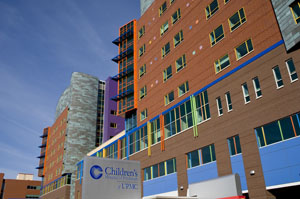
Children’s Hospital of Pittsburgh
At $625 million, the new nine-story hospital and adjacent research center cost more than the combined $518 million price tag for PNC Park and Heinz Field, the homes of the Pirates and Steelers.
It wasn’t expected to be that expensive. But the price kept climbing as potential locations changed, building plans expanded and Children’s officials squabbled with their nonprofit parent, University of Pittsburgh Medical Center, over how much to spend. UPMC officials complained that Children’s spending plans were too lavish. Children’s officials responded that they were building a world-class resource.
The dispute dragged on for a year, with Children’s officials eventually agreeing to trims while UPMC shouldered most of the cost.
“There were enormous disputes over the cost of the project, enormous capital overruns in the building of the project,” recalled Jan Jennings, a local health care consultant. “But they got it done. It’s like a paragon of pediatric care.”
The new hospital was designed to include a 20,000-square foot family resource center with play space, chapel, libraries and school rooms. A four-story atrium includes a 20-by-30-foot screen that can be lowered to show movies and sporting events. The upgrades weren’t limited to amenities, however. The operating suites include multiple high-definition monitors and cameras, prompting one executive to boast to a health care magazine, “We went from a Yugo to a Ferrari.”
Children’s officials received financial help from the region’s largest health insurer, Highmark Inc., in building their 296-bed hospital. In 2002, Highmark awarded Children’s/UPMC a $68.6 million grant and $164 million loan as part of a settlement to a dispute over rates. The money was earmarked for the new hospital. In return, the hospital entered into a long-term contract with Highmark.

Day TwoÌý
One City, Three Hospitals
Regional ReportsÌý
Arizona
Chicago
Denver
Ohio
Pittsburgh
Texas
Day OneÌý
The Rise of Children’s Hospitals
A spokesman for Children’s declined to discuss the hospital’s finances or to provide financial statements. In fiscal year 2007, the most recent year in which data were available, Children’s reported $465 million in operating revenues and $440 million in spending, according to its annual report. Including non-operating gains, it posted a profit of $63 million.
When UPMC unveiled its new children’s facility in 2009, its president Jeffrey A. Romoff told the Pittsburgh Post-Gazette he envisioned the hospital “becoming a national and international treasure.” Without UPMC’s help, he added, Children’s never would have been able to build a new hospital.
Pennsylvania, with one of the older populations in the nation, is now book-ended by large children’s hospitals in Pittsburgh and Philadelphia. Children’s Hospital of Philadelphia has invested $1 billion in new patient-care and research facilities in the last decade, and officials have said they expect to spend another $1 billion in the next decade.
Now the middle of the state is getting its own children’s hospital. In 2009, Hershey Medical Center announced it would build a $207 million facility near Harrisburg. Hershey Medical, part of Penn State University, said the project will include 72 patient rooms, six surgical suites, outpatient clinics and a neonatal intensive care unit. It is expected to open next year.
Â鶹ŮÓÅ Health News is a national newsroom that produces in-depth journalism about health issues and is one of the core operating programs at Â鶹ŮÓÅ—an independent source of health policy research, polling, and journalism. Learn more about .This <a target="_blank" href="/health-industry/childrens-hospitals-pittsburgh/">article</a> first appeared on <a target="_blank" href="">Â鶹ŮÓÅ Health News</a> and is republished here under a <a target="_blank" href=" Commons Attribution-NonCommercial-NoDerivatives 4.0 International License</a>.<img src="/wp-content/uploads/sites/8/2023/04/kffhealthnews-icon.png?w=150" style="width:1em;height:1em;margin-left:10px;">
<img id="republication-tracker-tool-source" src="/?republication-pixel=true&post=29392&ga4=G-J74WWTKFM0" style="width:1px;height:1px;">]]>This story was produced in collaboration with
At first blush, it seems counterintuitive. Since 2008, the two dominant children’s hospitals in Phoenix have spent nearly $1 billion building new hospitals, adding beds and recruiting specialists.

Construction of a facade in 2009 at Phoenix Children’s Hospital (Photo by cobalt123 via Flickr)
They couldn’t have picked a worse time. The economy started to crater just about the time they were breaking ground. Between the collapse of the housing market and the loss of thousands of jobs, the outlook in Arizona was bleak.
To make matters worse, state officials started to cut Medicaid payments to children’s hospitals in 2008, and those cuts have continued, says Robert L. Meyer, CEO of Phoenix Children’s Hospital, which recently opened a $538-million, 11-story facility. Over three years he estimates the cuts have cost his hospital $52 million. Medicaid, the state-federal program for the poor, insures more than half of Phoenix Children’s patients.
Yet Phoenix Children’s has managed the financial challenges and is positioned to take advantage of the booming market there for children’s care, according to Meyer. With another half million children expected in the region by 2025, “We’re still looking at a lot of potential to grow,” he said.
Children’s Phoenix, currently at 478 beds, has room to expand to more than 600 beds. Cardon Children’s Medical Center in Mesa opened a new hospital in 2009 with about 240 beds. At the same time, community hospitals with smaller pediatric units are getting out of the business, a trend Meyer expects to continue as economic pressures and the federal health law changes place a premium on efficiency.
He says the hospital has worked hard to lower its costs, especially during the recession.

Day TwoÌý
One City, Three Hospitals
Regional ReportsÌý
Arizona
Chicago
Denver
Ohio
Pittsburgh
Texas
Day OneÌý
The Rise of Children’s Hospitals
“It has been difficult but we have done it,” Meyer said. “We have looked at all kinds of efficiencies,” ranging from travel expenses to the number of hospital employees to collaborating with the nearby Mayo Clinic on some services. Nationally, children’s hospitals use the equivalent of eight full-time employees for each bed, while “we use about six.”
The hospital’s strategic plan focuses on half a dozen core areas “with large volumes and reasonable reimbursements.” They include cardiac, neurosurgery, orthopedics, trauma and hematology and oncology. It seems to be working. Revenues have swelled from $100 million to more than $400 million in the last decade, records show.
Like many other children’s hospitals, Phoenix Children’s started as part of an adult system. It separated about a decade ago and Meyer, 57, a consultant by training, was hired on an interim basis to help turn around the hospital. The temporary position became full time in November 2003.
“I’ve probably heard the world is ending four or five times since I have been doing this,” Meyer said. “I just don’t believe it. It’s a challenging time in healthcare. You have to be adaptive and flexible. You have to be creative. And you have to be more efficient. But if you do that, you’ll probably be okay.”
Â鶹ŮÓÅ Health News is a national newsroom that produces in-depth journalism about health issues and is one of the core operating programs at Â鶹ŮÓÅ—an independent source of health policy research, polling, and journalism. Learn more about .This <a target="_blank" href="/health-industry/childrens-hospitals-phoenix/">article</a> first appeared on <a target="_blank" href="">Â鶹ŮÓÅ Health News</a> and is republished here under a <a target="_blank" href=" Commons Attribution-NonCommercial-NoDerivatives 4.0 International License</a>.<img src="/wp-content/uploads/sites/8/2023/04/kffhealthnews-icon.png?w=150" style="width:1em;height:1em;margin-left:10px;">
<img id="republication-tracker-tool-source" src="/?republication-pixel=true&post=29397&ga4=G-J74WWTKFM0" style="width:1px;height:1px;">]]>This story was produced in collaboration with
Executives at children’s hospitals like to say they provide a gentler kind of care. Their collegial environment prizes sharing, teaching and research over competition. Often, one large hospital enjoys a monopoly over care.
Then there is Denver, with two newly minted children’s hospitals costing nearly $1 billion. It offers another kind of model: freewheeling, competitive, expensive.

Children’s Hospital Colorado (Photo by Jeffrey Beall via Flickr)
In 2007, Denver Children’s Hospital, which had long operated downtown, opened a $610 million replacement facility in suburban Aurora, about 10 miles away. The new, 9-story hospital was almost double the size of the old hospital and featured a four-story glass atrium and private rooms with 32-inch plasma televisions and on-demand movies and video games, among other amenities. In June, the hospital changed its name to Children’s Hospital Colorado.
Roughly the same time the Aurora facility opened, officials at HealthOne System, a regional health care provider, announced plans to build a $120 million children’s hospital at Presbyterian/St. Luke’s Medical Center in Denver. The Rocky Mountain Hospital for Children, located just blocks from the old Denver Children’s site, opened in August last year. A local paper wrote that it resembled a hotel more than a hospital, with its brightly colored walls, outdoor playground and family area. Executives of the two hospitals initially downplayed their rivalry.

Rocky Mountain Hospital for Children
“We’re very collegial,” James Shmerling, CEO of Children’s Colorado, said in an interview. “We are competing but in a very collegial fashion.”
“I wouldn’t like to see this portrayed as a war,” said Rocky Mountain’s CEO, Mimi Roberson. “Jim Shmerling and I still talk. Is there communication? Yes and no.”
But if the two hospitals aren’t engaged in an outright battle, it is at least a sharp-elbowed skirmish. Shmerling publicly questioned the need for a second children’s hospital, writing in a December 2007 newsletter that Denver Children’s “already meets and surpasses the needs of children in the region.”
Shmerling added that in markets with two children’s hospitals, “one is deemed great and one is referred to as the ‘other’ children’s hospital. The other children’s hospitals will never be cited as great or probably even ranked in the top 100. Some are good, some mediocre, but none great.”
Not surprisingly, Roberson took exception, saying care at her hospital centered on patients, not teaching or research. “We offer a different model of care,” she said. “Ours is a private practice model. Our physicians prefer to focus all of their time on their patients instead of doing research.”
Shmerling said he was concerned that the much smaller Rocky Mountain Hospital for Children wouldn’t see enough patients to maintain the volumes necessary to ensure quality, especially for complicated procedures such as open heart surgery. He said research showed the Denver market could support a total of three pediatric open heart surgeons. Including two currently at Rocky Mountain, “there are now five.
Supply and demand can be a really good thing. But like anything else there is a point of diminishing returns,” he said.
“He’s not being very collegial,” countered Roberson. She said Shmerling’s hospital cancelled an agreement to share pediatric open heart surgeons after it moved to Aurora. As a result, Rocky Mountain went out and recruited two surgeons of its own from Dallas, Roberson said.

Day TwoÌý
One City, Three Hospitals
Regional ReportsÌý
Arizona
Chicago
Denver
Ohio
Pittsburgh
Texas
Day OneÌý
The Rise of Children’s Hospitals
Colorado Children’s is located on a 227-acre campus that includes a medical school and research facilities. The land for its 304-bed hospital was donated. Since opening, business has been good. Admissions have exceeded expectations, while revenues and profits have spiked. In 2009, the hospital reported $69 million in operating income on $589 million in revenue – a nearly 12 percent margin, records show.
Now Colorado Children’s is spending $222 million to expand, building a 10-story addition to its Aurora hospital. The project will increase capacity to about 500 beds, officials said, making the facility among the largest children’s hospitals in the nation.
“We’re sort of the victims of our own success,” Shmerling said.
The expansion announcement came just weeks before Rocky Mountain opened its doors. But Roberson remains undeterred. She said her hospital also is experiencing tremendous growth.
“Just as a market the size of Denver would not want to have just one hospital for acute adult care, we believe more than one option should also be available for children,” she said.
Â鶹ŮÓÅ Health News is a national newsroom that produces in-depth journalism about health issues and is one of the core operating programs at Â鶹ŮÓÅ—an independent source of health policy research, polling, and journalism. Learn more about .This <a target="_blank" href="/health-industry/childrens-hospitals-denver/">article</a> first appeared on <a target="_blank" href="">Â鶹ŮÓÅ Health News</a> and is republished here under a <a target="_blank" href=" Commons Attribution-NonCommercial-NoDerivatives 4.0 International License</a>.<img src="/wp-content/uploads/sites/8/2023/04/kffhealthnews-icon.png?w=150" style="width:1em;height:1em;margin-left:10px;">
<img id="republication-tracker-tool-source" src="/?republication-pixel=true&post=29415&ga4=G-J74WWTKFM0" style="width:1px;height:1px;">]]>This story was produced in collaboration with
While many hospital CEOs worry about the sluggish economy and looming impact of the federal health law, executives at Children’s Memorial Hospital in Chicago confidently point to a future in which “the sky truly is the limit,” according to the hospital’s 2009 annual report.

Children’s Memorial Hospital Chicago (Photo by orijinal via flickr)
In keeping with their can-do attitude, they are building a towering new hospital just blocks from Lake Michigan in Chicago’s Streeterville neighborhood, adjacent to Northwestern University’s Feinberg School of Medicine.
Officials say the location, a few miles from their existing hospital in the Lincoln Park section of the city, will enable them to leverage world-class research, clinical care and technology, while recruiting more specialists and researchers through their training programs.
But with a price tag of $915 million, the new hospital ranks among the most expensive children’s facilities ever, costing the equivalent of $3.1 million for each of its 288 beds. One reason is the setting. The 23-story tower, slated to open next year, is being squeezed onto a 1.8 acre urban plot. The relatively small parcel has driven a vertical design that some say resembles a Lego stack, posing challenges for architects and builders while adding to the cost.
Two separate banks of elevators, one each for lower and higher floors; a sky lobby that cantilevers slightly over an alley, as well as complex mechanical, electrical and plumbing issues also added to the price tag. The new hospital will be 40 percent larger than the old hospital, with much of the new space devoted to research, according to a Chicago architectural website.

Day TwoÌý
One City, Three Hospitals
Regional ReportsÌý
Arizona
Chicago
Denver
Ohio
Pittsburgh
Texas
Day OneÌý
The Rise of Children’s Hospitals
Children’s officials seem confident that the budget-stretching design won’t put them in a hole financially. One reason is a $100 million gift from local philanthropists Ann Lurie and her late husband, Robert. In return, the 129-year-old Children’s Memorial is being renamed the Ann & Robert H. Lurie Children’s Hospital of Chicago. The balance of the cost will come from additional fundraising, hospital funds and tax-exempt bonds.
Children’s Memorial traces its roots to an eight-bed cottage hospital founded in 1882. Over time, it has evolved into a major teaching and research hospital with millions in federal grants and 700 physicians. According to its most recent public filings, income climbed from $348 million in 2003 to $547 million in 2008. The hospital’s assets, meanwhile, grew by $1 billion, to $1.8 billion.
Like many other children’s hospitals, Children’s Memorial has shifted some of its focus to the suburbs as the city’s pediatric population has declined and the population of children in outlying counties has increased. In a 2004 bond filing, hospital officials wrote that they were targeting “Female consumers (age 18-45 years of age) with a college background and a household income of greater than $50,000” as part of their branding strategy.
Hospital officials declined to say how much free care they give away, but in a written statement said they have “very few requests for outright charity care.” In a 2007 report, they said they spent $3 million for charity care, or less than 1 percent of what they took in that year. They added that they spent $74 million on community benefits, including teaching, research and losses due to low Medicaid reimbursement rates.
Â鶹ŮÓÅ Health News is a national newsroom that produces in-depth journalism about health issues and is one of the core operating programs at Â鶹ŮÓÅ—an independent source of health policy research, polling, and journalism. Learn more about .This <a target="_blank" href="/health-industry/childrens-hospitals-chicago/">article</a> first appeared on <a target="_blank" href="">Â鶹ŮÓÅ Health News</a> and is republished here under a <a target="_blank" href=" Commons Attribution-NonCommercial-NoDerivatives 4.0 International License</a>.<img src="/wp-content/uploads/sites/8/2023/04/kffhealthnews-icon.png?w=150" style="width:1em;height:1em;margin-left:10px;">
<img id="republication-tracker-tool-source" src="/?republication-pixel=true&post=29387&ga4=G-J74WWTKFM0" style="width:1px;height:1px;">]]>This story was produced in collaboration withÌý
President Obama is fighting to save his signature health law on two fronts: in the Supreme Court and on the campaign trail, where Republican candidates are promising to kill the Affordable Care Act.
Yet even if the president prevails, he faces another daunting challenge: implementing the law in a seamless, timely manner. The Centers for Medicare & Medicaid Services is charged with making the health law work, drafting regulations, setting up new programs and providing oversight. But for years Congress has undermined the agency’s leadership and potential effectiveness, raising questions about its capabilities and resources even as the health law ramps up its responsibilities.
For starters: consider the revolving door leadershipÌýat CMS.
Since its creation in 1977 as the Health Care Financing Administration, the agency has had Ìýin 35 years – an average tenure of just 14 months. The longest-serving administrator held the job for four years and five months. The shortest: two months.
The most recent CMS administrator, Dr. Donald Berwick, resigned in December after 16 months. His replacement, Marilyn Tavenner, currently holds the title of acting administrator. That’s hardly uncommon.
Acting administrators have run the agency 20 percent of the time. And the trend appears to be increasing: the Senate hasn’t confirmed a full-time CMS administrator since 2006, when Mark McClellan resigned midway through the second Bush administration.
“Imagine if somebody went two years without a Secretary of Defense,” Thomas A. Scully, who was CMS administrator under President George W. Bush, told the journal Ìýin April 2010.
For decades, government and private researchers have pointed to a widening gap between the agency’s responsibilities and resources. As the largest purchaser of health care in the world, with a budget of $820 billion, CMS pays for the care of one in three Americans, and interacts daily with thousands of hospitals, doctors and other providers.
4,900 vs. 62,000 Employees
The number of Medicare and Medicaid beneficiaries has soared since the programs started in 1966, with tens of millions of Baby Boomers and uninsured expected to swell the rolls even more in coming years. Yet today the agency has the same number of employees it had during the during the Carter administration – about 4,900.
By comparison, the Social Security Administration, with a smaller budget, has 62,000 employees. Even including work that CMS outsources to private contractors – bill-paying, coverage decisions and quality oversight – the agency operates with about half as many employees as Social Security.
The shortages have hurt the agency’s ability to implement crucial reforms, ensure adequate oversight of hospitals and other providers and find ways to stem spiraling medical costs, researchers say. For years, CMS executives weren’t even sure if they could consider cost as part of their coverage decisions, paying high-quality and low-quality providers the same amount.
In 1999, a bipartisan group of former administrators and health policy experts wrote an Ìýto Congress decrying “the mismatch” between the agency’s resources and its “mammoth assignment.”
Three years later, the nonprofit National Academy of Social Insurance , “This mismatch has grown worse in recent years as CMS’ responsibilities have increased dramatically.”
“Really, when you consider what they have to work with, they do a fairly remarkable job,” adds Robert A. Berenson, a former CMS administrator, and now a health researcher at the Urban Institute. “Assuring adequate staff at CMS has not been a priority for Congress even though it might more than pay for itself in more efficient programs.”
‘What’s Missing Is … A Consolidated Strategic Vision’
Berwick, a physician and national expert on health quality, said he was “impressed and gratified” by the way senior staff rallied around his calls to implement the sprawling health law. But much of staff time is taken up writing rules and regulations.
Career executives “perform these core components well,” said Berwick. “What’s missing is a kind of coherence and consolidated strategic vision of where to head next.”
In recent years, Congress has added more programs and complex legislation to the agency’s plate, including overseeing a 2003 prescription drug benefit for seniors, ensuring patient privacy, helping to weed out waste and fraud and developing a system for grading hospitals and nursing homes.
The Obama administration’s nearly two-year-old health law adds yet more duties: helping to oversee insurance exchanges in 50 states, operating a program to spur ways of delivering care more efficiently, and guiding big expansions of Medicare and Medicaid, the agency’s core programs.
CMS will be expected to do so even as “frequent changes” at the top “have inhibited the implementation of long-term Medicare initiatives or the pursuit of a consistent management strategy,” according to a 2000 study by the U.S. General Accounting Office.
For years, the agency was criticized for focusing more on getting checks out to hospitals and doctors than ensuring quality or finding ways to trim health spending. Part of that had to do with Medicare’s unique history. For the first 11 years of its existence, the program was housed in the Social Security Administration, which issues monthly income support checks to retired Americans.
But even after the Medicare and Medicaid programs were put under one roof in 1977, the agency continued to struggle, facing criticism from Congress and medical providers. “It’’s almost paradoxical the extent to which Medicare is so important and valued in the lives of so many families and communities, and the overwhelming communication the people running the program get is hostility,” said Bruce Vladeck, an administrator in the Clinton administration.
Not Just A Check-Writing Agency
Gail Wilensky, who ran the agency for two years under President George H.W. Bush, said CMS has evolved into a much more sophisticated operation. “It’s not just a check-writing agency anymore,” she said. But the turnover at the top sends the wrong message to employees, who respond by being “more inward and protective.”
The CMS administrator’s position is a political appointment requiring Senate confirmation. Berwick’s name surfaced as a potential CMS leader shortly after Obama’s election. A pediatrician by training, Berwick gradually shifted his focus to quality improvement, steering the nationally recognized Institute for Healthcare Improvement, a nonprofit based near Boston.
The Obama administration waited to submit his name for the CMS position until April 2010, one month after it won passage of the Affordable Care Act. By then, Republicans were openly attacking the legislation as unduly burdensome and costly. Berwick never did get a Senate hearing and was appointed by the president during the congressional recess that July.
The recess appointment avoided what many predicted would be a losing battle with Senate Republicans. Some of them accused Berwick of promoting rationing, based on favorable comments he had made in the past about the British National Health System. Sen. Pat Roberts, R-Kan., said Berwick’s focus on cutting costs would lead to a rural health system consisting “of a Band-Aid and a bed pan.”
In an interview, Berwick said Republicans “twisted and distorted” his words and used the agency as “a political football. It’s a game to them,” he said. Berwick added that the churn in administrators “demoralizes and confuses” senior staff and hurts the agency’s ability to develop a consistent long-term vision. “What happens, I think, when you have a lot of turnover is senior staff loses its confidence and is less willing to take risks.”
Wilensky said she was “especially frustrated” with what happened to Berwick. “I like Don Berwick. I don’t always agree with him but I have a lot of respect for what he has done and for his passion for the great issues he takes on.”
Berwick had little choice except to resign. His acting term was set to expire at the end of 2011 and 42 Republican senators had already announced their intentions to block his confirmation as a full-time administrator. The administration nominated Tavenner, a former Virginia health official and executive with the for-profit Hospital Corporation of America, just days later.
Several prominent Republicans, including Republican House Majority leader, Eric Cantor, said Tavenner was “eminently qualified” to run the agency. But months later Tavenner still hasn’t gotten a hearing and, with the heated politics of an election year, some wonder if she will.
This article was produced by Kaiser Health News with support from .
Â鶹ŮÓÅ Health News is a national newsroom that produces in-depth journalism about health issues and is one of the core operating programs at Â鶹ŮÓÅ—an independent source of health policy research, polling, and journalism. Learn more about .This <a target="_blank" href="/medicaid/cms-chief-job/">article</a> first appeared on <a target="_blank" href="">Â鶹ŮÓÅ Health News</a> and is republished here under a <a target="_blank" href=" Commons Attribution-NonCommercial-NoDerivatives 4.0 International License</a>.<img src="/wp-content/uploads/sites/8/2023/04/kffhealthnews-icon.png?w=150" style="width:1em;height:1em;margin-left:10px;">
<img id="republication-tracker-tool-source" src="/?republication-pixel=true&post=23840&ga4=G-J74WWTKFM0" style="width:1px;height:1px;">]]>This story was produced in collaboration with
Last October, executives from some of the largest and most prestigious children’s hospitals gathered in Philadelphia to talk about the future of children’s care. Panel topics ranged from the impact of the federal health overhaul law on children’s hospitals to the nation’s debt crisis and the significant role that health spending plays in it.
In the past, the mood at such gatherings was largely upbeat, reflecting the exceptional market power of children’s hospitals, which were enjoying strong profits and record growth. But now, confronted with a rapidly shifting landscape for children’s care and a battering economy, the leaders were worried.
“There was a lot less arrogance in the room than I’ve seen before,” said Marc A. Bard, a health care expert with Navigant Consulting. “There was a lot more humility. They were saying they don’t have all of the answers.”
After years of being largely immune to concerns about costs, children’s hospitals are being buffeted by powerful economic and political forces. Chief among them: state lawmakers are slashing Medicaid payments to children’s hospitals as part of their efforts to close budget gaps. The federal-state health plans account for about half of children’s hospitals’ revenues. Even small cuts, like the 3 percent payment reduction Florida lawmakers enacted this spring, will severely strain budgets, advocates say.

Day ThreeÌý
Facing A Leaner Future
Executive CompensationÌýÌý
Big Salaries And Rich Benefits | Chart
Data ChartÌý
The Growth Of Children’s Hospitals
Day TwoÌý
One City, Three Hospitals
Day OneÌý
The Rise of Children’s Hospitals
“In past years, children’s hospitals have been held harmless in state budget negotiations,” said Tony Carvalho, president of the , which includes children’s hospitals. “This year, with the size of the budget deficit, the mood in the legislature was everybody had to participate.”
In California and Florida, lawmakers are shifting Medicaid populations into more restrictive managed care plans. Hospital officials estimate the moves will cost them millions in lower payments. Cindy Ehnes, president of the , said children’s hospitals are suffering “from death by a thousand cuts. This year is no exception, just worse.”
Meanwhile, cuts to physician training programs have some children’s advocates worried that there won’t be enough pediatricians and specialists to provide care. That’s particularly true in Texas, where the children’s population is growing and hospitals already struggle to fill slots. Conversely, Ohio, California and other states with aging populations are seeing a decline in the number of children, even as hospitals invest billions in new facilities and payments are trimmed.
At Florida Hospital for Children, regional vice president for government affairs Rich Morrison worries that Medicaid cuts could undercut children’s hospitals’ ability to cover their debts. “That’s the question I have. Can you really sustain your capital infrastructure given what you’re going to get paid by Medicaid?”
Children’s Hospital Colorado CEO James Shmerling also worries about paying the bills even as his hospital undergoes a second expansion in five years. “Will there come a time when the demand slacks off. I ask myself that question every night,” he said.
More Growth But At A Slower Rate
Two factors will continue to help drive demand, Shmerling said. As small community hospitals abandon the pediatric business, those patients will gravitate toward large regional centers like his. Medical research will also lead to new treatments, drawing more patients. In effect, large, independent children’s hospitals will act as super providers with regional and national bases.
“We still think there’s going to be demand for children’s hospitals,” he said. “Maybe not at the same rate, but we will continue to grow.”
But even as patient volume increases, Shmerling expects revenues to decline, “squeezing margins.” To adjust, children’s hospitals will have to become even more efficient. “If the staff says we’re operating at 95 percent efficiency, that still leaves 5 percent. In our case, 5 percent equals roughly $35 million in [potential] savings.”
Some experts say it is time for children’s hospitals to share in the sacrifices. “For a long time the mentality has been we’ll do anything for any kid and costs be damned,” said Terry Dougherty, a former executive at Children’s Hospital Boston, who until recently oversaw Massachusetts’ Medicaid program.
“At the end of the day, folks have to be more realistic. We have to be thinking about things we do and how to do that in the best fashion.”Ìý
Although some hospital leaders say they’re heeding that message, changing may be difficult. “For years, the attitude of children’s hospitals was that they had a monopoly,” Bard said. “Everyone else had to change but they didn’t. That’s a very dangerous strategy, especially with everything that is going on.”
The 2010 federal health law promises to further reshape the way children’s hospitals provide care, offering incentives for hospitals and doctors to operate efficiently, reduce fragmented care and improve communications among all those that see patients.
Doing so requires an emphasis on primary care, with a goal of avoiding expensive hospital stays for asthma, diabetes and other costly but manageable chronic diseases.
“Most serious policy experts would say to improve child health it’s about treating asthma, getting kids into early education; it’s about exercise, about nutrition, a lot of care that sometimes gets overlooked,” said , a physician and prominent health researcher at Dartmouth Medical School.
That could require a shift in thinking for some children’s hospitals, Fisher added, with less emphasis on “over-investing in costly hospitals” and more attention paid to “patients and communities.”
Many children’s hospitals say they are already moving in this direction, shifting as much care as they safely can to less-costly outpatient settings. Only the sickest children are admitted to the hospital, they add.
“Children’s hospitals are very much aware of the need to provide more for less,” said Larry A. McAndrews, until last week the head of the National Association of Children’s Hospitals and Related Institutions, an industry group. “Some of that focus is on quality. The focus is also to find innovative ways of delivering care by working with their physicians, providing more ambulatory care. The hope is there will be some way of controlling costs.”
The impact of all these challenges will vary from hospital to hospital, depending on geography, poverty levels and other factors, experts said.
Finding More Patients And Revenue Abroad
Elite hospitals such as Children’s Hospital of Philadelphia (CHOP) and Children’s Hospital Boston dominate their markets and enjoy national reputations.Ìý They have continued to post profits during the economic downturn. Now, CHOP executives are looking to extend their geographic horizons, traveling to Hong Kong and Singapore as part of an ambitious plan to build international referrals of well-heeled patients.
“CHOP isn’t immune to economic pressures,” CEO Steven M. Altschuler said. “We’re looking at ways to diversify our revenue. Most of these patients tend to have generous insurance paid for by their governments.”
On the other hand, children’s hospitals treating large numbers of poor patients may struggle as Medicaid budgets are cut, patients are moved into managed care and employers and insurers apply increased pressure to lower rates. That will limit the ability of hospitals to charge private insurers more to cover some of the cost of treating poor patients. It’s a common industry practice called cost-shifting.
In some areas of Texas, California and Arizona, up to three-fourths of all children are covered by Medicaid, hospital officials say, leaving little margin for error financially.
“We have hospitals in the South, especially along the border, where most of the patients are Medicaid. Those hospitals are definitely getting squeezed,” said Bryan Sperry, president of the .ÌýÌý
“Medicaid is already grossly underfunded, so even a small cut can have a big impact.”
This spring, Texas lawmakers voted to slash Medicaid payments for outpatient services by 8 percent at children’s hospitals. Those payments currently cover just 84 percent of the hospitals’ costs, Sperry said.Ìý A fund that helps to pay for training doctors and to cover Medicaid shortfalls also was cut by about $35 million a year, according to Sperry.Ìý
“Out inpatient reimbursement was not cut,” Sperry said. “We did manage to protect that. That’s one piece of good news.”Ìý
In June, Phoenix Children’s Hospital opened a new 11-story hospital with 478 beds and the potential to grow to 621 beds. Including new ambulatory clinics and other construction, the project cost $538 million.
About 55 percent of the hospital’s patients are covered by Medicaid. The program has cut payments each of the last three years, CEO Robert Meyer said, leaving Phoenix Children’s with a shortfall of $52 million. Management has tried to cover the cuts by trimming expenses and charging commercial insurers higher rates.
“No doubt we’re cost-shifting,” Meyer said. “But it’s getting harder and harder to do. I’d like to say Aetna, United Healthcare and the rest will give me 20 percent cost increases to offset the Medicaid losses, but I don’t think that’s going to happen.”
California’s budget plan calls for changes large and small in its Medicaid program, called Medi-Cal, which covers nearly three million children. According to advocates for children’s hospitals, the moves range from increasing hospital co-pays for families to shifting nearly 1 million children from California’s separate low-income Healthy Families plan into Medicaid managed care.
Mandatory co-pays for Medi-Cal beneficiaries of up to $200 for hospital stays and $50 for emergency room visits are “a backdoor cut in reimbursement for providers,” said Ehnes. Low-income patients won’t be able to come up with the money and hospitals will be stuck.
Advocates worry that children shifting from Health Families to Medicaid will have to switch doctors. Not all Healthy Families physicians participate in the state’s Medicaid plan because of its low fees.
“We’re worried whether the access to care will be there,” said Kelly Hardy, director of health policy for Children Now, a nonprofit. “That’s critical. Will kids be able to keep their doctors?”
A far different issue pressing California children’s hospitals is the state’s aging population. USC researchers recently reported that the number of five- to nine-year-old children in California declined by 8.1 percent in the last decade. Even more surprising, the number plummeted by 21 percent, from 802,047 to 633,690, in Los Angeles County.
Hospital officials and advocates say the decline reflects the severe housing and budget crisis that has pummeled California for several years now. Families have moved out of state or relocated inland to areas that are still growing.
Children’s hospitals say they will continue to draw patients even with the population shift.
“It is true that because of the downturn of the economy families are leaving California for states where the cost of living is less,” said Ehnes. “However, there will always be a need for children’s hospitals because we take care of the sickest of the sick children – children that other providers and community hospitals don’t have the expertise or equipment to care for.”Ìý
But to be on the safe side, some children’s hospitals are looking beyond their traditional borders. Cincinnati Children’s Hospital Medical Center markets its specialized services in Kentucky and Indiana, among other states. The children it attracts often suffer from complicated, expensive conditions, said Scott Hamlin, the hospital’s chief financial officer. While only a small percentage of overall admissions, they account “for a great portion of the revenue. Just shy of 50 percent of our inpatient revenue comes from kids outside of our primary referral region.”
Ìýis setting its sights even farther, to the Middle East and Asia. Revenue from CHOP’s International Program has climbed from $6 million to $30 million in 18 months, CEO Steven Altschuler said in an interview. That’s a fraction of the hospital’s estimated $1.8 billion in revenue. However, the figure could swell to “100 to $150 million in a few years,” he said. “That’s real money.”
The income represents a buffer against “a lot of negative headwinds in terms of reimbursements.” Currently, most of the patients come from Dubai, Kuwait, Saudi Arabia and other oil governments with generous health insurance. The plans pay “10 to 20 percent higher than you get from the best insurers here,” Altschuler said.
In April, Altschuler and several other CHOP executives flew to Hong Kong and Singapore to meet with doctors and hospital officials to highlight CHOP’s services. That followed a series of “house calls” to Embassy Row in Washington over the last 18 months.
“We’re knocking on doors and meeting with medical attaches,” Altschuler said. “These days you can’t do too much. Even if you are as big and sophisticated as Children’s Hospital of Philadelphia, you need to be looking for an edge.”
Â鶹ŮÓÅ Health News is a national newsroom that produces in-depth journalism about health issues and is one of the core operating programs at Â鶹ŮÓÅ—an independent source of health policy research, polling, and journalism. Learn more about .This <a target="_blank" href="/health-industry/childrens-hospitals-part-three/">article</a> first appeared on <a target="_blank" href="">Â鶹ŮÓÅ Health News</a> and is republished here under a <a target="_blank" href=" Commons Attribution-NonCommercial-NoDerivatives 4.0 International License</a>.<img src="/wp-content/uploads/sites/8/2023/04/kffhealthnews-icon.png?w=150" style="width:1em;height:1em;margin-left:10px;">
<img id="republication-tracker-tool-source" src="/?republication-pixel=true&post=29371&ga4=G-J74WWTKFM0" style="width:1px;height:1px;">]]>This story was produced in collaboration with
Most CEOs at the largest and richest children’s hospitals are paid more than $1 million in salary and benefits annually, an analysis of hospital tax records shows.
Including retirement payouts and bonuses, three CEOs collected $5 million or more in 2009, the most recent year for which compensation figures were available, public tax returns show. Three others received $2 million. In all, 22 of 25 CEOs collected at least $1 million.
Some CEOs received bonuses and perks more commonly associated with the private sector, including cars, first class travel, country club memberships and special retirement packages worth millions.

Zechman
As the head of Children’s National Medical Center in Washington, D.C., Edwin K. Zechman Jr., who retired in June, was “entitled” under his employment contract to take his spouse “on up to 7 trips per year for conferences,” according to the hospital’s tax return. The hospital said in a statement that Denise Zechman’s “presence at national business and association meetings supported her ability to represent and advocate for the needs of children generally and for Children’s National specifically with national child health and health policy advocates and leaders.” Zechman received nearly $2 million in compensation in 2009, including the value of any trips on which his wife accompanied him.
The pay packages have continued to climb even as the economy has languished and millions of Americans struggle to pay their health care bills. For some, the generous compensation raises questions about the mission of children’s hospitals, which operate as tax-exempt charities.

Day ThreeÌý
Facing A Leaner Future
Executive CompensationÌýÌý
Big Salaries And Rich Benefits | Chart
Data ChartÌý
The Growth Of Children’s Hospitals
Day TwoÌý
One City, Three Hospitals
Day OneÌý
The Rise of Children’s Hospitals
“Hospital CEOs, including those at children’s hospitals, are among the most lavishly compensated executives in the nonprofit field,” said Daniel Borochoff, president of the American Institute of Philanthropy, a charity watchdog group based in Chicago.
“These seven-figure CEO pay packages make it hard for nonprofit hospitals to justify their tax-exempt status,” he added. “If hospital CEO compensation were more in line with other large nonprofits then there could be more funding for community benefits such as free or discounted health care or important medical research.”
An advocacy group for nonprofit hospitals and other health care groups warned its members in 2009 that the pay packages were coming under increasing scrutiny from lawmakers and regulators. “Boards would be wise to streamline their executive compensation programs to make them less tempting targets,” a report prepared for the Alliance for Advancing Nonprofit Health Care advised.
The report pointed to cars, bonuses, generous retirement payouts and country club memberships as also likely to attract criticism. “Many nonprofit organizations have been pressing their luck by imitating patterns in the for-profit sector,” it noted.
In 2009, CEO compensation at the 25 largest independent children’s hospitals ranged from a high of nearly $6 million to a low of $686,125, records show.
In all, CEOs collected more than $49 million, including deferred income and supplemental retirement awards, for an average of nearly $2 million each.

O’Donnell
The highest compensated CEO was Randall L. O’Donnell of Children’s Mercy Hospital in Kansas City. The longtime executive received compensation totaling $5,987,194, records show. The figure included a special payout based on his years of service of nearly $4.1 million. Excluding the payout, O’Donnell received $1.9 million.
O’Donnell earned the supplemental pay over a 15-year period, according to David Oliver, chairman of the hospital’s compensation committee. In that time, O’Donnell transformed Children’s Mercy from a small, local hospital with 159 beds to a children’s care network with 314 beds, 20 regional clinics and more than 6,000 employees. “We are in fact a regional and at times national destination,” Oliver said.
A spokesman for Children’s Medical Center of Dallas also pointed to hospital growth numbers in defending CEO Christopher J. Durovich’s compensation package. “Under Chris’ exceptional leadership, Children’s has become a world class pediatric health care organization, grown its total patient volume by 73 percent and created more than 2,000 new jobs,” said the hospital’s chairman, Robert A. Chereck.

Durovich
Durovich ranked among the highest-compensated CEOs in 2009 at $2.8 million, according to the hospital’s tax return. That included $1,291,245 in deferred income. Chereck said Durovich’s compensation arrangement was unique in that half of his potential earnings are contingent on the hospital meeting selected goals. “We expect exceptional performance from our chief executive officer. When we get it we expect to pay for it,” Chereck said.
Hospital officials say CEO compensation reflects the size and complexity of modern children’s hospitals with operating budgets of up to $1 billion in some cases. They add that their pay is set by independent committees and often reviewed by outside benefits consultants.

Altschuler
“It’s a very rigorous process,” said Steven M. Altschuler, CEO of Children’s Hospital of Philadelphia, whose total compensation is about $2 million annually. “I think our results speak for themselves. We’ve had a very good financial performance.”
Under Altschuler, CHOP has more than doubled in size in the last decade and expects to report $1.8 billion in revenue this year. “Charity or no charity, it is certainly a complex business that has to be run here,” said the 57-year-old physician-executive.
The pay packages of children’s hospitals’ CEOs rank among the top of nonprofit organizations, records show. In some cases, they are more generous. The head of the American Red Cross, Gail J. McGovern, is paid about $450,000 annually. That charity has a $3.3 billion budget.
Pay isn’t always linked to size. Children’s Hospital/Medical Center in Akron, Ohio, ranked 22nd in revenue in 2009, taking in $435 million. Its president, William H. Considine, was the 7th-highest paid CEO.

Considine
Considine’s total compensation package was $5.1 million. That included a special payout of nearly $4 million based on years of service. Excluding the payout, Considine received nearly $1.6 million. The hospital also paid for a country club membership and car for Considine, but declined to provide details.
Laurie Schueler, a spokeswoman for Akron, said Considine is “currently the longest serving CEO of a children’s hospital in the country,” at 31 years. Under his leadership, she added, Akron has experienced “phenomenal growth” and is “the largest pediatric provider in Northeast Ohio.”
The IRS does not limit salaries or perks for charity executives. Rather, it looks at whether an executive appears to be enriching himself at the charity’s expense. One measure is if compensation accounts for an inordinately large percentage of the overall budget.
“Given their size, I don’t think that would be an issue with the children’s hospitals,” said Marcus Owens, former head of the agency’s exempt organizations division and currently an attorney with Caplin & Drysdale in Washington, D.C.
Â鶹ŮÓÅ Health News is a national newsroom that produces in-depth journalism about health issues and is one of the core operating programs at Â鶹ŮÓÅ—an independent source of health policy research, polling, and journalism. Learn more about .This <a target="_blank" href="/health-industry/childrens-hospitals-ceo-compensation/">article</a> first appeared on <a target="_blank" href="">Â鶹ŮÓÅ Health News</a> and is republished here under a <a target="_blank" href=" Commons Attribution-NonCommercial-NoDerivatives 4.0 International License</a>.<img src="/wp-content/uploads/sites/8/2023/04/kffhealthnews-icon.png?w=150" style="width:1em;height:1em;margin-left:10px;">
<img id="republication-tracker-tool-source" src="/?republication-pixel=true&post=29354&ga4=G-J74WWTKFM0" style="width:1px;height:1px;">]]>This story was produced in collaboration with
With strict limits on medical facilities and equipment, Florida seems to set a high bar for building costly new hospitals. Among other criteria, organizations are required to show they won’t duplicate existing services and drive up costs.
In 2006, regulators twice rejected applications from the Nemours Foundation to build a children’s hospital in Orlando, concluding it wasn’t needed. The area already had two large children’s hospitals, they noted. Adding another could fuel health inflation and hurt quality by cutting into the business at the existing hospitals.
But Nemours refused to accept no as an answer. The powerful Jacksonville-based health charity, one of the largest and richest in Florida, started marshaling political and civic support. Among benefits it touted was the economic impact of a new hospital, including thousands of high-paying jobs. Backers rallied around the plan, deluging the state capital with more than 1,000 letters of support.
“Nemours has an outstanding national medical reputation, and prodigious financial resources,” the local League of Women Voters wrote.

Day TwoÌý
One City, Three Hospitals
Regional ReportsÌý
Arizona
Chicago
Denver
Ohio
Pittsburgh
Texas
Day OneÌý
The Rise of Children’s Hospitals
The two existing children’s hospitals opposed Nemours’ plan. So, too, did some of Nemours’ doctors, who left to join other hospitals. The Florida Health Care Coalition, an employer group aiming to lower health costs, also questioned the need for it.
“There is this idea in health care that if you build it they will come,” said Becky Cherney, then head of the coalition. “That’s never a good thing in health care. It’s very egotistical…and drives up costs.” Ìý
But the appeal of children’s hospitals as caregivers for sick kids is powerful and unique. Even as regulators continued to say another children’s hospital wasn’t needed, they approved Nemours’ plan in February 2008 to build a seven-story, $400 million children’s hospital and outpatient clinic complete with healing gardens and nature trails.
The story of how Orlando got a third new children’s hospital when most cities only have one is more than a tale of wealthy health care providers pressing their case. It is also about the pressures facing state regulators charged with restraining spiraling health costs. Attempts to limit expensive new hospitals, MRIs and other technologies have been under attack almost since the first laws requiring “certificates of need” were passed in the early 1970s.
In 2009,Ìý at a ceremony attended by then Gov. Charlie Crist, local politicians and civic leaders.Ìý

Gov. Charlie Crist attended the groundbreaking of Nemours Children’s Hospital in Feb. 2009 (Photo by Jason Greene/Orlando Sentinel).
Ìý“The third time was the charm, I guess,” said Richard Morrison, vice president of government relations for Florida Hospital, which operates a 200-bed children’s hospital in Orlando. “They spent a lot of money making their case, and they were effective doing it.”
After they gained approval, several Nemours officials contributed a total of $4,500 to the re-election campaign of state Rep. Dean Cannon, a Republican from Winter Park who helped to negotiate the final agreement with the state and other two children’s hospitals. A Nemours spokeswoman said at the time that its executives were free to support whomever they liked. Cannon’s office did not return e-mails or phone calls for comment.
Florida regulators declined to discuss their decisions in the Nemours case saying they didn’t have time for detailed questions. Nemours officials turned aside repeated interview requests to discuss why they insisted on building in Orlando instead of a less developed area of the state, or why they weren’t willing to merge their plans with one of the existing children’s hospitals.
In bond filings and other reports, Nemours’ officials have said that they will be providing much needed care to a growing community. “A key objective of the new hospital is to establish Central Florida as a leading health care region in the country through pediatric research, advocacy, and training,” Nemours wrote as part of a $300 million bond offering to fund its new hospital.
Like most large, powerful nonprofits, Nemours has its own institutional ambitions. An internal vision statement notes that Nemours seeks to be recognized as one of the nation’s leading health care systems. In its various state applications, Nemours officials said they aspire to be ranked among the nation’s elite children’s hospitals.
The foundation serves as an umbrella organization for all of Nemours’ health operations. In addition to the new Orlando children’s hospital, scheduled to open next year, Nemours owns and operates a 200-bed children’s hospital in Wilmington, Del., and several clinics. In 2009, the foundation reported $662 million in revenue, including $94 million from the $3.1 billion trust of the late industrialist Alfred I. DuPont, who directed his estate to create the charity.
Nemours’ decision to build its own children’s hospital in Orlando evolved over time. In 1996 Nemours started to share its specialist physicians with the 160-bed Arnold Palmer Hospital for Children, named after the legendary golfer and benefactor. “For a number of years we worked really well with Nemours,” recalled Arnold Palmer’s longtime CEO, John Bozard. “It was a real partnership. Some of our best physicians were from Nemours.”
But in the mid-2000s the relationship began to sour. Bozard said there were disputes over money, physicians and plans for a new hospital that Nemours and Arnold Palmer officials were discussing building together at the time.
“They never mentioned anything about a separate inpatient facility, Bozard recalled. “But things started to get strange after that. They wanted to negotiate everything.”

Arnold Palmer Hospital for Children first opened in Sept. 1989 (Photo by Scott A. Miller for KHN).
At one point, Bozard said, Nemours representatives offered to buy the Arnold Palmer Hospital. “We actually told them it was not for sale. They wanted to know if they could buy in as a partner. We told them we would entertain a 50-50 partnership. They turned that down. They said it had to be 51 percent.”
Cherney attempted to get the two sides to work out their differences, arranging meetings with doctors and top executives. “We said why don’t you two combine? It’s supposed to be about the kids.”
After a while, the meetings collapsed. “When you meet with docs it becomes a very egotistical thing, a turf war,” Cherney said. “They both just said we can’t get along. We each have to be the boss.”
In 2005, Nemours informed Arnold Palmer that it intended to file a “certificate of need” with state health planners to build its own children’s hospital about four miles from downtown Orlando. Foundation executives stressed that their hospital would be devoted solely to children, unlike the other two hospitals, which are part of larger adult systems.
Executives of the two other children’s hospitals were upset by the proximity of the Nemours’ site. They also said they were offended by the implication that Nemours would provide superior care. “Arnold Palmer and Florida Hospital are both large, well-respected children’s hospitals,” Morrison said. “It turned into a slugfest after that.”

Florida Hospital in Orlando is part of a 2,188-bed hospital system with seven locations (Photo by Scott A. Miller for KHN).
The application was submitted to the Florida Agency for Health Care Administration in Tallahassee, where health planners reviewed it. TheÌý that the Orlando market already had a surplus of pediatric beds; the two existing children’s hospitals were operating below capacity and could accommodate future growth.
Most cities have enough children to support a single children’s hospital, said Larry A. McAndrews, until last week the head of the National Association of Children’s Hospitals and Related Institutions. “That’s what the market will support. There are exceptions. But Orlando stands out. I can see how people might have some questions.”
Undeterred, Nemours officials filed a second application. They stressed that their hospital would provide more complex, cutting edge care than the two other children’s hospitals. “Among the applicant’s expectations is being recognized nationally as a ‘top tier’ children’s hospital.”
There is no official top tier designation for children’s hospitals. The reference apparently was to an annual survey published by U.S. News & World Report ranking children’s hospitals according to selected criteria.
The state health planners noted that Nemours had operated the Alfred I. DuPont Hospital for Children in Delaware for decades without achieving an overall top ranking. They rejected the second application. “Need is not demonstrated,” they wrote.
By this point, in 2006, Nemours officials had started to scramble. They initiated anÌý reaching out to politicians, civic leaders and media outlets.
They also set up a website and polled Orlando area residents, reporting that 95 percent of those surveyed favored their plan.
“There was a lot of community support because they were bringing in new money,” said Morrison. “It was all about jobs.”
Nemours looked at a new location near the airport called Lake Nona. The site includes the University of Central Florida’s new medical school, the Burnham Research Institute and a VA center. A new children’s hospital would nicely fit the vision of local politicians of making Orlando a medical destination.
“Nemours selected central Florida as the location for a new facility in order to participate in the region’s development into a leader in medical care and research,” Nemours said in a 2009 bond document.
Belle Isle Mayor William G. Brooks echoed that theme in a . “What Nemours brings is not just more beds,” he wrote, “but a global resource and name in medical research and treatment.”Ìý
Florida regulatorsÌý the hospital wasn’t needed. But this time they approved Nemours’ plan, linking it to the larger efforts to develop Orlando’s medical hub.ÌýÌý
“A new administration had come in,” Morrison said, referring to Crist. “I think the new administration had a general attitude of more is better.”

The construction of Nemours Children’s Hospital is expected to finish some time next year (Photo by Joe Burbank).
The two other children’s hospitals challenged the ruling. But rather than fight a long, expensive legal battle, theyÌý in February 2008.Ìý Nemours officials agreed to a series of conditions, including not competing for two years with the other two children’s hospitals in the lucrative areas of open heart surgery, angioplasty and organ transplants. Nemours also agreed to provide much-needed mental health and rehabilitative care, and to accept a large number of patients with Medicaid.
Some question if the agreement will hold. The Orlando region has struggled in the recession, losing jobs and population. “We’re actually getting smaller,” Cherney said. “That’s going to make it challenging.”
In order for Nemours to succeed, it will need to attract patients from across the state, not just the Orlando region, says Aaron Liberman, chairman of the health management department at the University of Central Florida. “If on the other hand they serve as a competitor for the same services provided by Florida Hospital or Arnold Palmer, then this could spell a real problem for all three institutions.”
Â鶹ŮÓÅ Health News is a national newsroom that produces in-depth journalism about health issues and is one of the core operating programs at Â鶹ŮÓÅ—an independent source of health policy research, polling, and journalism. Learn more about .This <a target="_blank" href="/health-industry/childrens-hospitals-part-two/">article</a> first appeared on <a target="_blank" href="">Â鶹ŮÓÅ Health News</a> and is republished here under a <a target="_blank" href=" Commons Attribution-NonCommercial-NoDerivatives 4.0 International License</a>.<img src="/wp-content/uploads/sites/8/2023/04/kffhealthnews-icon.png?w=150" style="width:1em;height:1em;margin-left:10px;">
<img id="republication-tracker-tool-source" src="/?republication-pixel=true&post=29407&ga4=G-J74WWTKFM0" style="width:1px;height:1px;">]]>This story was produced in collaboration with
In Texas, everything is bigger, including the children’s hospitals.
Driven by a sharp increase in demand, a surplus of cash and their own outsized ambitions, children’s hospitals in Texas are expanding furiously, investing billions in new facilities and services and reshaping the geography of children’s care in the state.

Children’s Medical Center in Plano
The 487-bed Children’s Medical Center in Dallas opened a second pediatric hospital in Plano in 2008, part of an ambitious plan to expand operations in the growing, well-to-do suburbs north of the city. Children’s Medical Center Legacy, a 72-bed facility with an ICU, MRI and ambulatory care, is located on the site of a former family farm and, with 155 acres, has plenty of room to grow.

Cook’s Children’s Medical Center
Cook Children’s Medical Center in nearby Fort Worth is also adding beds and services as part of a $250 million expansion. Started as the Fort Worth Free Baby Hospital in 1918, Cook expects to position itself among the nation’s largest children’s medical centers, with 428 licensed beds, when its expansion is completed early next year.
Texas Children’s Hospital in Houston already ranks as one of the nation’s largest children’s facilities. With 639 beds, almost 7,000 employees and a 20-story hospital, it is a key destination in the city’s sprawling downtown medical complex, which includes other hospitals and research facilities. And with plenty of money available, it is looking to get even bigger.

Texas Children’s Hospital during a 1999 expansion
In 2006, Texas Children’s announced a $1.5 billion campaign, Vision 2010: Excellence to Eminence, with a stated goal of enhancing the health and well being of children worldwide. Officials said then their planned expansion would be the largest ever by a single children’s hospital. It includes a new maternity center and a second, 96-bed children’s hospital west of Houston near affluent suburbs.
“Texas is different,” said Bryan Sperry, president of the Texas Children’s Hospital Association. “The hospitals are struggling to keep up with the population growth. We’re heading toward 7 million kids.”
With millions in profits and ample investments, the hospitals appear positioned to handle the growth spurt, financial records show. Cook Children’s reported nearly $100 million in profits on its 2009 tax return, the most recent publicly available. Texas Children’s had $1.9 billion in stocks and other investments as of 2010.
Children’s Medical Center in Dallas measures its imprint another way. It recently hired researchers at the University of North Texas to study the hospital’s economic impact. The researchersÌý that it generates $1.6 billion in yearly economic activity, including millions for goods and services, ongoing construction and salaries. “There is no question it is one of the regional economic drivers,” said economist Terry Clower, one of the study’s authors. “Even during the downturn, [Dallas] Children’s was continuing with their capital expenditures.” The hospital paid the university about $17,000 for the report, Clower said.
Like the Dallas hospital, Cook Children’s has also followed its population as it moves northward. It competes with Dallas Children’s for patients in Plano, Southlake and Grapevine, among other growing communities. Cook’s $250 million expansion, the largest in the hospital’s history, includes a larger neonatal intensive care unit, expanded emergency room and an outpatient surgery center.

Day TwoÌý
One City, Three Hospitals
Regional ReportsÌý
Arizona
Chicago
Denver
Ohio
Pittsburgh
Texas
Day OneÌý
The Rise of Children’s Hospitals
“Some may ask, ‘how can we begin this project while our country is in an economic challenge,'” Cook Children’s CEO, Rick Merrill, asked in May 2009 as the expansion was starting. He then answered his own question. “I think anyone who walks through our halls knows we are bursting at the seams. … We have to take action.”
In Houston, Texas Children’s officials are pushing their services out to the so-called Energy Corridor along I-10, one of the fastest-growing areas in the state.
In 2007, it took over the maternity service of another hospital. Since then, it has acquired some of the largest and busiest OB-GYN practices in the region. To house the new business, Texas Children’s is building a $575 million maternity hospital in a former hotel. When The Pavilion for Women opens later this year, officials predict, they will handle more than 1,500 deliveries annually.
Delivering babies is a natural extension of its mission, Texas Children officials have said. It will also help to secure a steady flow of pediatric patients requiring everything from primary care to complex surgical procedures.
“It’s cradle to grave care,” said Jerry Katz, a health care consultant and former children’s hospital CEO. “A number of elite children’s hospitals are doing this. It’s very smart of them; they’re locking up their book of business.”
Â鶹ŮÓÅ Health News is a national newsroom that produces in-depth journalism about health issues and is one of the core operating programs at Â鶹ŮÓÅ—an independent source of health policy research, polling, and journalism. Learn more about .This <a target="_blank" href="/health-industry/childrens-hospitals-texas/">article</a> first appeared on <a target="_blank" href="">Â鶹ŮÓÅ Health News</a> and is republished here under a <a target="_blank" href=" Commons Attribution-NonCommercial-NoDerivatives 4.0 International License</a>.<img src="/wp-content/uploads/sites/8/2023/04/kffhealthnews-icon.png?w=150" style="width:1em;height:1em;margin-left:10px;">
<img id="republication-tracker-tool-source" src="/?republication-pixel=true&post=29375&ga4=G-J74WWTKFM0" style="width:1px;height:1px;">]]>This story was produced in collaboration with
Many states have one or two large children’s hospitals. Then there is Ohio, with its growing number of seniors and shrinking children’s population. It has seven.
There are four large freestanding children’s hospitals in Akron, Cincinnati, Columbus and Dayton. In addition, the Cleveland Clinic operates a 114-bed children’s unit as part of its adult system. University Hospitals, also based in Cleveland, has its 244-bed Rainbow Babies and Children’s Hospital. Toledo Children’s Hospital, a 151-bed unit, is affiliated with Toledo Hospital.

President Obama talks to people near a now completed Nationwide Children’s Hospital, on the left in the picture, in Columbus, Ohio in June 2010. President Obama touted theÌýstimulus at the siteÌýthat he said created jobs to improve the roads around the new hospital.Ìý(White House Photo by Chuck Kennedy).
All told, the seven children’s hospitals have more than 1,900 beds and revenues of about $3 billion annually, records show. Only Delaware, Rhode Island, South Dakota and the District of Columbia have more children’s hospital beds per capita than Ohio, according to industry and Census data. New York has double the number of children (4.4 million) as Ohio (2.7 million) yet about 400 fewer pediatric beds, according to industry figures.
The number of children in Ohio is shrinking at the same time children’s hospitals are expanding. Since 1970, the number of children under the age of 18 has plummeted by one million, to 2.7 million, according to Census data and the Ohio Department of Development. Children now account for 24 percent of the state’s 11.5 million residents, down from 35 percent in 1970.
Hospital officials note that Ohio’s children’s hospitals attract patients from out of state. In addition, as smaller community hospitals retreat from the pediatric business, their patients have shifted to children’s hospitals.
There are no industry or government standards for what is an appropriate number of children’s hospital beds. Nationally, there is about one bed for every 2,490 children, industry data show. But the figures vary. Ohio has one bed for about every 1,426 children, which hospital officials contend is just right.
The Ohio Children’s Hospital Association did not respond to requests for comment. The group’s website notes that “Ohio is the only state in the nation with a flagship children’s hospital within two hours drive of every child.” That ensures easy access for even the rural parts of the state, according to the group.
But the shifting demographics inevitably raise questions about the duplication of costly services and technology, especially in older industrial areas such as Cleveland, where there are three large children’s hospitals within miles of one another. The city reported a sharp decline in overall population, while a number of surrounding counties reported shrinking or stagnant children’s populations, according to 2010 Census data. In contrast, the number of Ohio residents 65 or over is growing. Ohio ranks 15th nationally in the number of elderly, at 1.6 million, Census data show.
One area where the pediatric population is growing is Columbus, home to Nationwide Children’s Hospital. Formed more than a century ago, the hospital serves as the pediatric department for nearby Ohio State University. In 2007, it announced an $800-million expansion, with plans to build a 12-story patient tower scheduled to open next year.

Day TwoÌý
One City, Three Hospitals
Regional ReportsÌý
Arizona
Chicago
Denver
Ohio
Pittsburgh
Texas
Day OneÌý
The Rise of Children’s Hospitals
In a press release, officials stressed the economic impact of the new hospital, noting that it would create 2,400 new hospital jobs and have a “positive economic impact in excess of $1 billion.” When completed, officials added, Nationwide “is expected to be the second-largest pediatric hospital and research center in America” with more than 500 beds.
Like other elite children’s hospitals, Nationwide is expanding its geographic reach “from across the country and increasingly the world.” In 2007, the hospital treated 6,443 patients from out of state and 20 patients from other countries, according to a spokeswoman.
“Our challenge is broad and encompassing and to meet it we are investing across the board: the best doctors, best researchers, best staff, best facilities,” Nationwide CEO Steven J. Allen said at the time. “There is no shortcut to providing the best care to our children.”
The new hospital will feature private rooms, a family zone with increased sleeping accommodations, Internet access, patient entertainment systems, a larger emergency department and transplant unit, as well as a six-acre “park-like green space,” according to hospital documents.
The hospital is getting financial help from a variety of sources. In 2007, it announced a $50 million gift from a foundation associated with Columbus-based Nationwide Insurance. In return, the hospital agreed to change its name to Nationwide Children’s from Children’s Hospital of Columbus.
Nationwide also said that it would name its expanded emergency department for Abercrombie & Fitch, which pledged $10 million for its expansion. The announcement was criticized by some because of the clothing retailer’s edgy marketing campaigns targeting teenagers. Hospital officials responded that the gift was a “tangible commitment to the welfare of children.”
The new ER is set to open in June 2012.
Â鶹ŮÓÅ Health News is a national newsroom that produces in-depth journalism about health issues and is one of the core operating programs at Â鶹ŮÓÅ—an independent source of health policy research, polling, and journalism. Learn more about .This <a target="_blank" href="/health-industry/childrens-hospitals-ohio/">article</a> first appeared on <a target="_blank" href="">Â鶹ŮÓÅ Health News</a> and is republished here under a <a target="_blank" href=" Commons Attribution-NonCommercial-NoDerivatives 4.0 International License</a>.<img src="/wp-content/uploads/sites/8/2023/04/kffhealthnews-icon.png?w=150" style="width:1em;height:1em;margin-left:10px;">
<img id="republication-tracker-tool-source" src="/?republication-pixel=true&post=29382&ga4=G-J74WWTKFM0" style="width:1px;height:1px;">]]>This story was produced in collaboration with
In 2009, Children’s Hospital of Pittsburgh moved from its cramped and aging downtown facility to a 10-acre site a few miles away.

Children’s Hospital of Pittsburgh
At $625 million, the new nine-story hospital and adjacent research center cost more than the combined $518 million price tag for PNC Park and Heinz Field, the homes of the Pirates and Steelers.
It wasn’t expected to be that expensive. But the price kept climbing as potential locations changed, building plans expanded and Children’s officials squabbled with their nonprofit parent, University of Pittsburgh Medical Center, over how much to spend. UPMC officials complained that Children’s spending plans were too lavish. Children’s officials responded that they were building a world-class resource.
The dispute dragged on for a year, with Children’s officials eventually agreeing to trims while UPMC shouldered most of the cost.
“There were enormous disputes over the cost of the project, enormous capital overruns in the building of the project,” recalled Jan Jennings, a local health care consultant. “But they got it done. It’s like a paragon of pediatric care.”
The new hospital was designed to include a 20,000-square foot family resource center with play space, chapel, libraries and school rooms. A four-story atrium includes a 20-by-30-foot screen that can be lowered to show movies and sporting events. The upgrades weren’t limited to amenities, however. The operating suites include multiple high-definition monitors and cameras, prompting one executive to boast to a health care magazine, “We went from a Yugo to a Ferrari.”
Children’s officials received financial help from the region’s largest health insurer, Highmark Inc., in building their 296-bed hospital. In 2002, Highmark awarded Children’s/UPMC a $68.6 million grant and $164 million loan as part of a settlement to a dispute over rates. The money was earmarked for the new hospital. In return, the hospital entered into a long-term contract with Highmark.

Day TwoÌý
One City, Three Hospitals
Regional ReportsÌý
Arizona
Chicago
Denver
Ohio
Pittsburgh
Texas
Day OneÌý
The Rise of Children’s Hospitals
A spokesman for Children’s declined to discuss the hospital’s finances or to provide financial statements. In fiscal year 2007, the most recent year in which data were available, Children’s reported $465 million in operating revenues and $440 million in spending, according to its annual report. Including non-operating gains, it posted a profit of $63 million.
When UPMC unveiled its new children’s facility in 2009, its president Jeffrey A. Romoff told the Pittsburgh Post-Gazette he envisioned the hospital “becoming a national and international treasure.” Without UPMC’s help, he added, Children’s never would have been able to build a new hospital.
Pennsylvania, with one of the older populations in the nation, is now book-ended by large children’s hospitals in Pittsburgh and Philadelphia. Children’s Hospital of Philadelphia has invested $1 billion in new patient-care and research facilities in the last decade, and officials have said they expect to spend another $1 billion in the next decade.
Now the middle of the state is getting its own children’s hospital. In 2009, Hershey Medical Center announced it would build a $207 million facility near Harrisburg. Hershey Medical, part of Penn State University, said the project will include 72 patient rooms, six surgical suites, outpatient clinics and a neonatal intensive care unit. It is expected to open next year.
Â鶹ŮÓÅ Health News is a national newsroom that produces in-depth journalism about health issues and is one of the core operating programs at Â鶹ŮÓÅ—an independent source of health policy research, polling, and journalism. Learn more about .This <a target="_blank" href="/health-industry/childrens-hospitals-pittsburgh/">article</a> first appeared on <a target="_blank" href="">Â鶹ŮÓÅ Health News</a> and is republished here under a <a target="_blank" href=" Commons Attribution-NonCommercial-NoDerivatives 4.0 International License</a>.<img src="/wp-content/uploads/sites/8/2023/04/kffhealthnews-icon.png?w=150" style="width:1em;height:1em;margin-left:10px;">
<img id="republication-tracker-tool-source" src="/?republication-pixel=true&post=29392&ga4=G-J74WWTKFM0" style="width:1px;height:1px;">]]>This story was produced in collaboration with
At first blush, it seems counterintuitive. Since 2008, the two dominant children’s hospitals in Phoenix have spent nearly $1 billion building new hospitals, adding beds and recruiting specialists.

Construction of a facade in 2009 at Phoenix Children’s Hospital (Photo by cobalt123 via Flickr)
They couldn’t have picked a worse time. The economy started to crater just about the time they were breaking ground. Between the collapse of the housing market and the loss of thousands of jobs, the outlook in Arizona was bleak.
To make matters worse, state officials started to cut Medicaid payments to children’s hospitals in 2008, and those cuts have continued, says Robert L. Meyer, CEO of Phoenix Children’s Hospital, which recently opened a $538-million, 11-story facility. Over three years he estimates the cuts have cost his hospital $52 million. Medicaid, the state-federal program for the poor, insures more than half of Phoenix Children’s patients.
Yet Phoenix Children’s has managed the financial challenges and is positioned to take advantage of the booming market there for children’s care, according to Meyer. With another half million children expected in the region by 2025, “We’re still looking at a lot of potential to grow,” he said.
Children’s Phoenix, currently at 478 beds, has room to expand to more than 600 beds. Cardon Children’s Medical Center in Mesa opened a new hospital in 2009 with about 240 beds. At the same time, community hospitals with smaller pediatric units are getting out of the business, a trend Meyer expects to continue as economic pressures and the federal health law changes place a premium on efficiency.
He says the hospital has worked hard to lower its costs, especially during the recession.

Day TwoÌý
One City, Three Hospitals
Regional ReportsÌý
Arizona
Chicago
Denver
Ohio
Pittsburgh
Texas
Day OneÌý
The Rise of Children’s Hospitals
“It has been difficult but we have done it,” Meyer said. “We have looked at all kinds of efficiencies,” ranging from travel expenses to the number of hospital employees to collaborating with the nearby Mayo Clinic on some services. Nationally, children’s hospitals use the equivalent of eight full-time employees for each bed, while “we use about six.”
The hospital’s strategic plan focuses on half a dozen core areas “with large volumes and reasonable reimbursements.” They include cardiac, neurosurgery, orthopedics, trauma and hematology and oncology. It seems to be working. Revenues have swelled from $100 million to more than $400 million in the last decade, records show.
Like many other children’s hospitals, Phoenix Children’s started as part of an adult system. It separated about a decade ago and Meyer, 57, a consultant by training, was hired on an interim basis to help turn around the hospital. The temporary position became full time in November 2003.
“I’ve probably heard the world is ending four or five times since I have been doing this,” Meyer said. “I just don’t believe it. It’s a challenging time in healthcare. You have to be adaptive and flexible. You have to be creative. And you have to be more efficient. But if you do that, you’ll probably be okay.”
Â鶹ŮÓÅ Health News is a national newsroom that produces in-depth journalism about health issues and is one of the core operating programs at Â鶹ŮÓÅ—an independent source of health policy research, polling, and journalism. Learn more about .This <a target="_blank" href="/health-industry/childrens-hospitals-phoenix/">article</a> first appeared on <a target="_blank" href="">Â鶹ŮÓÅ Health News</a> and is republished here under a <a target="_blank" href=" Commons Attribution-NonCommercial-NoDerivatives 4.0 International License</a>.<img src="/wp-content/uploads/sites/8/2023/04/kffhealthnews-icon.png?w=150" style="width:1em;height:1em;margin-left:10px;">
<img id="republication-tracker-tool-source" src="/?republication-pixel=true&post=29397&ga4=G-J74WWTKFM0" style="width:1px;height:1px;">]]>This story was produced in collaboration with
Executives at children’s hospitals like to say they provide a gentler kind of care. Their collegial environment prizes sharing, teaching and research over competition. Often, one large hospital enjoys a monopoly over care.
Then there is Denver, with two newly minted children’s hospitals costing nearly $1 billion. It offers another kind of model: freewheeling, competitive, expensive.

Children’s Hospital Colorado (Photo by Jeffrey Beall via Flickr)
In 2007, Denver Children’s Hospital, which had long operated downtown, opened a $610 million replacement facility in suburban Aurora, about 10 miles away. The new, 9-story hospital was almost double the size of the old hospital and featured a four-story glass atrium and private rooms with 32-inch plasma televisions and on-demand movies and video games, among other amenities. In June, the hospital changed its name to Children’s Hospital Colorado.
Roughly the same time the Aurora facility opened, officials at HealthOne System, a regional health care provider, announced plans to build a $120 million children’s hospital at Presbyterian/St. Luke’s Medical Center in Denver. The Rocky Mountain Hospital for Children, located just blocks from the old Denver Children’s site, opened in August last year. A local paper wrote that it resembled a hotel more than a hospital, with its brightly colored walls, outdoor playground and family area. Executives of the two hospitals initially downplayed their rivalry.

Rocky Mountain Hospital for Children
“We’re very collegial,” James Shmerling, CEO of Children’s Colorado, said in an interview. “We are competing but in a very collegial fashion.”
“I wouldn’t like to see this portrayed as a war,” said Rocky Mountain’s CEO, Mimi Roberson. “Jim Shmerling and I still talk. Is there communication? Yes and no.”
But if the two hospitals aren’t engaged in an outright battle, it is at least a sharp-elbowed skirmish. Shmerling publicly questioned the need for a second children’s hospital, writing in a December 2007 newsletter that Denver Children’s “already meets and surpasses the needs of children in the region.”
Shmerling added that in markets with two children’s hospitals, “one is deemed great and one is referred to as the ‘other’ children’s hospital. The other children’s hospitals will never be cited as great or probably even ranked in the top 100. Some are good, some mediocre, but none great.”
Not surprisingly, Roberson took exception, saying care at her hospital centered on patients, not teaching or research. “We offer a different model of care,” she said. “Ours is a private practice model. Our physicians prefer to focus all of their time on their patients instead of doing research.”
Shmerling said he was concerned that the much smaller Rocky Mountain Hospital for Children wouldn’t see enough patients to maintain the volumes necessary to ensure quality, especially for complicated procedures such as open heart surgery. He said research showed the Denver market could support a total of three pediatric open heart surgeons. Including two currently at Rocky Mountain, “there are now five.
Supply and demand can be a really good thing. But like anything else there is a point of diminishing returns,” he said.
“He’s not being very collegial,” countered Roberson. She said Shmerling’s hospital cancelled an agreement to share pediatric open heart surgeons after it moved to Aurora. As a result, Rocky Mountain went out and recruited two surgeons of its own from Dallas, Roberson said.

Day TwoÌý
One City, Three Hospitals
Regional ReportsÌý
Arizona
Chicago
Denver
Ohio
Pittsburgh
Texas
Day OneÌý
The Rise of Children’s Hospitals
Colorado Children’s is located on a 227-acre campus that includes a medical school and research facilities. The land for its 304-bed hospital was donated. Since opening, business has been good. Admissions have exceeded expectations, while revenues and profits have spiked. In 2009, the hospital reported $69 million in operating income on $589 million in revenue – a nearly 12 percent margin, records show.
Now Colorado Children’s is spending $222 million to expand, building a 10-story addition to its Aurora hospital. The project will increase capacity to about 500 beds, officials said, making the facility among the largest children’s hospitals in the nation.
“We’re sort of the victims of our own success,” Shmerling said.
The expansion announcement came just weeks before Rocky Mountain opened its doors. But Roberson remains undeterred. She said her hospital also is experiencing tremendous growth.
“Just as a market the size of Denver would not want to have just one hospital for acute adult care, we believe more than one option should also be available for children,” she said.
Â鶹ŮÓÅ Health News is a national newsroom that produces in-depth journalism about health issues and is one of the core operating programs at Â鶹ŮÓÅ—an independent source of health policy research, polling, and journalism. Learn more about .This <a target="_blank" href="/health-industry/childrens-hospitals-denver/">article</a> first appeared on <a target="_blank" href="">Â鶹ŮÓÅ Health News</a> and is republished here under a <a target="_blank" href=" Commons Attribution-NonCommercial-NoDerivatives 4.0 International License</a>.<img src="/wp-content/uploads/sites/8/2023/04/kffhealthnews-icon.png?w=150" style="width:1em;height:1em;margin-left:10px;">
<img id="republication-tracker-tool-source" src="/?republication-pixel=true&post=29415&ga4=G-J74WWTKFM0" style="width:1px;height:1px;">]]>This story was produced in collaboration with
While many hospital CEOs worry about the sluggish economy and looming impact of the federal health law, executives at Children’s Memorial Hospital in Chicago confidently point to a future in which “the sky truly is the limit,” according to the hospital’s 2009 annual report.

Children’s Memorial Hospital Chicago (Photo by orijinal via flickr)
In keeping with their can-do attitude, they are building a towering new hospital just blocks from Lake Michigan in Chicago’s Streeterville neighborhood, adjacent to Northwestern University’s Feinberg School of Medicine.
Officials say the location, a few miles from their existing hospital in the Lincoln Park section of the city, will enable them to leverage world-class research, clinical care and technology, while recruiting more specialists and researchers through their training programs.
But with a price tag of $915 million, the new hospital ranks among the most expensive children’s facilities ever, costing the equivalent of $3.1 million for each of its 288 beds. One reason is the setting. The 23-story tower, slated to open next year, is being squeezed onto a 1.8 acre urban plot. The relatively small parcel has driven a vertical design that some say resembles a Lego stack, posing challenges for architects and builders while adding to the cost.
Two separate banks of elevators, one each for lower and higher floors; a sky lobby that cantilevers slightly over an alley, as well as complex mechanical, electrical and plumbing issues also added to the price tag. The new hospital will be 40 percent larger than the old hospital, with much of the new space devoted to research, according to a Chicago architectural website.

Day TwoÌý
One City, Three Hospitals
Regional ReportsÌý
Arizona
Chicago
Denver
Ohio
Pittsburgh
Texas
Day OneÌý
The Rise of Children’s Hospitals
Children’s officials seem confident that the budget-stretching design won’t put them in a hole financially. One reason is a $100 million gift from local philanthropists Ann Lurie and her late husband, Robert. In return, the 129-year-old Children’s Memorial is being renamed the Ann & Robert H. Lurie Children’s Hospital of Chicago. The balance of the cost will come from additional fundraising, hospital funds and tax-exempt bonds.
Children’s Memorial traces its roots to an eight-bed cottage hospital founded in 1882. Over time, it has evolved into a major teaching and research hospital with millions in federal grants and 700 physicians. According to its most recent public filings, income climbed from $348 million in 2003 to $547 million in 2008. The hospital’s assets, meanwhile, grew by $1 billion, to $1.8 billion.
Like many other children’s hospitals, Children’s Memorial has shifted some of its focus to the suburbs as the city’s pediatric population has declined and the population of children in outlying counties has increased. In a 2004 bond filing, hospital officials wrote that they were targeting “Female consumers (age 18-45 years of age) with a college background and a household income of greater than $50,000” as part of their branding strategy.
Hospital officials declined to say how much free care they give away, but in a written statement said they have “very few requests for outright charity care.” In a 2007 report, they said they spent $3 million for charity care, or less than 1 percent of what they took in that year. They added that they spent $74 million on community benefits, including teaching, research and losses due to low Medicaid reimbursement rates.
Â鶹ŮÓÅ Health News is a national newsroom that produces in-depth journalism about health issues and is one of the core operating programs at Â鶹ŮÓÅ—an independent source of health policy research, polling, and journalism. Learn more about .This <a target="_blank" href="/health-industry/childrens-hospitals-chicago/">article</a> first appeared on <a target="_blank" href="">Â鶹ŮÓÅ Health News</a> and is republished here under a <a target="_blank" href=" Commons Attribution-NonCommercial-NoDerivatives 4.0 International License</a>.<img src="/wp-content/uploads/sites/8/2023/04/kffhealthnews-icon.png?w=150" style="width:1em;height:1em;margin-left:10px;">
<img id="republication-tracker-tool-source" src="/?republication-pixel=true&post=29387&ga4=G-J74WWTKFM0" style="width:1px;height:1px;">]]>