Shortly after the adjournment, Gov. Rick Scott, a Republican, against the federal government over the same issue.

Here’s a brief overview of the fight: The Republican-led state House is firmly against Medicaid expansion, while the Republican-led state Senate, which is still in session, supports it. Scott once supported expansion but is now against it.
And the federal government raised the stakes of the battle by refusing to negotiate on the renewal of $2 billion in funds, mainly for the Low Income Pool program, which reimburses hospitals for unpaid bills. The federal funding will expire at the end of June.
“The pool money was about helping low-income people have access,” Health and Human Services Secretary Sylvia Burwell told WFSU in January. “I think we believe an important way to extend that coverage to low-income individuals is what passed in the Affordable Care Act, is this issue of Medicaid expansion.”
Scott’s suit says it’s a case of coercion – Florida must expand Medicaid or lose $2 billion – and that was expressly forbidden by the Supreme Court when it upheld the health law in 2012.
Close to if the state expands Medicaid.
House Appropriations Chief Richard Corcoran recently delivered a 20-minute speech against Medicaid to fellow lawmakers.
“Here’s my message to the Senate: They want us to come dance? We’re not dancing,” Corcoran said. “We’re not dancing this session, we’re not dancing next session, we’re not dancing next summer. We’re not dancing. And if you want to blow up the process because you think you have some right that doesn’t exist? Have at it.”
Senate President Andy Gardiner says he’s disappointed with the House’s decision: “The House didn’t win, the Senate didn’t win and the taxpayers lost. There are a lot of issues that aren’t going to make it, and it’s unfortunate.”
But House Speaker Steve Crisafulli says it was the right thing to do: “We’ve made every effort we can to negotiate with the Senate on a budget and at this time they’re standing strong on Medicaid expansion.”
Crisafulli’s top legislative priority, water policy reform, is among the many bills left hanging this session.
Scott tried to pressure the Legislature to the bargaining table to craft a state budget. He threatened to veto Senate priorities, but the Senate remained unmoved.
Now, the one task the Legislature isÌýmandated to do — pass a budget — remains incomplete. Scott he will call the Legislature back for a special session to complete the budget.
This storyÌýis part of a reporting partnership that includes WFSU, NPR and Kaiser Health News. Ìý
Â鶹ŮÓÅ Health News is a national newsroom that produces in-depth journalism about health issues and is one of the core operating programs at Â鶹ŮÓÅ—an independent source of health policy research, polling, and journalism. Learn more about .This <a target="_blank" href="/medicaid/florida-legislature-goes-home-early-over-medicaid-impasse/">article</a> first appeared on <a target="_blank" href="">Â鶹ŮÓÅ Health News</a> and is republished here under a <a target="_blank" href=" Commons Attribution-NonCommercial-NoDerivatives 4.0 International License</a>.<img src="/wp-content/uploads/sites/8/2023/04/kffhealthnews-icon.png?w=150" style="width:1em;height:1em;margin-left:10px;">
<img id="republication-tracker-tool-source" src="/?republication-pixel=true&post=537216&ga4=G-J74WWTKFM0" style="width:1px;height:1px;">]]>They were told: “If anybody is interested in getting enrolled we can get you enrolled tonight.”
Signs outside the church even looked official:Ìý A familiar large “O” with a blue outline, white center and three red stripes.
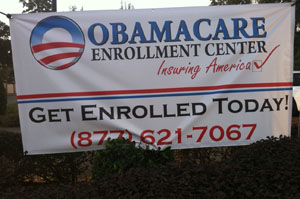
This Obamacare Enrollment Center is not connected to the federal health insurance exchange (Photo by Lynn Hatter/WFSU).
But the presenters, Pastor H.B. Holmes and Katrina Copeland, are not part of the federal government, nor are they credentialed by the federal government to be “.”Ìý
Copeland claims that, “I’m a registered lobbyist with the Senate and House, so I don’t have to have a navigator license. I have my credentials from the U.S. Senate and House of Representatives.”ÌýÌý
But she does have to be licensed.Ìý Real navigators and Ìýhave received federal approval to assist people in signing up for insurance through healthcare.gov, the federal website where people are supposed to be able to browse all the plans available, figure out what subsidies they might qualify for (or if they qualify for Medicaid), and apply for coverage with a private insurer.ÌýÌýÌý
The Obamacare Enrollment Team didn’t mention healthcare.gov during their presentation at St. Mary. Instead, they offered a narrower choice of plans than consumers can find on the federal site. And, they told seniors in the audience they could sign up for insurance, when in reality they qualify for Medicare.
In fact, Copeland and Holmes work for health insurance agencies and agents, specifically the Fiorella Insurance Agency in Stuart, Florida.ÌýÌý
The agency’s vice president Nick Fiorella runs the “Obamacare Enrollment Teams” in various states,Ìý“specifically,” he said, “in urban communities where we feel there is a lot of misinformation and education that needs to be done in order to inform individuals of their health insurance options in regard to health care reform.”ÌýÌýÌýÌý

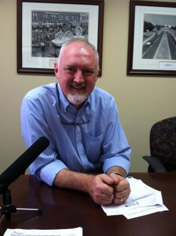
Bart Gunter of Gunter Vaughn Insurance Agency (Photo by Lynn Hatter/WFSU)
Pastor Holmes reluctantly acknowledged after questioningÌý that they’re not working directly with healthcare.gov, that he’s “marketing” for specific insurers, including Florida Blue and Humana.Ìý
Fiorella insurance agents are licensed and authorized to sell insurance to consumers.
Florida Blue officials did not return a request for comment, and Humana officials declined to be interviewed. However, in a statement, company spokesman Mitch Lubitz confirmed Humana does business with Fiorella’s agency, but that Humana, “does not endorse nor participate in Fiorella’s health reform or Affordable Care Act seminars.”Ìý
Other insurance agents trying to navigate the new health insurance market see the Obamacare Enrollment Teams as giving their industry a bad rap.
Bart Gunter, vice president of the Rogers, Gunter, Vaughn Insurance company in Tallahassee says, “Transparency has to be at the forefront because … there’s a void of education. And so, people are vulnerable. When people don’t know, the darker side kinda comes in and takes advantage of that.”Ìý
When asked about the similarity of the “Teams” materials to the Obama campaign logo, Fiorella said:Ìý“Whenever we’re made aware of materials that are not approved, we make our best efforts to get those materials out of circulation.” As of now, the familiar symbol is gone from the Enrollment Team .
Several attendees at the St. Mary church event, who did not want to be identified or directly quoted, said they were worried about the lack of transparency but were grateful the Obamacare Enrollment Team had come into their community — and openly questioned why the federal government’s own navigators and counselors weren’t present.
The U.S. Department of Health and Human Services didn’t comment on this story, but in a statement, a spokeswoman says allegations of fraud are taken seriously.
A complaint against the Obamacare Enrollment Team has been filed in Illinois regarding the group’s website,Ìý but it was cleared of any wrongdoing. Consumers also have in Michigan, where people say they were led to believe the group is affiliated with the federal government. ÌýA complaint was also filed , and now state regulators there are looking into the group’s activities as well.
This story is part of a reporting partnership that includes , and Kaiser Health News.
Â鶹ŮÓÅ Health News is a national newsroom that produces in-depth journalism about health issues and is one of the core operating programs at Â鶹ŮÓÅ—an independent source of health policy research, polling, and journalism. Learn more about .This <a target="_blank" href="/insurance/florida-health-insurance-obamacare-imitators/">article</a> first appeared on <a target="_blank" href="">Â鶹ŮÓÅ Health News</a> and is republished here under a <a target="_blank" href=" Commons Attribution-NonCommercial-NoDerivatives 4.0 International License</a>.<img src="/wp-content/uploads/sites/8/2023/04/kffhealthnews-icon.png?w=150" style="width:1em;height:1em;margin-left:10px;">
<img id="republication-tracker-tool-source" src="/?republication-pixel=true&post=26224&ga4=G-J74WWTKFM0" style="width:1px;height:1px;">]]>To be revived in the near term, Gov. Rick Scott would have to call a special session of the Legislature. There has been no indication that he is willing to do that – or that he is close to a deal with state House Republicans that would warrant such a session.
Scott, a Republican,Ìýstunned supporters and critics alike in February when he flipped from being a staunch opponent of the federal health law toÌý.
The health care overhaul gives states the option to expand their existing Medicaid programs with the federal government footing the full cost of the expansion in the first three years and paying 90-percent thereafter. In Florida, the raw numbers were persuasive to Scott, who is a former executive with hospital giant, HCA. Medicaid expansion would bring $50 billion in federal money to the state over the next ten years and cost Florida $3.5 billion in the same time frame.
State Sen. Joe Negron, a Republican, was the architect of a bill that passed the Senate. He laid out the differences between members of the two chambers within his own party.
“I have a view that when it comes to providing health care to people who get up and go to work every day, there is a role for government to provide assistance for their premiums,” Negron said. “And in the House, there’s a concern that we’re becoming too reliant on federal funds and [that] we could be setting up a program that’s too expensive for us to afford.”
Negron’s proposal, which is similar to a plan thatÌýhas passed in Arkansas, would use the federal money to help eligible Floridians purchase private plans. That was a non-starter for House Republicans. Instead House lawmakers pitched a separate plan to insure far fewer people using state funds. The back and forth between the two sides got heated, culminating in a protest by House Democrats that required every single bill to be read aloud before the chamber, line-by-line, and in full. That prompted Republicans to employ “Mary” the House’s auto reader, stalling all House business for two days as “she” read.
At one point, there were talks of a compromise between the two chambers. ButÌýSenate President Don GaetzÌýsaid, “It appears the shot-clock has run out on the health care issue for this session. But that doesn’t mean we’re going to stop working.”
Nearly 4 million people, or about one in five Floridians, are uninsured. An expansion of the Medicaid program, or some kind of alternative, could cover up to a million of the uninsured. Florida Hospital Association President Bruce Reuben says accepting the federal money would reduce the costs of treating the rest of the uninsured.
“Even if we did nothing, we’d still be paying for the cost of care for these people,” Reuben said. “We’d simply be paying for it through a hidden tax, a cost shift onto people’s private health insurance premiums.”
U.S. Rep. Debbie Wasserman Schultz, who is Chairwoman of the Democratic National Committee and who represents the Fort Lauderdale area, criticized Scott for his inaction.
“It seems to me he’s sitting on the sidelines trying to have his cake and eat it too,” said Wasserman Schultz. “You can’t have it both ways. You’re either for it or you’re against it, and in Tallahassee you have to take a stand.”
For states that have taken action, the Medicaid expansion goes into effect in January. If Florida waits until next year to expand the program, it would lose some of the federal money it would otherwise have received. States do not have a deadline when they have to accept or permanently reject the expansion.
There is precedent for states jumping in late to government health programs. Florida adopted the main Medicaid programÌý, four years after it began.
This story is part of a reporting partnership that includes ,Ìý and Kaiser Health News.Ìý
Â鶹ŮÓÅ Health News is a national newsroom that produces in-depth journalism about health issues and is one of the core operating programs at Â鶹ŮÓÅ—an independent source of health policy research, polling, and journalism. Learn more about .This <a target="_blank" href="/medicaid/florida-legislature-medicaid-expansion-rick-scott/">article</a> first appeared on <a target="_blank" href="">Â鶹ŮÓÅ Health News</a> and is republished here under a <a target="_blank" href=" Commons Attribution-NonCommercial-NoDerivatives 4.0 International License</a>.<img src="/wp-content/uploads/sites/8/2023/04/kffhealthnews-icon.png?w=150" style="width:1em;height:1em;margin-left:10px;">
<img id="republication-tracker-tool-source" src="/?republication-pixel=true&post=25852&ga4=G-J74WWTKFM0" style="width:1px;height:1px;">]]>
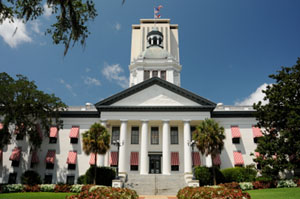
Florida’s capitol
The dispute over the Medicaid expansion sanctioned by the federal health law has engulfed the state Republican Party, which controls the House, Senate and governor’s office, and left the fate of expansion in doubt.
In voicing his opposition to the move, Weatherford Tuesday told a personal story of how, when he was 15, his 13-month-old brother Peter was dying of cancer.
“I don’t know the specifics of what happened. I know my brother had cancer, I know we were uninsured and I know we weren’t able to pay the bills,” he said.
Weatherford said the family relied on safety-net and charity services, like the Ronald McDonald House, where they stayed during trips to the hospital. The speaker neglected to say what other “safety net” services the family received.
contacted Weatherford’s father. Bill Weatherford told the reporters that the family applied for and received Medicaid, a federal-state health care program for low-income people, to cover some $100,000 worth of bills. When asked about his father’s comments, the speaker said his father was mistaken and later issued a statement saying the family received support from the . That program used Medicaid funds to for people with low incomes but who would not otherwise qualify for Medicaid.
“As I stated yesterday, I believe in the safety net,” Weatherford said in the statement. “My family benefitted from the safety net. Children living in poverty today are offered coverage under Medicaid or Kidcare in Florida. Expanding Medicaid will not extend coverage to a single low-income child under 18 in Florida because they are already covered, just like Peter was.”
Governor’s Support
Gov. Rick Scott, who is an ardent opponent of the federal health law, surprised many in his party when he announced a week ago that . Under the health law, the federal government picks up the entire tab for the expansion for the first three years but the support would fall to 90 percent in later years.
When the U.S. Supreme Court upheld the Affordable Care Act last summer, it also ruled that states could not be forced to expand Medicaid. Scott became the seventh Republican governor to announce his support of the expansion.
Opponents say expanding Medicaid doesn’t guarantee better health outcomes or access to doctors. But if Florida chooses to reject the Medicaid money, the program’s advocates counter, it would be footing the bill for other states, and low-income Floridians would still be left uninsured.
Monday aÌý to draft language rejecting the funding. Representatives say they’re concerned about additional costs to the state, and question whether Medicaid is the solution for providing people access to doctors.
In opening the House session, Weatherford said, “I’m opposed to Medicaid expansion because I believe it crosses the line of the proper role of government. I believe it forces Florida to expand a broken system that we’ve been battling Washington to fix. And I believe it will ultimately drive up the cost of healthcare in Florida.”
Senate’s Views
Senate President Don Gaetz cast even more doubt on the possibility of an expansion after the House panel vote when he said if the House rejects the plan, it would kill any future negotiations.
“It takes three yeses to get to ‘yes’ and one ‘no’ to get to ‘no,’ and it sounds to me from what I heard today stated in the Florida House, that the House of Representatives and the speaker are inclining toward no. And if that’s the case, then no one gets to bat, the lights get turned off and we all go home on that issue,” Gaetz said.
The Senate committee studying the issue has yet to come out with its stance on the expansion. But committee chairman Joe Negron, who crafted Florida’s statewide Medicaid Managed Care System, has said the state can’t just say no without having a solution to serve Florida’s 4 million uninsured. The managed care plan won approval from the federal government on the same day that the governor said he would support expansion.
Negron hopes to continue negotiations on the issue.
“The concerns about Medicaid expansion are very real and very legitimate,” he says. “But I don’t find persuasive the idea that we just can’t. We just have to have people go to the Emergency Room when their 11-year-old kid has an ear ache at 2 am. That that’s the best we can do. We can do better than that.”
But some analysts suggested if the Senate were to move forward with the expansion, it could put some pressure on House Republicans to reconsider.
“I think if the Senate comes out on the opposite side here, you’re going to see back room negotiations and ideas and issues trying to persuade the other House to come over to the position,” said Florida State University political science professor .
Some lawmakers also are now looking to a , which got federal approval to give billions in federal Medicaid money to people who would qualify under the health law to buy private coverage on an exchange.
Meanwhile, in his State of the State Speech Tuesday, Scott reiterated his support of increasing access to Medicaid.
“I cannot, in good conscience, deny the uninsured access to care,” Scott said to cheers from Democrats, and mostly silence from Republicans.
This story is part of a reporting partnership that includes ,Ìý and Kaiser Health News.Ìý
Â鶹ŮÓÅ Health News is a national newsroom that produces in-depth journalism about health issues and is one of the core operating programs at Â鶹ŮÓÅ—an independent source of health policy research, polling, and journalism. Learn more about .This <a target="_blank" href="/medicaid/florida-republicans-medicaid-expansion-dispute/">article</a> first appeared on <a target="_blank" href="">Â鶹ŮÓÅ Health News</a> and is republished here under a <a target="_blank" href=" Commons Attribution-NonCommercial-NoDerivatives 4.0 International License</a>.<img src="/wp-content/uploads/sites/8/2023/04/kffhealthnews-icon.png?w=150" style="width:1em;height:1em;margin-left:10px;">
<img id="republication-tracker-tool-source" src="/?republication-pixel=true&post=25295&ga4=G-J74WWTKFM0" style="width:1px;height:1px;">]]>The Florida House of Representatives has signaled it won’t go along with Gov. Rick Scott to expand Medicaid coverage to more than a million low-income Floridians under the Affordable Care Act. The party-line vote came Monday shortly after a joint committee hearing on the law’s financial impact on the state.
Under the federal health care law, the state has the option to expandÌýthe Medicaid program, with the federal government picking up the tab for the first three years. That support would fall to 90 percent in later years.
Ìýhad signaled a week ago that he would support an expansion of Medicaid after the federal government approved the state’s plan to privatize the program. It was a major reversal coming from one of the health law’s staunchest Republican critics.Ìý But in a meeting today, the House’s Select Committee on the Patient Protection and Affordable Care ActÌýsaid the state can’t rely on promises from the federal government that it might be unable to keep.
“What the federal government gives, it can take away,” said state Rep. Kathleen Passidomo, R-Naples.
The vote against the Medicaid expansion was along party lines, with 10 Republicans voting no and five Democrats voting in favor of the expansion. Minority Leader Perry Thurston, D-Fort Lauderdale, who supports the expansion, says Florida is one of the states that needs it most.
“We’re at the bottom of the barrel for people who need these services,” said Thurston.
Earlier in the day, state economist Amy Baker told a joint meeting of the House and Senate PPACA committees that the state could see gains in employment, wages and state revenues from the expansion. But Baker also presented worst-case scenarios that projected decreases in personal income and lower state revenues.
Meanwhile, the Senate select committee has postponed a meeting originally set for later today. , R-Palm City, who leads that committee, is the architect of the Medicaid managed care programÌýwhich wasÌýtentativelyÌýapproved by the federal government last month.
“Whether senators support or oppose expansion, the choice comes with far-reaching consequences for individuals, health care providers, and the entire state,”ÌýNegron said in a statement. “The additional time between today and our next meeting will allow senators to review and study these important issues to ensure that our final decisions and recommendations receive the thoughtful and careful consideration they deserve.”
Monday’s vote sets up a possible split-legislature scenario in which Medicaid expansion is supported by the Senate and opposed by the House, which is the more conservative chamber in Florida. Both chambers of the legislature have Republican majorities.
This story is part of a collaboration that includes , and Kaiser Health News.
Â鶹ŮÓÅ Health News is a national newsroom that produces in-depth journalism about health issues and is one of the core operating programs at Â鶹ŮÓÅ—an independent source of health policy research, polling, and journalism. Learn more about .This <a target="_blank" href="/news/florida-house-panel-opposes-medicaid-expansion/">article</a> first appeared on <a target="_blank" href="">Â鶹ŮÓÅ Health News</a> and is republished here under a <a target="_blank" href=" Commons Attribution-NonCommercial-NoDerivatives 4.0 International License</a>.<img src="/wp-content/uploads/sites/8/2023/04/kffhealthnews-icon.png?w=150" style="width:1em;height:1em;margin-left:10px;">
<img id="republication-tracker-tool-source" src="/?republication-pixel=true&post=5256&ga4=G-J74WWTKFM0" style="width:1px;height:1px;">]]>At that time, retirees were skeptical of how it would work.
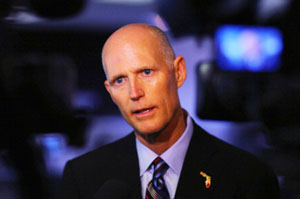
Gov. Scott (Photo by Joe Raedle/Getty Images)
“For-profit companies have a fiduciary responsibility to do what? Make money. So they’re not going to manage their care, they’re going to ration their care,” said Joseph Flynn, a retiree living in the Central Florida community of the Villages, where Gov. Rick Scott was holding a budget signing ceremony.
That skepticism has not gone away but now the federal Centers for Medicaid & Medicare Services has signed off on part of allowing Florida to begin its transition to managed care for Medicaid recipients in long-term care.
Under the state’s current fee-for-service model, whenÌýthe patient goes to a nursing home, hospital or doctor, the health providerÌýbillsÌýthe state, and the state cuts a check. But that system is expensive, difficult for frail patients to navigate and doesn’t necessarily result in good care.ÌýFlorida officials and industry representatives say managed care will be an improvement.Ìý
“Let’s just take medication compliance. That alone. That’s a big issue for seniors, people in long-term care, because that can be very complicated,” said Michael Garner, presidentÌýof the . He says managed care has a number of ways to help boost health outcomes, starting with something as simple as helping people manage their medications.
“Managed care plans have a number of techniques, [such as] having a nurse come out and do pill counts,” Garner said. “So just on pharmaceutical management, we can do a tremendous thing to improve the continuity of health for that individual and lower cost.”ÌýÌý
In the new Medicaid managed care model, Florida will be paying health plans in various regions of the state a set amount of money per person to treat the elderly and disabled in long-term care. The waiver affects 87,000 Medicaid recipients in long-term care. It provides $417 million in the first year to take care of 36,795 beneficiaries in home- and community- based services, according to the letter from CMS to the state health agency. These are patients who would otherwise qualify for nursing home care.Ìý
The health plans will contract with doctors and other facilities toÌýbuild networksÌýfor beneficiaries.ÌýPatients will be able to choose their plan and network. But elder law attorneyÌýÌýsays Medicaid recipients, especially in rural communities, already have troubleÌýgetting access to doctors. “We don’t know how, If we can’t get it for private pay rates, how the managed care organizations will be able to provide it for probably less than what the private pay rates are going to be,” Sketchley said.ÌýÌý
But the health plan association’s Garner says theÌýstate will holdÌýthe managed care plans accountable for making sure enough health careÌýproviders areÌýin their network. He also says while Medicaid reimbursements have always been low, the savings gained throughÌýbetter patientÌýhealth outcomes will be used to raise reimbursement rates.Ìý
Another aspect of the plan is to move some seniors out of nursing homes and into home and community-based programs, which are cheaper. But the , which represents the long-term care industry, has raised concerns about how much savings theÌýstateÌýwillÌýachieve.
“In fact, there was a study done on Florida, and only about 1 percentÌýof patients in nursing homes were found to be inappropriately placed,” said the association’sÌýExecutive Director Emmett Reed.
He says companies needÌýto turn a profitÌýto stay in business, but, “nursing homes operate on razor-thin margins already. Out of the entire medical profession, it’s the least profitable,” Reed said. “We’re just curious to see how a company would be able to come in and significantly slash costs without affecting quality.”ÌýÌý
Medicaid managed care is not a new concept in Florida. The state beganÌýa pilot project in five South Florida counties inÌý2006, with mixed results on care and cost. The state is still awaiting federalÌýapproval to move the larger Medicaid population into managed care.
This story is part of a reporting partnership that includes ,Ìý and Kaiser Health News.Ìý
This article was produced by Kaiser Health News with support from .
Â鶹ŮÓÅ Health News is a national newsroom that produces in-depth journalism about health issues and is one of the core operating programs at Â鶹ŮÓÅ—an independent source of health policy research, polling, and journalism. Learn more about .This <a target="_blank" href="/aging/florida-medicaid-managed-care-long-term-care/">article</a> first appeared on <a target="_blank" href="">Â鶹ŮÓÅ Health News</a> and is republished here under a <a target="_blank" href=" Commons Attribution-NonCommercial-NoDerivatives 4.0 International License</a>.<img src="/wp-content/uploads/sites/8/2023/04/kffhealthnews-icon.png?w=150" style="width:1em;height:1em;margin-left:10px;">
<img id="republication-tracker-tool-source" src="/?republication-pixel=true&post=25430&ga4=G-J74WWTKFM0" style="width:1px;height:1px;">]]>Pharmacists descended on the state capitol Wednesday to support a bill sponsored by state Rep. Ana Rivas Logan,ÌýR-Miami,Ìýwhich would allow them to give shingles and pneumonia vaccines to seniors.
“Many seniors contract shingles and pneumonia and this vaccine will prevent hundreds of thousands of seniors from not only contracting the disease, but from the complications of the disease,” she said, adding that the law could make vaccinations more affordable.
“Going to a doctor’s office to receive the vaccination requires a copayment to the physician and then the vaccine payment. This will allow the senior to just have the vaccine.”
Lynn Hatter, of WFSU reports:
Five years ago, the state started letting pharmacies offer flu vaccines. Since then, the number of flu vaccinations throughout Florida has gone up. Advocates point to that as evidence that more people take advantage of immunizations when it’s more convenient and thatÌýpharmacies should be able to provideÌýpneumonia and shingles vaccinations.
“It’s a question of access,” according to Sally West, director of government affairs for the Florida Retail Federation. “Ninety percent of Floridians live less than five miles from a pharmacy. Pharmacies serve the underserved, minority and rural communities.”
But turf battles over who can administer vaccines have long been fought between pharmacists and doctors, who have historically been the gatekeepers of immunizations. Physicians say they have concerns about patient care and giving vaccination power to pharmacists, who do not have the same training as doctors.
“We want to make sure that people are immunized, and we want to increase the rate of immunizations, but what we don’t want to do is put people unnecessarily in jeopardy,” said Rebecca O’Hara, vice president of governmental affairs for the Florida Medical Association.
The pharmacist-physician battle is playing out in the state senate version of the bill. Senate President-Designate Don Gaetz, a Republican, attached an amendment requiring doctors to write prescriptions for the vaccines before patients can get them at their local pharmacy.
Senator Dennis Jones says that defeats the purpose of the bill. “This prescription is not necessary. It is going to cost money. People are going to have to be inconvenienced by making an appointment, paying a co-pay and getting another piece of paper to take to the pharmacy, where right now they can walk into their local pharmacy to obtain these services.”
But Gaetz held firm with his amendments. “By adopting these two amendments I think we’ll have the votes to pass the bill. Failing that, I think the bill could be in trouble as it goes forward.”
Rep. Ronald “Doc” Renuart, R-Ponte Vedra Beach, who is an osteopathic physician, argued that pharmacies would offer free or low-cost vaccinations as “loss leaders” to attract customers who will buy other goods — an offer that doctors can’t match.
“I’m against the expansion of pharmacies doing things that would otherwise be reserved for physicians,” Renuart said.
Another disagreement centers on a Senate amendment that would require pharmacists to go through a certification program that would be offered by a physicians’ group, likely the Florida Medical Association.
The proposal cleared the Senate Health Regulation Committee on a 6-1 vote. It passed 10-to-5 in the House Committee. Lobbyists for the pharmacies and physician groups say they’ll try to work out their differences as the proposals move through the two chambers.
The News Service of Florida contributed to this story.
This <a target="_blank" href="/aging/florida-vaccines-seniors/">article</a> first appeared on <a target="_blank" href="">Â鶹ŮÓÅ Health News</a> and is republished here under a <a target="_blank" href=" Commons Attribution-NonCommercial-NoDerivatives 4.0 International License</a>.<img src="/wp-content/uploads/sites/8/2023/04/kffhealthnews-icon.png?w=150" style="width:1em;height:1em;margin-left:10px;">
<img id="republication-tracker-tool-source" src="/?republication-pixel=true&post=22733&ga4=G-J74WWTKFM0" style="width:1px;height:1px;">]]>This story is part of a reporting partnership that includes ,Ìý and Kaiser Health News.
Like other states, Florida is feeling squeezed by the soaring cost of Medicaid. But its response is drawing fire from hospitals, and the Obama administration may be pushing back.Ìý
Republican Gov. Rick Scott this weekÌý in the joint state-federal health insurance program for the poor by $2 billion, in part to add $1 billion to education in the next fiscal year.
“No program has grown as fast and as much as Medicaid, and we must find a way to control the cost. If we do nothing, this program will bankrupt our state,” Scott saidÌý describing his proposed $66.4 billion budget for the year that begins July 1.
Scott wants to change the way hospitals are reimbursed for treating patients on Medicaid, eliminating wide variations that now exist and paying flat rates for the same procedures in similar types of hospitals.
Scott is also looking to cut the number of emergency room visits and hospitalizations that Medicaid will cover.
Hospitals are warning of ,ÌýbutÌýthey’re not the only ones concerned about plans toÌýslow the rate of Medicaid spending in the state.Ìý
A plan to expandÌýa five-county Medicaid managed care pilot program to the whole state may be in trouble. Lawmakers touted the expansion as a way to curb the rising costs of the program, but at least one part of the plan seems to be causing federal health officials some heartburn: charging beneficiaries co-pays and premiums.
As part of the effort to privatize many of the state’s Medicaid services, the state plans to charge monthly premiums of $10 per person and and a $100 co-payment for non-emergency visits to hospitalÌýERs. But those extra charges may pose serious problems.
In Florida, a majority of the 2.9 million people on Medicaid are women and children.Ìý“These are families with very low incomes. We found that 800,000 children and their parents would be likely to lose coverage if this premium went into effect,” said Joan Alker, a senior researcher at the Georgetown University Health Policy Institute, who has been tracking the state’s progress in transitioning Medicaid recipients into managed care statewide.
She noted thatÌýstates are allowed to impose some cost-sharing requirements on Medicaid patients, and some do, but Florida is taking it a step further by allowing private companies to charge premiums and co-pays to people below the poverty line.
“The most similar experience we can look at is Oregon,” she said. “With respect to adults below poverty, Oregon instituted premiums in 2003 and over the next few years enrollment for adults dropped precipitously from 104,000 to 24,000,” Alker said.
The extra payments are expected to generate about $370 millionÌýannually in Medicaid savings. The program’s annual budget is about $21 billion. But state Medicaid Director Justin Senior says the federal government appears unlikely to give Florida the waiver it needs to proceed.
“A lot of our initial conversations with the federal government have centered on whether those provisions are maintenance-of-effort violations,” he said.
The maintenance of effort (MOE) provision is part of the 2010 federal health overhaul. It says states can’t change the rules for who is eligible for Medicaid. And according to Senior, the planned co-pays and premiums, at first blush, seem to do that.
“The initial determination appears to be that they probably are maintenance of effort violations and may not be approved,” he said.
Billions of dollars in federal support are at risk. If it’s found that Florida isn’t following the rules, the federal government willÌýwithhold its $15 billion share of program costs.
But Florida isn’t backing down from its plan just yet. State lawmakers approved the changes in May as part of a broader Medicaid overhaul, steering almost all Medicaid beneficiaries into managed care plans run by private insurance companies.
Scott says the state can’t afford the Medicaid program in its current form and needs a federal waiver to make Medicaid work.
“We began last year by passing major Medicaid reform. But after months of dealing with the federal government, we still have not received approval for our Medicaid waiver. In order to fund education and ensure our state is in a position to continue to create jobs, we must control costs,” he said at a news conference announcing his budget proposal.
Â鶹ŮÓÅ Health News is a national newsroom that produces in-depth journalism about health issues and is one of the core operating programs at Â鶹ŮÓÅ—an independent source of health policy research, polling, and journalism. Learn more about .This <a target="_blank" href="/medicaid/florida-medicaid-budget-cuts/">article</a> first appeared on <a target="_blank" href="">Â鶹ŮÓÅ Health News</a> and is republished here under a <a target="_blank" href=" Commons Attribution-NonCommercial-NoDerivatives 4.0 International License</a>.<img src="/wp-content/uploads/sites/8/2023/04/kffhealthnews-icon.png?w=150" style="width:1em;height:1em;margin-left:10px;">
<img id="republication-tracker-tool-source" src="/?republication-pixel=true&post=27569&ga4=G-J74WWTKFM0" style="width:1px;height:1px;">]]>This story is part of a reporting partnership that includes ,Ìý and Kaiser Health News.
TALLAHASSEE – A special panel appointed by Florida Gov. Rick Scott has been meeting to figure out a way to scale back what taxpayers at the local level contribute to hospital costs in some parts of the state.
The panel is wading into sensitive territory. Taxpayer-funded “hospital districts” are counties where property owners pay a bit more tax to fund local hospitals, specifically those serving the poor. The more than 20 districts generate about five billion dollars annually, statewide,Ìýfor the coffers of some medical centers.
One area where those special property taxes have created controversy is in Lake County, in the central part of the state. Republican State Rep. Larry Metz isÌý – which send the extra funds to three of the area’s hospitals – andÌýto let voters decide in a referendumÌýwhether they want to create a new district. He’s calling for sending the extra funds to any hospital to help pay for the costs of charity care.
“The taxpayers are paying all their taxes, and out of those general taxes we’re paying for all these programs, general programs. Then on top of that the taxpayers of North Lake County are paying 1 mill to pay for these Medicare and Medicaid (mostly Medicaid) shortfalls. I just don’t think the system is properly structured,” he said.
Not everyone is on board with the idea of scrapping the special hospitalÌýdistricts. Florida Hospital Association President Bruce Rueben says there could be a big problem down the road if the state tinkers with that revenue source. That’s because the money those districts generate goes to help the state draw matching funds from the federal government for Medicaid. The federal government pays about 55 cents of every dollar spent on care for Medicaid patients; Florida pays the rest.
Rueben cautions that the state relies on the hospital district revenues to get additional money from the federal government and adds: “If we’re going to dismantle that or put it at risk, then we simply have to know where that match is coming from.” He believesÌýthe governor’s Hospital Review Commission is tinkering with a very delicate instrument, and, if it’s not careful with its proposals, it could create a problem that it may not be able to fix.
“I don’t know what they’re really trying to accomplish or focus on, but I hope, before this thing is over, that they will address this issue of what really could be a gigantic unintended consequence,” he says.
Meanwhile, the commission is set to make recommendations to the governor and legislature in January on how to treat theÌýhospital taxing districts. Gov. Scott says lawmakers may not act on the recommendations until 2013.
The panel isÌýalso examingÌýan effort by Tallahassee Memorial Hospital to cut hospital costs, so they don’t need as much help government help.
The hospital invested in a program as a way to give people follow-up care once they’re discharged from the hospital, in the hope that they won’t come back to the emergency room – which is the most expensive kind of care –Ìýto be readmitted.
Judy Griffen, a nurse practitioner at Tallahassee Memorial Hospital’s Transition Center says it’s working: “What we’re finding is that when we get a patient who didn’t have good follow-up care and we get them stabilized medically and we provide them out-patient services, they tend to not utilize the hospitals or community services as much, because they get what they need.”
Â鶹ŮÓÅ Health News is a national newsroom that produces in-depth journalism about health issues and is one of the core operating programs at Â鶹ŮÓÅ—an independent source of health policy research, polling, and journalism. Learn more about .This <a target="_blank" href="/health-industry/florida-hospital-districts/">article</a> first appeared on <a target="_blank" href="">Â鶹ŮÓÅ Health News</a> and is republished here under a <a target="_blank" href=" Commons Attribution-NonCommercial-NoDerivatives 4.0 International License</a>.<img src="/wp-content/uploads/sites/8/2023/04/kffhealthnews-icon.png?w=150" style="width:1em;height:1em;margin-left:10px;">
<img id="republication-tracker-tool-source" src="/?republication-pixel=true&post=27543&ga4=G-J74WWTKFM0" style="width:1px;height:1px;">]]>Shortly after the adjournment, Gov. Rick Scott, a Republican, against the federal government over the same issue.

Here’s a brief overview of the fight: The Republican-led state House is firmly against Medicaid expansion, while the Republican-led state Senate, which is still in session, supports it. Scott once supported expansion but is now against it.
And the federal government raised the stakes of the battle by refusing to negotiate on the renewal of $2 billion in funds, mainly for the Low Income Pool program, which reimburses hospitals for unpaid bills. The federal funding will expire at the end of June.
“The pool money was about helping low-income people have access,” Health and Human Services Secretary Sylvia Burwell told WFSU in January. “I think we believe an important way to extend that coverage to low-income individuals is what passed in the Affordable Care Act, is this issue of Medicaid expansion.”
Scott’s suit says it’s a case of coercion – Florida must expand Medicaid or lose $2 billion – and that was expressly forbidden by the Supreme Court when it upheld the health law in 2012.
Close to if the state expands Medicaid.
House Appropriations Chief Richard Corcoran recently delivered a 20-minute speech against Medicaid to fellow lawmakers.
“Here’s my message to the Senate: They want us to come dance? We’re not dancing,” Corcoran said. “We’re not dancing this session, we’re not dancing next session, we’re not dancing next summer. We’re not dancing. And if you want to blow up the process because you think you have some right that doesn’t exist? Have at it.”
Senate President Andy Gardiner says he’s disappointed with the House’s decision: “The House didn’t win, the Senate didn’t win and the taxpayers lost. There are a lot of issues that aren’t going to make it, and it’s unfortunate.”
But House Speaker Steve Crisafulli says it was the right thing to do: “We’ve made every effort we can to negotiate with the Senate on a budget and at this time they’re standing strong on Medicaid expansion.”
Crisafulli’s top legislative priority, water policy reform, is among the many bills left hanging this session.
Scott tried to pressure the Legislature to the bargaining table to craft a state budget. He threatened to veto Senate priorities, but the Senate remained unmoved.
Now, the one task the Legislature isÌýmandated to do — pass a budget — remains incomplete. Scott he will call the Legislature back for a special session to complete the budget.
This storyÌýis part of a reporting partnership that includes WFSU, NPR and Kaiser Health News. Ìý
Â鶹ŮÓÅ Health News is a national newsroom that produces in-depth journalism about health issues and is one of the core operating programs at Â鶹ŮÓÅ—an independent source of health policy research, polling, and journalism. Learn more about .This <a target="_blank" href="/medicaid/florida-legislature-goes-home-early-over-medicaid-impasse/">article</a> first appeared on <a target="_blank" href="">Â鶹ŮÓÅ Health News</a> and is republished here under a <a target="_blank" href=" Commons Attribution-NonCommercial-NoDerivatives 4.0 International License</a>.<img src="/wp-content/uploads/sites/8/2023/04/kffhealthnews-icon.png?w=150" style="width:1em;height:1em;margin-left:10px;">
<img id="republication-tracker-tool-source" src="/?republication-pixel=true&post=537216&ga4=G-J74WWTKFM0" style="width:1px;height:1px;">]]>They were told: “If anybody is interested in getting enrolled we can get you enrolled tonight.”
Signs outside the church even looked official:Ìý A familiar large “O” with a blue outline, white center and three red stripes.

This Obamacare Enrollment Center is not connected to the federal health insurance exchange (Photo by Lynn Hatter/WFSU).
But the presenters, Pastor H.B. Holmes and Katrina Copeland, are not part of the federal government, nor are they credentialed by the federal government to be “.”Ìý
Copeland claims that, “I’m a registered lobbyist with the Senate and House, so I don’t have to have a navigator license. I have my credentials from the U.S. Senate and House of Representatives.”ÌýÌý
But she does have to be licensed.Ìý Real navigators and Ìýhave received federal approval to assist people in signing up for insurance through healthcare.gov, the federal website where people are supposed to be able to browse all the plans available, figure out what subsidies they might qualify for (or if they qualify for Medicaid), and apply for coverage with a private insurer.ÌýÌýÌý
The Obamacare Enrollment Team didn’t mention healthcare.gov during their presentation at St. Mary. Instead, they offered a narrower choice of plans than consumers can find on the federal site. And, they told seniors in the audience they could sign up for insurance, when in reality they qualify for Medicare.
In fact, Copeland and Holmes work for health insurance agencies and agents, specifically the Fiorella Insurance Agency in Stuart, Florida.ÌýÌý
The agency’s vice president Nick Fiorella runs the “Obamacare Enrollment Teams” in various states,Ìý“specifically,” he said, “in urban communities where we feel there is a lot of misinformation and education that needs to be done in order to inform individuals of their health insurance options in regard to health care reform.”ÌýÌýÌýÌý

Bart Gunter of Gunter Vaughn Insurance Agency (Photo by Lynn Hatter/WFSU)
Pastor Holmes reluctantly acknowledged after questioningÌý that they’re not working directly with healthcare.gov, that he’s “marketing” for specific insurers, including Florida Blue and Humana.Ìý
Fiorella insurance agents are licensed and authorized to sell insurance to consumers.
Florida Blue officials did not return a request for comment, and Humana officials declined to be interviewed. However, in a statement, company spokesman Mitch Lubitz confirmed Humana does business with Fiorella’s agency, but that Humana, “does not endorse nor participate in Fiorella’s health reform or Affordable Care Act seminars.”Ìý
Other insurance agents trying to navigate the new health insurance market see the Obamacare Enrollment Teams as giving their industry a bad rap.
Bart Gunter, vice president of the Rogers, Gunter, Vaughn Insurance company in Tallahassee says, “Transparency has to be at the forefront because … there’s a void of education. And so, people are vulnerable. When people don’t know, the darker side kinda comes in and takes advantage of that.”Ìý
When asked about the similarity of the “Teams” materials to the Obama campaign logo, Fiorella said:Ìý“Whenever we’re made aware of materials that are not approved, we make our best efforts to get those materials out of circulation.” As of now, the familiar symbol is gone from the Enrollment Team .
Several attendees at the St. Mary church event, who did not want to be identified or directly quoted, said they were worried about the lack of transparency but were grateful the Obamacare Enrollment Team had come into their community — and openly questioned why the federal government’s own navigators and counselors weren’t present.
The U.S. Department of Health and Human Services didn’t comment on this story, but in a statement, a spokeswoman says allegations of fraud are taken seriously.
A complaint against the Obamacare Enrollment Team has been filed in Illinois regarding the group’s website,Ìý but it was cleared of any wrongdoing. Consumers also have in Michigan, where people say they were led to believe the group is affiliated with the federal government. ÌýA complaint was also filed , and now state regulators there are looking into the group’s activities as well.
This story is part of a reporting partnership that includes , and Kaiser Health News.
Â鶹ŮÓÅ Health News is a national newsroom that produces in-depth journalism about health issues and is one of the core operating programs at Â鶹ŮÓÅ—an independent source of health policy research, polling, and journalism. Learn more about .This <a target="_blank" href="/insurance/florida-health-insurance-obamacare-imitators/">article</a> first appeared on <a target="_blank" href="">Â鶹ŮÓÅ Health News</a> and is republished here under a <a target="_blank" href=" Commons Attribution-NonCommercial-NoDerivatives 4.0 International License</a>.<img src="/wp-content/uploads/sites/8/2023/04/kffhealthnews-icon.png?w=150" style="width:1em;height:1em;margin-left:10px;">
<img id="republication-tracker-tool-source" src="/?republication-pixel=true&post=26224&ga4=G-J74WWTKFM0" style="width:1px;height:1px;">]]>To be revived in the near term, Gov. Rick Scott would have to call a special session of the Legislature. There has been no indication that he is willing to do that – or that he is close to a deal with state House Republicans that would warrant such a session.
Scott, a Republican,Ìýstunned supporters and critics alike in February when he flipped from being a staunch opponent of the federal health law toÌý.
The health care overhaul gives states the option to expand their existing Medicaid programs with the federal government footing the full cost of the expansion in the first three years and paying 90-percent thereafter. In Florida, the raw numbers were persuasive to Scott, who is a former executive with hospital giant, HCA. Medicaid expansion would bring $50 billion in federal money to the state over the next ten years and cost Florida $3.5 billion in the same time frame.
State Sen. Joe Negron, a Republican, was the architect of a bill that passed the Senate. He laid out the differences between members of the two chambers within his own party.
“I have a view that when it comes to providing health care to people who get up and go to work every day, there is a role for government to provide assistance for their premiums,” Negron said. “And in the House, there’s a concern that we’re becoming too reliant on federal funds and [that] we could be setting up a program that’s too expensive for us to afford.”
Negron’s proposal, which is similar to a plan thatÌýhas passed in Arkansas, would use the federal money to help eligible Floridians purchase private plans. That was a non-starter for House Republicans. Instead House lawmakers pitched a separate plan to insure far fewer people using state funds. The back and forth between the two sides got heated, culminating in a protest by House Democrats that required every single bill to be read aloud before the chamber, line-by-line, and in full. That prompted Republicans to employ “Mary” the House’s auto reader, stalling all House business for two days as “she” read.
At one point, there were talks of a compromise between the two chambers. ButÌýSenate President Don GaetzÌýsaid, “It appears the shot-clock has run out on the health care issue for this session. But that doesn’t mean we’re going to stop working.”
Nearly 4 million people, or about one in five Floridians, are uninsured. An expansion of the Medicaid program, or some kind of alternative, could cover up to a million of the uninsured. Florida Hospital Association President Bruce Reuben says accepting the federal money would reduce the costs of treating the rest of the uninsured.
“Even if we did nothing, we’d still be paying for the cost of care for these people,” Reuben said. “We’d simply be paying for it through a hidden tax, a cost shift onto people’s private health insurance premiums.”
U.S. Rep. Debbie Wasserman Schultz, who is Chairwoman of the Democratic National Committee and who represents the Fort Lauderdale area, criticized Scott for his inaction.
“It seems to me he’s sitting on the sidelines trying to have his cake and eat it too,” said Wasserman Schultz. “You can’t have it both ways. You’re either for it or you’re against it, and in Tallahassee you have to take a stand.”
For states that have taken action, the Medicaid expansion goes into effect in January. If Florida waits until next year to expand the program, it would lose some of the federal money it would otherwise have received. States do not have a deadline when they have to accept or permanently reject the expansion.
There is precedent for states jumping in late to government health programs. Florida adopted the main Medicaid programÌý, four years after it began.
This story is part of a reporting partnership that includes ,Ìý and Kaiser Health News.Ìý
Â鶹ŮÓÅ Health News is a national newsroom that produces in-depth journalism about health issues and is one of the core operating programs at Â鶹ŮÓÅ—an independent source of health policy research, polling, and journalism. Learn more about .This <a target="_blank" href="/medicaid/florida-legislature-medicaid-expansion-rick-scott/">article</a> first appeared on <a target="_blank" href="">Â鶹ŮÓÅ Health News</a> and is republished here under a <a target="_blank" href=" Commons Attribution-NonCommercial-NoDerivatives 4.0 International License</a>.<img src="/wp-content/uploads/sites/8/2023/04/kffhealthnews-icon.png?w=150" style="width:1em;height:1em;margin-left:10px;">
<img id="republication-tracker-tool-source" src="/?republication-pixel=true&post=25852&ga4=G-J74WWTKFM0" style="width:1px;height:1px;">]]>
Florida’s capitol
The dispute over the Medicaid expansion sanctioned by the federal health law has engulfed the state Republican Party, which controls the House, Senate and governor’s office, and left the fate of expansion in doubt.
In voicing his opposition to the move, Weatherford Tuesday told a personal story of how, when he was 15, his 13-month-old brother Peter was dying of cancer.
“I don’t know the specifics of what happened. I know my brother had cancer, I know we were uninsured and I know we weren’t able to pay the bills,” he said.
Weatherford said the family relied on safety-net and charity services, like the Ronald McDonald House, where they stayed during trips to the hospital. The speaker neglected to say what other “safety net” services the family received.
contacted Weatherford’s father. Bill Weatherford told the reporters that the family applied for and received Medicaid, a federal-state health care program for low-income people, to cover some $100,000 worth of bills. When asked about his father’s comments, the speaker said his father was mistaken and later issued a statement saying the family received support from the . That program used Medicaid funds to for people with low incomes but who would not otherwise qualify for Medicaid.
“As I stated yesterday, I believe in the safety net,” Weatherford said in the statement. “My family benefitted from the safety net. Children living in poverty today are offered coverage under Medicaid or Kidcare in Florida. Expanding Medicaid will not extend coverage to a single low-income child under 18 in Florida because they are already covered, just like Peter was.”
Governor’s Support
Gov. Rick Scott, who is an ardent opponent of the federal health law, surprised many in his party when he announced a week ago that . Under the health law, the federal government picks up the entire tab for the expansion for the first three years but the support would fall to 90 percent in later years.
When the U.S. Supreme Court upheld the Affordable Care Act last summer, it also ruled that states could not be forced to expand Medicaid. Scott became the seventh Republican governor to announce his support of the expansion.
Opponents say expanding Medicaid doesn’t guarantee better health outcomes or access to doctors. But if Florida chooses to reject the Medicaid money, the program’s advocates counter, it would be footing the bill for other states, and low-income Floridians would still be left uninsured.
Monday aÌý to draft language rejecting the funding. Representatives say they’re concerned about additional costs to the state, and question whether Medicaid is the solution for providing people access to doctors.
In opening the House session, Weatherford said, “I’m opposed to Medicaid expansion because I believe it crosses the line of the proper role of government. I believe it forces Florida to expand a broken system that we’ve been battling Washington to fix. And I believe it will ultimately drive up the cost of healthcare in Florida.”
Senate’s Views
Senate President Don Gaetz cast even more doubt on the possibility of an expansion after the House panel vote when he said if the House rejects the plan, it would kill any future negotiations.
“It takes three yeses to get to ‘yes’ and one ‘no’ to get to ‘no,’ and it sounds to me from what I heard today stated in the Florida House, that the House of Representatives and the speaker are inclining toward no. And if that’s the case, then no one gets to bat, the lights get turned off and we all go home on that issue,” Gaetz said.
The Senate committee studying the issue has yet to come out with its stance on the expansion. But committee chairman Joe Negron, who crafted Florida’s statewide Medicaid Managed Care System, has said the state can’t just say no without having a solution to serve Florida’s 4 million uninsured. The managed care plan won approval from the federal government on the same day that the governor said he would support expansion.
Negron hopes to continue negotiations on the issue.
“The concerns about Medicaid expansion are very real and very legitimate,” he says. “But I don’t find persuasive the idea that we just can’t. We just have to have people go to the Emergency Room when their 11-year-old kid has an ear ache at 2 am. That that’s the best we can do. We can do better than that.”
But some analysts suggested if the Senate were to move forward with the expansion, it could put some pressure on House Republicans to reconsider.
“I think if the Senate comes out on the opposite side here, you’re going to see back room negotiations and ideas and issues trying to persuade the other House to come over to the position,” said Florida State University political science professor .
Some lawmakers also are now looking to a , which got federal approval to give billions in federal Medicaid money to people who would qualify under the health law to buy private coverage on an exchange.
Meanwhile, in his State of the State Speech Tuesday, Scott reiterated his support of increasing access to Medicaid.
“I cannot, in good conscience, deny the uninsured access to care,” Scott said to cheers from Democrats, and mostly silence from Republicans.
This story is part of a reporting partnership that includes ,Ìý and Kaiser Health News.Ìý
Â鶹ŮÓÅ Health News is a national newsroom that produces in-depth journalism about health issues and is one of the core operating programs at Â鶹ŮÓÅ—an independent source of health policy research, polling, and journalism. Learn more about .This <a target="_blank" href="/medicaid/florida-republicans-medicaid-expansion-dispute/">article</a> first appeared on <a target="_blank" href="">Â鶹ŮÓÅ Health News</a> and is republished here under a <a target="_blank" href=" Commons Attribution-NonCommercial-NoDerivatives 4.0 International License</a>.<img src="/wp-content/uploads/sites/8/2023/04/kffhealthnews-icon.png?w=150" style="width:1em;height:1em;margin-left:10px;">
<img id="republication-tracker-tool-source" src="/?republication-pixel=true&post=25295&ga4=G-J74WWTKFM0" style="width:1px;height:1px;">]]>The Florida House of Representatives has signaled it won’t go along with Gov. Rick Scott to expand Medicaid coverage to more than a million low-income Floridians under the Affordable Care Act. The party-line vote came Monday shortly after a joint committee hearing on the law’s financial impact on the state.
Under the federal health care law, the state has the option to expandÌýthe Medicaid program, with the federal government picking up the tab for the first three years. That support would fall to 90 percent in later years.
Ìýhad signaled a week ago that he would support an expansion of Medicaid after the federal government approved the state’s plan to privatize the program. It was a major reversal coming from one of the health law’s staunchest Republican critics.Ìý But in a meeting today, the House’s Select Committee on the Patient Protection and Affordable Care ActÌýsaid the state can’t rely on promises from the federal government that it might be unable to keep.
“What the federal government gives, it can take away,” said state Rep. Kathleen Passidomo, R-Naples.
The vote against the Medicaid expansion was along party lines, with 10 Republicans voting no and five Democrats voting in favor of the expansion. Minority Leader Perry Thurston, D-Fort Lauderdale, who supports the expansion, says Florida is one of the states that needs it most.
“We’re at the bottom of the barrel for people who need these services,” said Thurston.
Earlier in the day, state economist Amy Baker told a joint meeting of the House and Senate PPACA committees that the state could see gains in employment, wages and state revenues from the expansion. But Baker also presented worst-case scenarios that projected decreases in personal income and lower state revenues.
Meanwhile, the Senate select committee has postponed a meeting originally set for later today. , R-Palm City, who leads that committee, is the architect of the Medicaid managed care programÌýwhich wasÌýtentativelyÌýapproved by the federal government last month.
“Whether senators support or oppose expansion, the choice comes with far-reaching consequences for individuals, health care providers, and the entire state,”ÌýNegron said in a statement. “The additional time between today and our next meeting will allow senators to review and study these important issues to ensure that our final decisions and recommendations receive the thoughtful and careful consideration they deserve.”
Monday’s vote sets up a possible split-legislature scenario in which Medicaid expansion is supported by the Senate and opposed by the House, which is the more conservative chamber in Florida. Both chambers of the legislature have Republican majorities.
This story is part of a collaboration that includes , and Kaiser Health News.
Â鶹ŮÓÅ Health News is a national newsroom that produces in-depth journalism about health issues and is one of the core operating programs at Â鶹ŮÓÅ—an independent source of health policy research, polling, and journalism. Learn more about .This <a target="_blank" href="/news/florida-house-panel-opposes-medicaid-expansion/">article</a> first appeared on <a target="_blank" href="">Â鶹ŮÓÅ Health News</a> and is republished here under a <a target="_blank" href=" Commons Attribution-NonCommercial-NoDerivatives 4.0 International License</a>.<img src="/wp-content/uploads/sites/8/2023/04/kffhealthnews-icon.png?w=150" style="width:1em;height:1em;margin-left:10px;">
<img id="republication-tracker-tool-source" src="/?republication-pixel=true&post=5256&ga4=G-J74WWTKFM0" style="width:1px;height:1px;">]]>At that time, retirees were skeptical of how it would work.

Gov. Scott (Photo by Joe Raedle/Getty Images)
“For-profit companies have a fiduciary responsibility to do what? Make money. So they’re not going to manage their care, they’re going to ration their care,” said Joseph Flynn, a retiree living in the Central Florida community of the Villages, where Gov. Rick Scott was holding a budget signing ceremony.
That skepticism has not gone away but now the federal Centers for Medicaid & Medicare Services has signed off on part of allowing Florida to begin its transition to managed care for Medicaid recipients in long-term care.
Under the state’s current fee-for-service model, whenÌýthe patient goes to a nursing home, hospital or doctor, the health providerÌýbillsÌýthe state, and the state cuts a check. But that system is expensive, difficult for frail patients to navigate and doesn’t necessarily result in good care.ÌýFlorida officials and industry representatives say managed care will be an improvement.Ìý
“Let’s just take medication compliance. That alone. That’s a big issue for seniors, people in long-term care, because that can be very complicated,” said Michael Garner, presidentÌýof the . He says managed care has a number of ways to help boost health outcomes, starting with something as simple as helping people manage their medications.
“Managed care plans have a number of techniques, [such as] having a nurse come out and do pill counts,” Garner said. “So just on pharmaceutical management, we can do a tremendous thing to improve the continuity of health for that individual and lower cost.”ÌýÌý
In the new Medicaid managed care model, Florida will be paying health plans in various regions of the state a set amount of money per person to treat the elderly and disabled in long-term care. The waiver affects 87,000 Medicaid recipients in long-term care. It provides $417 million in the first year to take care of 36,795 beneficiaries in home- and community- based services, according to the letter from CMS to the state health agency. These are patients who would otherwise qualify for nursing home care.Ìý
The health plans will contract with doctors and other facilities toÌýbuild networksÌýfor beneficiaries.ÌýPatients will be able to choose their plan and network. But elder law attorneyÌýÌýsays Medicaid recipients, especially in rural communities, already have troubleÌýgetting access to doctors. “We don’t know how, If we can’t get it for private pay rates, how the managed care organizations will be able to provide it for probably less than what the private pay rates are going to be,” Sketchley said.ÌýÌý
But the health plan association’s Garner says theÌýstate will holdÌýthe managed care plans accountable for making sure enough health careÌýproviders areÌýin their network. He also says while Medicaid reimbursements have always been low, the savings gained throughÌýbetter patientÌýhealth outcomes will be used to raise reimbursement rates.Ìý
Another aspect of the plan is to move some seniors out of nursing homes and into home and community-based programs, which are cheaper. But the , which represents the long-term care industry, has raised concerns about how much savings theÌýstateÌýwillÌýachieve.
“In fact, there was a study done on Florida, and only about 1 percentÌýof patients in nursing homes were found to be inappropriately placed,” said the association’sÌýExecutive Director Emmett Reed.
He says companies needÌýto turn a profitÌýto stay in business, but, “nursing homes operate on razor-thin margins already. Out of the entire medical profession, it’s the least profitable,” Reed said. “We’re just curious to see how a company would be able to come in and significantly slash costs without affecting quality.”ÌýÌý
Medicaid managed care is not a new concept in Florida. The state beganÌýa pilot project in five South Florida counties inÌý2006, with mixed results on care and cost. The state is still awaiting federalÌýapproval to move the larger Medicaid population into managed care.
This story is part of a reporting partnership that includes ,Ìý and Kaiser Health News.Ìý
This article was produced by Kaiser Health News with support from .
Â鶹ŮÓÅ Health News is a national newsroom that produces in-depth journalism about health issues and is one of the core operating programs at Â鶹ŮÓÅ—an independent source of health policy research, polling, and journalism. Learn more about .This <a target="_blank" href="/aging/florida-medicaid-managed-care-long-term-care/">article</a> first appeared on <a target="_blank" href="">Â鶹ŮÓÅ Health News</a> and is republished here under a <a target="_blank" href=" Commons Attribution-NonCommercial-NoDerivatives 4.0 International License</a>.<img src="/wp-content/uploads/sites/8/2023/04/kffhealthnews-icon.png?w=150" style="width:1em;height:1em;margin-left:10px;">
<img id="republication-tracker-tool-source" src="/?republication-pixel=true&post=25430&ga4=G-J74WWTKFM0" style="width:1px;height:1px;">]]>Pharmacists descended on the state capitol Wednesday to support a bill sponsored by state Rep. Ana Rivas Logan,ÌýR-Miami,Ìýwhich would allow them to give shingles and pneumonia vaccines to seniors.
“Many seniors contract shingles and pneumonia and this vaccine will prevent hundreds of thousands of seniors from not only contracting the disease, but from the complications of the disease,” she said, adding that the law could make vaccinations more affordable.
“Going to a doctor’s office to receive the vaccination requires a copayment to the physician and then the vaccine payment. This will allow the senior to just have the vaccine.”
Lynn Hatter, of WFSU reports:
Five years ago, the state started letting pharmacies offer flu vaccines. Since then, the number of flu vaccinations throughout Florida has gone up. Advocates point to that as evidence that more people take advantage of immunizations when it’s more convenient and thatÌýpharmacies should be able to provideÌýpneumonia and shingles vaccinations.
“It’s a question of access,” according to Sally West, director of government affairs for the Florida Retail Federation. “Ninety percent of Floridians live less than five miles from a pharmacy. Pharmacies serve the underserved, minority and rural communities.”
But turf battles over who can administer vaccines have long been fought between pharmacists and doctors, who have historically been the gatekeepers of immunizations. Physicians say they have concerns about patient care and giving vaccination power to pharmacists, who do not have the same training as doctors.
“We want to make sure that people are immunized, and we want to increase the rate of immunizations, but what we don’t want to do is put people unnecessarily in jeopardy,” said Rebecca O’Hara, vice president of governmental affairs for the Florida Medical Association.
The pharmacist-physician battle is playing out in the state senate version of the bill. Senate President-Designate Don Gaetz, a Republican, attached an amendment requiring doctors to write prescriptions for the vaccines before patients can get them at their local pharmacy.
Senator Dennis Jones says that defeats the purpose of the bill. “This prescription is not necessary. It is going to cost money. People are going to have to be inconvenienced by making an appointment, paying a co-pay and getting another piece of paper to take to the pharmacy, where right now they can walk into their local pharmacy to obtain these services.”
But Gaetz held firm with his amendments. “By adopting these two amendments I think we’ll have the votes to pass the bill. Failing that, I think the bill could be in trouble as it goes forward.”
Rep. Ronald “Doc” Renuart, R-Ponte Vedra Beach, who is an osteopathic physician, argued that pharmacies would offer free or low-cost vaccinations as “loss leaders” to attract customers who will buy other goods — an offer that doctors can’t match.
“I’m against the expansion of pharmacies doing things that would otherwise be reserved for physicians,” Renuart said.
Another disagreement centers on a Senate amendment that would require pharmacists to go through a certification program that would be offered by a physicians’ group, likely the Florida Medical Association.
The proposal cleared the Senate Health Regulation Committee on a 6-1 vote. It passed 10-to-5 in the House Committee. Lobbyists for the pharmacies and physician groups say they’ll try to work out their differences as the proposals move through the two chambers.
The News Service of Florida contributed to this story.
This <a target="_blank" href="/aging/florida-vaccines-seniors/">article</a> first appeared on <a target="_blank" href="">Â鶹ŮÓÅ Health News</a> and is republished here under a <a target="_blank" href=" Commons Attribution-NonCommercial-NoDerivatives 4.0 International License</a>.<img src="/wp-content/uploads/sites/8/2023/04/kffhealthnews-icon.png?w=150" style="width:1em;height:1em;margin-left:10px;">
<img id="republication-tracker-tool-source" src="/?republication-pixel=true&post=22733&ga4=G-J74WWTKFM0" style="width:1px;height:1px;">]]>This story is part of a reporting partnership that includes ,Ìý and Kaiser Health News.
Like other states, Florida is feeling squeezed by the soaring cost of Medicaid. But its response is drawing fire from hospitals, and the Obama administration may be pushing back.Ìý
Republican Gov. Rick Scott this weekÌý in the joint state-federal health insurance program for the poor by $2 billion, in part to add $1 billion to education in the next fiscal year.
“No program has grown as fast and as much as Medicaid, and we must find a way to control the cost. If we do nothing, this program will bankrupt our state,” Scott saidÌý describing his proposed $66.4 billion budget for the year that begins July 1.
Scott wants to change the way hospitals are reimbursed for treating patients on Medicaid, eliminating wide variations that now exist and paying flat rates for the same procedures in similar types of hospitals.
Scott is also looking to cut the number of emergency room visits and hospitalizations that Medicaid will cover.
Hospitals are warning of ,ÌýbutÌýthey’re not the only ones concerned about plans toÌýslow the rate of Medicaid spending in the state.Ìý
A plan to expandÌýa five-county Medicaid managed care pilot program to the whole state may be in trouble. Lawmakers touted the expansion as a way to curb the rising costs of the program, but at least one part of the plan seems to be causing federal health officials some heartburn: charging beneficiaries co-pays and premiums.
As part of the effort to privatize many of the state’s Medicaid services, the state plans to charge monthly premiums of $10 per person and and a $100 co-payment for non-emergency visits to hospitalÌýERs. But those extra charges may pose serious problems.
In Florida, a majority of the 2.9 million people on Medicaid are women and children.Ìý“These are families with very low incomes. We found that 800,000 children and their parents would be likely to lose coverage if this premium went into effect,” said Joan Alker, a senior researcher at the Georgetown University Health Policy Institute, who has been tracking the state’s progress in transitioning Medicaid recipients into managed care statewide.
She noted thatÌýstates are allowed to impose some cost-sharing requirements on Medicaid patients, and some do, but Florida is taking it a step further by allowing private companies to charge premiums and co-pays to people below the poverty line.
“The most similar experience we can look at is Oregon,” she said. “With respect to adults below poverty, Oregon instituted premiums in 2003 and over the next few years enrollment for adults dropped precipitously from 104,000 to 24,000,” Alker said.
The extra payments are expected to generate about $370 millionÌýannually in Medicaid savings. The program’s annual budget is about $21 billion. But state Medicaid Director Justin Senior says the federal government appears unlikely to give Florida the waiver it needs to proceed.
“A lot of our initial conversations with the federal government have centered on whether those provisions are maintenance-of-effort violations,” he said.
The maintenance of effort (MOE) provision is part of the 2010 federal health overhaul. It says states can’t change the rules for who is eligible for Medicaid. And according to Senior, the planned co-pays and premiums, at first blush, seem to do that.
“The initial determination appears to be that they probably are maintenance of effort violations and may not be approved,” he said.
Billions of dollars in federal support are at risk. If it’s found that Florida isn’t following the rules, the federal government willÌýwithhold its $15 billion share of program costs.
But Florida isn’t backing down from its plan just yet. State lawmakers approved the changes in May as part of a broader Medicaid overhaul, steering almost all Medicaid beneficiaries into managed care plans run by private insurance companies.
Scott says the state can’t afford the Medicaid program in its current form and needs a federal waiver to make Medicaid work.
“We began last year by passing major Medicaid reform. But after months of dealing with the federal government, we still have not received approval for our Medicaid waiver. In order to fund education and ensure our state is in a position to continue to create jobs, we must control costs,” he said at a news conference announcing his budget proposal.
Â鶹ŮÓÅ Health News is a national newsroom that produces in-depth journalism about health issues and is one of the core operating programs at Â鶹ŮÓÅ—an independent source of health policy research, polling, and journalism. Learn more about .This <a target="_blank" href="/medicaid/florida-medicaid-budget-cuts/">article</a> first appeared on <a target="_blank" href="">Â鶹ŮÓÅ Health News</a> and is republished here under a <a target="_blank" href=" Commons Attribution-NonCommercial-NoDerivatives 4.0 International License</a>.<img src="/wp-content/uploads/sites/8/2023/04/kffhealthnews-icon.png?w=150" style="width:1em;height:1em;margin-left:10px;">
<img id="republication-tracker-tool-source" src="/?republication-pixel=true&post=27569&ga4=G-J74WWTKFM0" style="width:1px;height:1px;">]]>This story is part of a reporting partnership that includes ,Ìý and Kaiser Health News.
TALLAHASSEE – A special panel appointed by Florida Gov. Rick Scott has been meeting to figure out a way to scale back what taxpayers at the local level contribute to hospital costs in some parts of the state.
The panel is wading into sensitive territory. Taxpayer-funded “hospital districts” are counties where property owners pay a bit more tax to fund local hospitals, specifically those serving the poor. The more than 20 districts generate about five billion dollars annually, statewide,Ìýfor the coffers of some medical centers.
One area where those special property taxes have created controversy is in Lake County, in the central part of the state. Republican State Rep. Larry Metz isÌý – which send the extra funds to three of the area’s hospitals – andÌýto let voters decide in a referendumÌýwhether they want to create a new district. He’s calling for sending the extra funds to any hospital to help pay for the costs of charity care.
“The taxpayers are paying all their taxes, and out of those general taxes we’re paying for all these programs, general programs. Then on top of that the taxpayers of North Lake County are paying 1 mill to pay for these Medicare and Medicaid (mostly Medicaid) shortfalls. I just don’t think the system is properly structured,” he said.
Not everyone is on board with the idea of scrapping the special hospitalÌýdistricts. Florida Hospital Association President Bruce Rueben says there could be a big problem down the road if the state tinkers with that revenue source. That’s because the money those districts generate goes to help the state draw matching funds from the federal government for Medicaid. The federal government pays about 55 cents of every dollar spent on care for Medicaid patients; Florida pays the rest.
Rueben cautions that the state relies on the hospital district revenues to get additional money from the federal government and adds: “If we’re going to dismantle that or put it at risk, then we simply have to know where that match is coming from.” He believesÌýthe governor’s Hospital Review Commission is tinkering with a very delicate instrument, and, if it’s not careful with its proposals, it could create a problem that it may not be able to fix.
“I don’t know what they’re really trying to accomplish or focus on, but I hope, before this thing is over, that they will address this issue of what really could be a gigantic unintended consequence,” he says.
Meanwhile, the commission is set to make recommendations to the governor and legislature in January on how to treat theÌýhospital taxing districts. Gov. Scott says lawmakers may not act on the recommendations until 2013.
The panel isÌýalso examingÌýan effort by Tallahassee Memorial Hospital to cut hospital costs, so they don’t need as much help government help.
The hospital invested in a program as a way to give people follow-up care once they’re discharged from the hospital, in the hope that they won’t come back to the emergency room – which is the most expensive kind of care –Ìýto be readmitted.
Judy Griffen, a nurse practitioner at Tallahassee Memorial Hospital’s Transition Center says it’s working: “What we’re finding is that when we get a patient who didn’t have good follow-up care and we get them stabilized medically and we provide them out-patient services, they tend to not utilize the hospitals or community services as much, because they get what they need.”
Â鶹ŮÓÅ Health News is a national newsroom that produces in-depth journalism about health issues and is one of the core operating programs at Â鶹ŮÓÅ—an independent source of health policy research, polling, and journalism. Learn more about .This <a target="_blank" href="/health-industry/florida-hospital-districts/">article</a> first appeared on <a target="_blank" href="">Â鶹ŮÓÅ Health News</a> and is republished here under a <a target="_blank" href=" Commons Attribution-NonCommercial-NoDerivatives 4.0 International License</a>.<img src="/wp-content/uploads/sites/8/2023/04/kffhealthnews-icon.png?w=150" style="width:1em;height:1em;margin-left:10px;">
<img id="republication-tracker-tool-source" src="/?republication-pixel=true&post=27543&ga4=G-J74WWTKFM0" style="width:1px;height:1px;">]]>