
A by a Justice Department Scientific Working Group for Medicolegal Death Investigation, which is open for comment through Aug. 22,听spotlights the nation’s shortage of these highly trained professionals who perform autopsies to determine the cause of death, whether from disease or foul play.
The dwindling numbers have implications for the health care system not necessarily explored on CBS’听 or on the re-runs of .
For instance, according to Dr. Randy Hanzlick, the vice chairman of the scientific working group that prepared the report, areas lacking a board-certified pathologist will be ill-equipped to look for unexpected diseases and other risks to public health.
“If you have lay people filling out the death certificate, they may not be as good as they could be,” said Hanzlick, who is the chief medical examiner in Fulton County, Ga.听 “[Jurisdictions] may have to hire on a part-time basis, and may not be able to get an autopsy.”
The national autopsy rate is down to a “miserably low” 8.5 percent, with only 4.3 percent of disease-caused deaths undergoing autopsy, the report says.
“This is an extreme example, but if someone is driving down highway and gets killed, without the proper training someone might miss the fact they’ve been shot,” said Hanzlick.听 “If we take it for granted, we are not going to find the unexpected case.”
The report identifies a number of causes for the current low rate of autopsy, from limited medical school training programs to low pay.
The shortage of forensic pathologists hampers effective assessment of health care quality and detection of medical errors.听 An autopsy can show whether medical procedures were performed properly.
“A general autopsy itself is a very valuable tool in medicine,” said Dr. Stephen Cina, chairman of the College of American Pathologists Forensic Pathology Committee. “Medical autopsy can assess therapy if someone dies of a disease.听 What better way to determine skill than with an autopsy?”
听also contribute to听medical research and听to听understanding the progression of diseases. In addition, they can听alert families to potential risks, Cina said. “Let’s say someone dies of a car crash, but we notice breast cancer during the autopsy.听 We can tell the family that they have now have a history of breast cancer in the family.”
麻豆女优 Health News is a national newsroom that produces in-depth journalism about health issues and is one of the core operating programs at 麻豆女优鈥攁n independent source of health policy research, polling, and journalism. Learn more about .This <a target="_blank" href="/news/where-have-all-the-forensic-pathologists-gone/">article</a> first appeared on <a target="_blank" href="">麻豆女优 Health News</a> and is republished here under a <a target="_blank" href=" Commons Attribution-NonCommercial-NoDerivatives 4.0 International License</a>.<img src="/wp-content/uploads/sites/8/2023/04/kffhealthnews-icon.png?w=150" style="width:1em;height:1em;margin-left:10px;">
<img id="republication-tracker-tool-source" src="/?republication-pixel=true&post=3822&ga4=G-J74WWTKFM0" style="width:1px;height:1px;">]]>

The survey’s findings, which were released today, are based on the responses of 82 large employers out of a universe of about 250.
Survey respondents 鈥� employers with between 5,000 and 100,000 employees 鈥斕齩n average are budgeting for a 7 percent increase in the cost of health benefits in 2013 — the same as 2012, but lower than the growth of costs in the previous three years.听NBGH’s president and CEO Helen Darling said that although cost growth is slowing, the costs increases听“are still on a higher base from last year and are simply not sustainable.”
As a result, the trend of shifting costs to employees will likely continue. For instance, 60 percent of respondents said they plan to increase employee contributions to insurance premiums.听 Other methods of cost-shifting mentioned by employers include higher in-network deductibles (40 percent), and higher out-of-network deductibles (33 percent).
Forty-three percent of respondents said consumer-directed plans are the most effective means employers can use to control health care cost growth. Using wellness programs to encourage employees’ healthy behavior was the second most popular option (19 percent).
The survey was conducted before the Supreme Court June 28 ruling.
麻豆女优 Health News is a national newsroom that produces in-depth journalism about health issues and is one of the core operating programs at 麻豆女优鈥攁n independent source of health policy research, polling, and journalism. Learn more about .This <a target="_blank" href="/news/survey-employers-expect-7-percent-growth-in-cost-of-health-benefits/">article</a> first appeared on <a target="_blank" href="">麻豆女优 Health News</a> and is republished here under a <a target="_blank" href=" Commons Attribution-NonCommercial-NoDerivatives 4.0 International License</a>.<img src="/wp-content/uploads/sites/8/2023/04/kffhealthnews-icon.png?w=150" style="width:1em;height:1em;margin-left:10px;">
<img id="republication-tracker-tool-source" src="/?republication-pixel=true&post=3796&ga4=G-J74WWTKFM0" style="width:1px;height:1px;">]]>KHN has assembled this resource to show in detail how these positions are taking shape.
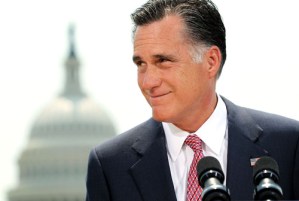
Photo by Alex Wong/Getty Images
On Massachusetts Health Reforms, Romney:
- Was a key player in the effort to reform Massachusetts’ health care system. Before his election as governor, he campaigned on a that included the following elements: charging co-pays to higher-income Medicaid recipients to expand coverage, requiring employers of more than to offer insurance or pay a penalty, extending favored prescription pricing in the state’s drug plan for elderly and disabled residents and negotiating an increase in federal funding for Medicaid. In 2005, he proposed , which helped frame the negotiation for health care reforms that ultimately became state law.
- After his term as governor ended, he cited the 2006 state health reform law as a point of , but has since himself from it because it is often considered a for the federal Affordable Care Act, an assertion he rejects. The includes the creation of an online insurance exchange known as the , as well as fines against businesses with more than 10 employees that don’t offer health insurance plans and a mandate that all individuals not covered by public health insurance purchase health insurance.
“If somebody could afford insurance, they should either buy the insurance or pay their own way. … We said: If you can afford insurance, then either have the insurance or get a health savings account. Pay your own way, but no more free ride. That was what the mandate did.” 鈥� Romney, GOP candidate debate, Jan. 30, 2008
- Defends Massachusetts’ individual mandate because it was a — not a matter imposed by the federal government.听
“Mr. President, if, in fact, you did look at what we did in Massachusetts, why didn’t you give me a call and ask what worked and what didn’t? … I would have told you, Mr. President, that what you’re doing will not work. It’s a huge power grab by the federal government. It’s going to be massively expensive, raising taxes, cutting Medicare.” 鈥� Romney, GOP candidate debate, June 13, 2011
- Advanced a managed care plan for seniors who are eligible for both Medicare and Medicaid.
- Was silent on a 2005 proposal to extend health care benefits provided by the state government to same-sex couples.
- Proposed tort reform in 2006 that would reduce legal fees and make a hard cap of $500,000 on non-economic damages. Lt. Gov. Kerry Healey led this effort.听
“I like what I proposed in Massachusetts when I was governor. And even though the final bill and its implementation aren’t exactly the way I wanted, the plan is a good model. Today, almost every Massachusetts citizen who had been uninsured now has private, free-market coverage, and we didn’t have to raise taxes or borrow money to make it happen. We may find even better ideas in other states. But let’s make certain that conservative principles are front and center. A big-government takeover of health care is the next thing liberals are going to try, and it’s the last thing America needs” 鈥� Romney, CPAC Convention, Feb. 27, 2009.
On Medicare & Aging, Romney:
- Favors Medicare reforms that would give future beneficiaries a and allow them to choose between private and traditional plans.
- Maintains that seniors already enrolled in Medicare, or those nearing retirement, would not be affected by his plan, which also would retain a fee-for-service option.
“I wouldn’t repeal it. I’d reform Medicare and reform Medicaid and reform Social Security to get them on a sustainable basis, not for current retirees, but for those in their 20s and 30s and early 50s” 鈥� Romney, Tampa Tea Party Debate, Sept. 12, 2011.
- All plans would have to offer coverage at least comparable to what Medicare provides today, though premiums for “traditional” coverage would rise if private companies can provide the same services for less. Critics say that capping the government’s contribution would likely mean that beneficiaries’ costs would increase.
- the December 2011 Medicare proposal by , D-Ore.
- Prior to the Ryan-Wyden plan, supported the Medicare overhaul included in the that was approved by the GOP-controlled House of Representatives.
- the notion that wealthier seniors should pay more toward their health coverage and lower income seniors should receive a higher subsidy.
- Wants to publish a yearly federal balance sheet to help people understand the impact of entitlement spending on the budget and economy.
On The Health Care Marketplace, Romney:
- Wants to strengthen high-deductible health savings accounts by allowing consumers to use them to pay insurance premiums.
- Supports caps on non-economic damage awards in and funds for states to develop other ways to deal with the liability issue, such as health care courts.
- Urges restricting federal regulation of health care insurance, although he supports limited rules to bar insurers from denying coverage to those with when they have had coverage for a specified period of time.
- “co-insurance” plans, in which consumers pay a fixed percentage of the cost of their care.
- Says insurers should be allowed to sell their products across .
- Endorses听ending “” and has suggested allowing tax deductions for people who obtain health insurance on their own; also favors allowing individuals and small businesses to join together to buy insurance.
- issue “Consumer Reports”-type ratings of insurance plans.
“The reason health care is so expensive 鈥� is not just because of insurance, it’s because of the cost of providing care. And one reason for that is the person who receives care in America generally doesn’t care how much it costs, because once they’ve paid their deductible, it’s free. And the provider, the more they do, the more they get paid 鈥� And so what we have to do is make sure that individuals have a concern and care about how much something costs. And for that to happen [we need] health savings accounts. Give people a stake in what the cost of insurance is going to be, what the cost of it is going to be. Co-insurance, where people pay a share of the bill, that makes a difference.” 鈥� Romney, Tampa Tea Party Debate, Sept. 12, 2011.
On Health Reform Philosophy, Romney:
- he would allow states to opt out of the federal health law and encourage Congress to repeal it.
- that “each state should be able to fashion their own program for the specific needs of their distinct citizens,” and that states are the “laboratories of democracy.”
- Maintains that “” such as increased competition, provider performance ratings, cost comparisons for procedures, co-insurance and lowering the number of uninsured will improve the health care delivery system.
- Endorses efforts to find an to the fee-for-service payment model.
“I want people to be able to own their own insurance, if they wish to. And to buy it for themselves and perhaps keep it the rest of their lives and to choose among different policies offered from companies across the nation,” he said. “That means the insurance company will have an incentive to keep you healthy. It also means, if you don’t like what they do, you can fire them.” — Nashua, New Hampshire, Jan. 9, 2012
On Medicaid, Romney:
- Opposes the health law’s expansion of Medicaid coverage to as many as 17 million people.
- Supports to allow states to use capped federal contributions to run the program with more flexibility.
- Would and requirements on private insurance and Medicaid coverage.
- Favors reducing the amount of money the federal government spends on Medicaid.
“My view is get the federal government out of Medicaid, get it out of health care. Return it to the states.” 鈥� Romney, South Carolina GOP Primary Debate, Jan. 20, 2012.
On Abortion/Contraception Issues, Romney:
- on a promise to not change existing abortion laws, neither making them stricter, nor more lenient. In 2005, he a bill expanding access to contraceptives on these grounds.
- Maintains that Roe v. Wade should be overturned by the Supreme Court so that the abortion issue can be decided by states, but also says that until that happens, Roe v. Wade should be considered the .
- Wants to implement awareness programs in schools.
- against the 2010 health law’s requirement for employers’ health plans to cover contraception without a copayment.
- Opposes for Planned Parenthood.
Romney’s Reaction To Supreme Court Health Law Decision:
- In a after the court’s decision was announced he said that “Obamacare was bad law yesterday, it’s bad law today.”
- Agreed, during , with the Supreme Court that the individual mandate is a tax.
Deep Reads:
:听 The Answer Is Unleashing Markets, Not Government
Our divide is fundamental: Republicans believe health care can be best guided by consumers, physicians and markets; Democrats believe government would do better. Some Democrats would have government buy health care for us; set the rates for doctors, hospitals and medicines; and decide what medical treatment we would be entitled to receive for each illness. If you liked the HMOs of the ’80s, you’d love government-run health care…But government can’t match consumers and markets when it comes to lowering cost, improving quality and boosting productivity…The right answer for health care is to apply more market force, not less (Mitt Romney, 05/01/09).
A Sampling Of KHN Video Clips
- Kaiser Health News: Romney Outlines Plans To Replace Obamacare (6/13/12)
- Kaiser Health News: After Winning Nomination, Romney Promises To Rollback Obamacare On Day One (5/30/12)
- Kaiser Health News: Romney Slams Obamacare On Primary Victory Night (4/25/12)
- Kaiser Health News: Romney Calls Health Law 鈥楩ourth Entitlement’ (1/17/12)
- Kaiser Health News: Romney Quizzed On Contraception During Debate (1/9/12)
:听 Preston’s Blueprint
Long before Mitt Romney unveiled his ambitious plan to provide health insurance to everyone in Massachusetts, he hired Ron Preston — “the best health and human services secretary in the nation,” as the governor once called him 鈥� to work on a plan to do in the Commonwealth what no other state has been able to do. Romney took the wraps off his vision in November 2004, and Preston, apparently no longer the best health and human services secretary in the nation, was nudged out by the next May.听 Preston and a tight group from inside and outside the administration spent six months answering Romney’s basic question: Could it be done? Their answer: Yes, Massachusetts could insure all its residents. But how the Preston working group planned to do it differed, in critical aspects, from what Romney eventually proposed (Bailey, 1/11/06).听
: ‘Romneycare’ Facts And Falsehoods
As the 2012 presidential campaign gets under way in just a few months (believe it or not), we expect to see an increasing number of attacks on so-called “RomneyCare.” So as part primer and part preemptive fact-checking, this article is our attempt to set the record straight (Robertson, 5/25/11).听
: Romney And Health Care: In The Thick Of History
The former governor has faced a fusillade from the right for the plan they call RomneyCare. But a look back at the birth of the Massachusetts law shows why he can’t, and won’t, back away. It was an amazing political feat, and no one’s role was bigger than his (Mooney, 5/30/11).
: ‘RomneyCare’ – A Revolution That Basically Worked
The former governor’s health plan is a policy piñata among his rivals. But a detailed Globe review finds the overhaul has achieved its main goals without devastating state finances. The remaining worry is future costs (Mooney, 6/26/11).听
: Ted Kennedy Helped Shape Mitt Romney’s Career, And Still Haunts It
When Gov. Mitt Romney signed legislation in April 2006 requiring most Massachusetts residents to have health coverage, Sen. Edward M. Kennedy stood by his side, beaming like a proud father. They were onstage at historic Faneuil Hall in Boston, a setting that had a special resonance for the two (Stolberg, 3/24/12).听
: Pride In RomneyCare Shows In Official Portrait
In 2008, for Romney’s official portrait, he had been clear about the image he wanted to convey for posterity. He would be sitting on his desk in front of an American flag, next to symbols of two things he held dear. The first was a photo of his wife, the center of his personal universe. The second was the Massachusetts health care law, represented by an official-looking document with a caduceus–often used as a symbol of the medical profession–embossed in gold on the cover. Romney was deeply proud of the law and felt strongly that it should figure prominently in the portrait, which would hang alongside others dating back to the Colonial era. He wanted to be remembered for that (Kranish and Helman, p. 261-262, 1/17/12).
Other Assorted Video Clips
- : Chris Wallace Interviews Mitt Romney On Healthcare (3/7/2010)
- : Part 2 Of the Wallace/Romney Interview (3/7/2010)
- : Mitt Romney Discusses State Sovereignty And His Replacement Proposal For Patient Protection and Affordable Care Act At University Of Michigan Cardiovascular Center (5/12/11)
- :听 Reaction To The Supreme Court Ruling, Plans For Replacement (6/28/12)
: Romney On The Health Insurance Mandate
In 2006, as Massachusetts’ governor, he talked about the state’s mandate in decidedly non-ideological terms: “We’re going to say, folks, if you can afford health care, then gosh, you’d better go get it; otherwise, you’re just passing on your expenses to someone else. That’s not Republican; that’s not Democratic; that’s not libertarian; that’s just wrong” (Liasson, 5/25/12).
: Jonathan Gruber, Health Care’s Mr. Mandate
After Massachusetts, California came calling. So did Connecticut, Delaware, Kansas, Minnesota, Oregon, Wisconsin and Wyoming. They all wanted Jonathan Gruber, a numbers wizard at M.I.T., to help them figure out how to fix their health care systems, just as he had helped Mitt Romney overhaul health insurance when he was the Massachusetts governor. Then came the call in 2008 from President-elect Obama’s transition team, the one that officially turned this stay-at-home economics professor into Mr. Mandate (Rampell, 3/28/12).
: Romney’s Health Care Plan May Be More Revolutionary Than Obama’s
As he pushes to “repeal and replace” President Obama’s healthcare law, former Massachusetts Gov. Mitt Romney has turned to proposals that could alter the way hundreds of millions of Americans get their medical insurance. In public, Romney has only sketched the outlines of a plan, and aides have declined to answer questions about the details. But his public statements and interviews with advisors make clear that Romney has embraced a strategy that in crucial ways is more revolutionary 鈥� and potentially more disruptive 鈥� than the law Obama signed two years ago (Levey, 4/23/12).听
: Mitt Romney’s Plan May Undercut Mass. Law
A proposal by Mitt Romney to curtail Medicaid spending would dramatically undercut the way the Massachusetts health care overhaul law has achieved near universal coverage. Although the specifics of Romney’s plan are not public, his overall intent – to rein in how much Medicaid money Washington sends to the states – would probably cripple the Massachusetts health care law, which was made possible by an expansion of Medicaid funding. If Romney succeeds, the result could have an ironic twist: the governor who ushered in the country’s first universal health plan would, as president, put in place policies that could undermine one of his signature achievements (Jan, 5/4/12).
This <a target="_blank" href="/news/romney-republican-candidate-on-health-care/">article</a> first appeared on <a target="_blank" href="">麻豆女优 Health News</a> and is republished here under a <a target="_blank" href=" Commons Attribution-NonCommercial-NoDerivatives 4.0 International License</a>.<img src="/wp-content/uploads/sites/8/2023/04/kffhealthnews-icon.png?w=150" style="width:1em;height:1em;margin-left:10px;">
<img id="republication-tracker-tool-source" src="/?republication-pixel=true&post=22597&ga4=G-J74WWTKFM0" style="width:1px;height:1px;">]]>:听A Christian Alternative To Health Insurance
The Affordable Care Act has a section that exempts members of health care sharing ministries from purchasing insurance. The Amish, Mennonite, Christian Science and Indian tribe communities also are exempt from the penalty that will be incurred on Americans who fail to purchase health insurance by 2014. Since the law was passed in 2010, membership for Medi-Share and Samaritan Ministries has risen by about 40 percent.听 Christian health sharing ministries are largely unregulated, except by themselves. This means members cannot go to an insurance commissioner with a complaint, rates aren’t reviewed by an independent regulator, and there is no way to ensure they are following anti-discrimination laws (Kimberly Leonard, 7/20).
:听‘We Can’t Afford It’:听 The Big Lie About Medicaid Expansion
In his letter to Health and Human Services Secretary Kathleen Sebelius rejecting the expansion of Medicaid under the Affordable Care Act,听Texas Governor Rick Perry tells a whopper. Expanding Medicaid, he writes, would “threaten even Texas with financial ruin.”鈥� In the first six years of the expansion, from 2014 to 2019, the total cost of insuring these Texans would be about $55 billion鈥攏ot an inconsiderable sum. But the federal government would pay more than 95 percent of that amount; Texas’s share would be just $2.6 billion. That’s not chump change鈥攂ut threaten Texas with financial ruin? Not by a long shot (Richard Kim, 7/20).
:听States Wrestle With Medicaid Budget Bind 鈥� Even As They Expand Coverage
Many blue states are finding themselves in a Medicaid bind these days. Several, including听Illinois, have warmly embraced major expansions of their programs as part of President Obama’s landmark health care law. At the same time, budget pressures have forced them to wring cost savings out of existing programs, often by cutting benefits, reducing payments to providers, or eliminating coverage for optional populations.听 The latest听California听budget includes more than听$1 billion in Medicaid cuts.听Maine听is eliminating coverage for more than 15,000 beneficiaries.听Minnesota听cut provider pay rates in 2010 and again in 2011.听Connecticut听cut provider rates and reduced benefits last year, including dental and vision. In the last two fiscal years, every state in the country has cut its program in some way, according to a Kaiser Family Foundation study, including 46 that cut rates paid to providers over the two-year period, and 18 that cut benefits in the last fiscal year alone (Margot Sanger-Katz, 7/25).
:听 “David Clause” In Obamacare Ready To Slay The Healthcare Cost Beast
I have called this new model “concierge medicine for the masses.” Officially, it is called听Direct Primary Care听(DPC). … Proponents of DPC state that the best way to pay for healthcare is to pair DPC with a high-deductible wraparound policy. The idea is you use insurance what it’s best for 鈥� rare items (house fires, cancer, major car accident). For day-to-day healthcare, DPC is paid for in a model that is akin to a gym membership 鈥� a flat monthly fee regardless of how much one uses it (though some have co-pays mainly due to state insurance regulations). As an observer of the evolution of health plans, I’ve been stunned by how slow insurance companies have been to capitalize on the DPC opportunity (Dave Chase, 7/24).
:听Top Obamacare Critic’s Op-Eds Drafted By PR Firm That Reps Drug, Health Care Clients
Last Tuesday, a week after the Supreme Court’s ruling听upholding Obamacare, Sally Pipes appeared before the House Oversight and Government Reform Committee to enumerate the evils of the law. The president of the Pacific Research Institute, a San Francisco-based free-market think tank, Pipes听warned members of Congress听that if they didn’t act quickly Americans would soon suffer the rationed care and long waits supposedly plaguing her native Canada. 鈥� All of this cemented her status as a leading voice of Obamacare opposition. Along with a constant stream of op-eds and TV appearances in recent years, she has also authored three books since 2008 lambasting health care reform.听If Pipes seems supernaturally prolific, there’s a good reason. To assist with her written output, PRI employs a DC-based ghostwriting and PR firm with drug and health care听industry clients (Stephanie Mencimer, 7/19).
:听The ABCs Of Getting Your Zzz’s:听 Why We Need Sleep, And How We Can Get More
One glance at U.S. coffee sales will give you a sense of America’s sleep habits.听 Sales of the caffeinated beans rose 19 percent last year听and have continued to thrive in the first half of 2012.听Americans, more than ever before, apparently are sleep-deprived masses muddling through the day in a zombie-like state. Studies have linked lack of sleep to issues ranging from judgment lapses and poor academic performance to obesity and stroke.听And getting five hours per night during the week, then compensating with an 11-hour weekend sleep marathon doesn’t cut it (Kelly House, 7/24).
This <a target="_blank" href="/news/religious-health-care-the-big-lie-about-expanding-medicaid/">article</a> first appeared on <a target="_blank" href="">麻豆女优 Health News</a> and is republished here under a <a target="_blank" href=" Commons Attribution-NonCommercial-NoDerivatives 4.0 International License</a>.<img src="/wp-content/uploads/sites/8/2023/04/kffhealthnews-icon.png?w=150" style="width:1em;height:1em;margin-left:10px;">
<img id="republication-tracker-tool-source" src="/?republication-pixel=true&post=3709&ga4=G-J74WWTKFM0" style="width:1px;height:1px;">]]>
The research published in the New England Journal of Medicine found a 6.1 percent reduction in mortality among low-income adults between the ages of 20 and 64 in Maine, New York and Arizona 鈥� three states that expanded coverage since 2000, compared with similar adults in New Hampshire, Pennsylvania, Nevada and New Mexico, neighboring states that did not do so.
The decline in mortality, by an overall 19.6 deaths per 100,000 adults, was especially pronounced among older individuals, minorities and residents of the poorest counties. 听The researchers analyzed data spanning听 five-year periods before and after the three states extended their Medicaid coverage to poor, childless adults.
The study also found “improved coverage, access to care and self-reported health” among the newly covered adults.
“It seems intuitive, but there’s been surprisingly little evidence so far,” said lead researcher Benjamin D. Sommers, M.D., Ph.D., an assistant professor of health policy and economics at the Harvard School of Public Health.听 “There’s been some [research] on pregnant women and children, but much less on adults.听 And right now there are a significant number of people arguing that Medicaid is .”
The Supreme Court on June 28 as unduly coercive a provision of the 2010 federal听 health care law that sought to force all states to extend Medicaid coverage to everyone with incomes up to 133 percent of the federal poverty level — currently 听$14,856 for individuals and $25,390 for a family of three. Although the federal government will pay the full cost of the expanded coverage for three years starting in 2014, and at least 90 percent thereafter, a number of state governors have said they will not approve the wider coverage.
The study’s authors — Sommers, Katherine Baicker, Ph.D. and Arnold M. Epstein, M.D. — said their research results are consistent with previous analyses finding an 8.5 percent reduction in infant mortality and a 5.1 percent drop in child mortality听 as a result of Medicaid expansions in the 1980s.
The authors cautioned that their study “cannot definitively show causality,” because other factors might have contributed to the reduction in death rates in the population newly covered by Medicaid. Among those factors, they said, was the possibility that “expanding coverage had positive spillover effects through increased funding to providers, particularly safety-net hospitals and clinics.” But they said they were not aware of any large-scale changes in health policy in the three states they studied.
“This answers the question of what happens when you give people Medicaid who didn’t already have coverage, as opposed to comparing people who have Medicaid with people who have something else,” said Sommers.听 “The latter is not apples to apples, because Medicaid recipients are usually sicker and with worse socioeconomic conditions.”
麻豆女优 Health News is a national newsroom that produces in-depth journalism about health issues and is one of the core operating programs at 麻豆女优鈥攁n independent source of health policy research, polling, and journalism. Learn more about .This <a target="_blank" href="/news/medicaid-expansion-reduces-mortality-study-finds/">article</a> first appeared on <a target="_blank" href="">麻豆女优 Health News</a> and is republished here under a <a target="_blank" href=" Commons Attribution-NonCommercial-NoDerivatives 4.0 International License</a>.<img src="/wp-content/uploads/sites/8/2023/04/kffhealthnews-icon.png?w=150" style="width:1em;height:1em;margin-left:10px;">
<img id="republication-tracker-tool-source" src="/?republication-pixel=true&post=3692&ga4=G-J74WWTKFM0" style="width:1px;height:1px;">]]>This story was produced in collaboration with
Thirteen states are moving to cut Medicaid by reducing benefits, paying health providers less or tightening eligibility, even as the federal government prepares to expand the insurance program for the poor to as many as 17 million more people.
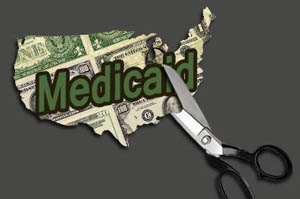
States routinely trim the program as tough times drive up enrollment and costs.听 But the latest reductions 鈥� which follow听 — threaten to limit access to care for some of its 60 million recipients.
“With more people on Medicaid, states will have to continue to ratchet down payments and limit services,” says Nina Owcharenko, director of the center for health policy studies at the conservative Heritage Foundation.
Some worry the cuts to doctors and hospitals could make it more difficult to expand the state-federal program in 2014, as called for by the federal health law.听听“Some providers may be unwilling to accept new Medicaid patients,” says former New York Medicaid Director Deborah Bachrach.听
More On State Medicaid Cuts
But she notes the law may counter that effect with its funding boosts to community health centers and听its temporary rate increases听for primary care doctors beginning in January 2013.
Most of the cuts went into effect this month, according to a 50-state survey by Kaiser Health News for USA Today. Among them:
— cut enrollees to four prescriptions a month; imposed a copay for prescriptions for non-pregnant adults; raised eligibility to eliminate more than 25,000 adults and eliminated non-emergency dental care for adults.
— cut pay for doctors and dentists 10 percent and eliminated coverage for eyeglasses.
–Florida cut funding to hospitals that treat Medicaid patients by 5.6 percent 鈥� following a 12.5 percent cut a year ago. The state is also seeking permission to limit non-pregnant adults to two primary care visits a month unless they are pregnant, and to cap emergency room coverage at six visits a year.
— added a $15 fee for those who go to the emergency room for routine care and cut reimbursements to private hospitals by $150 million.
— added or increased monthly premiums for most non-pregnant adults with incomes above $14,856 for an individual.
South Dakota, Maryland, Colorado, Louisiana, New Hampshire, Hawaii and Maine also are making reductions to their programs. Connecticut is weighing cuts likely to go into effect this fall.
A听few states have increased Medicaid benefits, including Arizona, which will boost pay for mental health providers next April. And some are looking at restoring cuts made during the worst of the recession, said Vernon Smith, managing principal with consulting firm Health Management Associates and a former Michigan Medicaid director.
Stacey Mazer, senior staff associate with the National Association of State Budget Officers, notes that fewer states are cutting the program this year, partly because many are in better economic shape and partly because “states are hearing a lot of hue and cry about the impact on access.”
Last November, for instance, about 3,500 Medicaid recipients in New Hampshire had to find new doctors after cuts led LRGHealthcare in Laconia to stop offering primary care to non-pregnant adults, says Senior Vice President Henry Lipman.听
“To see two decades of providing access for our community basically erased has been very disheartening,” he says.
It is unclear how many states will participate in the law’s Medicaid expansion since the Supreme Court ruled last month that they may not be penalized for opting out. A number of Republican governors have vowed not to participate, citing costs. Although the federal government will pay for the first three years, states will still have to cover up to 10 percent of the costs after that.听听
麻豆女优 Health News is a national newsroom that produces in-depth journalism about health issues and is one of the core operating programs at 麻豆女优鈥攁n independent source of health policy research, polling, and journalism. Learn more about .This <a target="_blank" href="/medicaid/medicaid-cuts/">article</a> first appeared on <a target="_blank" href="">麻豆女优 Health News</a> and is republished here under a <a target="_blank" href=" Commons Attribution-NonCommercial-NoDerivatives 4.0 International License</a>.<img src="/wp-content/uploads/sites/8/2023/04/kffhealthnews-icon.png?w=150" style="width:1em;height:1em;margin-left:10px;">
<img id="republication-tracker-tool-source" src="/?republication-pixel=true&post=22581&ga4=G-J74WWTKFM0" style="width:1px;height:1px;">]]>: Assisted Dying: Experts Debate Doctor’s Role
Peggy Sutherland was ready to die. The听morphine听oozing from a pump in her spine was no match for the pain of听lung cancer, which had evaded treatment and invaded her ribs. 鈥� Sutherland, 68, decided to use Oregon’s “Death With Dignity Act,” which allows terminally-ill residents to end their lives after a 15-day requisite waiting period by self-administering a lethal prescription drug. … But not all doctors are on board with the law. In the 15 years since Oregon legalized physician-assisted dying, only Washington and Montana have followed suit, a resistance some experts blame on the medical community听(Katie Moisse, 7/13).
: When Chemo Causes Cancer
Clutching George Stephanopolos’s hand on the sofa next to her, (Good Morning American anchor Robin) Roberts announced that she has听myelodysplastic syndrome听(MDS), a relatively rare blood disease that Roberts herself said she’d never heard of until she was diagnosed with it. Likely even more unfamiliar for many viewers than the name of her condition was Robert’s startling remark that cancer treatment can result in other serious health problems,听 including different forms of cancer,听 several years after the initial cancer is in remission.听 But in the medical world, it has been known for decades that听cancer treatment carries with it the risk of causing another kind of cancer to develop (Casey Schwartz, 7/12).
: 听Spray Tanning May Cause Cancer, Too — Ask For A Nose Filter
The chemical responsible for the ‘faux glow’ given by ‘spray-on’ tanners, may cause genetic mutations and DNA damage. One of the biggest concerns is the absorption of dihydroxyacetone, or DHA, into the bloodstream through the mucous membranes. … The FDA advises consumers to request protection for their eyes and mucous membranes and prevent inhalation. These preventive measures include the use of protective undergarments, nose filters, lip balm, and eyewear (Charlotte Lobuono, 7/13).
: Don’t Get Sick In July
It’s one of those secrets you normally don’t learn in nursing school: “Don’t go to the hospital in July.” That’s the month when medical residents, newly graduated from medical school, start learning how to be doctors, and they learn by taking care of patients. And learning means making mistakes. There’s disagreement in the medical literature about whether a so-called July Effect, where medical error rates increase in the summer, actually exists. … From what I’ve experienced as a clinical nurse, whether or not the July Effect is statistically validated as a cause of fatal hospital errors, it is undeniably real in terms of adequacy and quality of care delivery. Any nurse who has worked in a teaching hospital is likely to have found July an especially difficult month because, returning to Dr. Young’s football metaphor, the first-year residents are calling the plays, but they have little real knowledge of the game (Theresa Brown, 7/14).
: My Slide Back To Painkillers
We judge each other’s tolerance for pain. We tell ourselves that pain makes us stronger, that it sharpens our character, that it demonstrates our will. We expect high-paid athletes to play hurt. We debate whether women should use drugs during labor. We wonder if we rely too much on over-the-counter medications for the ordinary aches and pains of life. … When pain derailed my life more than a decade ago, I did not stop to attend to it. I popped a pill prescribed by my doctor and kept going, which eventually landed me in detox with a full-blown addiction to OxyContin. Eleven years later, I find myself wondering what it means to stay “sober.” I suffer from migraines, the variant known as cluster headaches 鈥� also known as “suicide headaches” 鈥� and as I lie in dark rooms, waiting for the headaches to pass, the question I ask myself is this: How much pain can I tolerate? Or really: How much should I tolerate? (Lorraine Berry, 7/16).
This <a target="_blank" href="/news/physicians-and-assisted-suicide-avoid-getting-sick-in-july/">article</a> first appeared on <a target="_blank" href="">麻豆女优 Health News</a> and is republished here under a <a target="_blank" href=" Commons Attribution-NonCommercial-NoDerivatives 4.0 International License</a>.<img src="/wp-content/uploads/sites/8/2023/04/kffhealthnews-icon.png?w=150" style="width:1em;height:1em;margin-left:10px;">
<img id="republication-tracker-tool-source" src="/?republication-pixel=true&post=3650&ga4=G-J74WWTKFM0" style="width:1px;height:1px;">]]>
In a and based on the first phase of a two-part study, the IOM called for more screening and better assessments of PTSD cases 鈥� suggesting that screening be done at least once a year when primary care providers see service members. It also recommends that the VA build on these early identification efforts by improving soldiers’ timely access to evidence-based care. 听In addition, the VA should invest in research regarding telemedicine, Internet-based approaches and other technological advances that could help patients overcome barriers to getting help. Also, military health care providers should take steps to coordinate with other health conditions that affect these service members and veterans.
The study estimated that PTSD, which is often triggered by traumatic events that are commonplace in combat life, affects somewhere between 13 to 20 percent of the 2.6 million soldiers who fought in Iraq or Afghanistan since 2001. Of those veterans diagnosed with PTSD, 50 percent also show signs of other related conditions, such as depressive symptoms and substance abuse. The absence of support from society and loved ones can increase the risk. In 2010, the VA treated more than 430,000 veterans with the disorder.
The IOM’s research grew out of congressional concern about the incidence of PTSD among returning soldiers. Congress directed the VA and Defense Department to support the project in the .
In the first phase, the IOM researchers conducted site visits and reviewed available information, but did not look at original data, like the number of soldiers who relapsed after receiving treatment, according to , the IOM panel’s听chair.
Findings from the study’s second phase, which are scheduled for release in 2014, will involve “examining databases of funding organizations to make systematic assessments of new treatments coming up the pipeline,” said Galea.
麻豆女优 Health News is a national newsroom that produces in-depth journalism about health issues and is one of the core operating programs at 麻豆女优鈥攁n independent source of health policy research, polling, and journalism. Learn more about .This <a target="_blank" href="/news/study-ptsd-treatment-for-soldiers-improving-but-theres-still-work-to-be-done/">article</a> first appeared on <a target="_blank" href="">麻豆女优 Health News</a> and is republished here under a <a target="_blank" href=" Commons Attribution-NonCommercial-NoDerivatives 4.0 International License</a>.<img src="/wp-content/uploads/sites/8/2023/04/kffhealthnews-icon.png?w=150" style="width:1em;height:1em;margin-left:10px;">
<img id="republication-tracker-tool-source" src="/?republication-pixel=true&post=3602&ga4=G-J74WWTKFM0" style="width:1px;height:1px;">]]>
The researchers examined responses from 275 physicians in Massachusetts who responded to surveys in 2005 and 2007, and examined the physicians’ use of electronic health records (EHRs) and the number of suits filed against them.听 According to the analysis, malpractice claims for physicians using electronic health records were a sixth of those for doctors not using EHRs.
“This study adds to the literature suggesting that EHRs have the potential to improve patient safety and supports the conclusions of our , which showed a lower risk of paid claims among physicians using EHRs,”听 report the researchers. They also note that lower malpractice claims can help to curb health care costs.
The researchers听acknowledged the results could relate to unmeasured factors such as doctors who “were early adopters of EHRs may exhibit practice patterns that make them less likely to have malpractice claims.”
The 2009 federal stimulus package provided financial for doctors who start using EHRs before 2015.听 Many providers have been struggling to make the change, however, and there have been concerns over .
麻豆女优 Health News is a national newsroom that produces in-depth journalism about health issues and is one of the core operating programs at 麻豆女优鈥攁n independent source of health policy research, polling, and journalism. Learn more about .This <a target="_blank" href="/news/electronic-health-records-could-help-lower-malpractice-claims/">article</a> first appeared on <a target="_blank" href="">麻豆女优 Health News</a> and is republished here under a <a target="_blank" href=" Commons Attribution-NonCommercial-NoDerivatives 4.0 International License</a>.<img src="/wp-content/uploads/sites/8/2023/04/kffhealthnews-icon.png?w=150" style="width:1em;height:1em;margin-left:10px;">
<img id="republication-tracker-tool-source" src="/?republication-pixel=true&post=3428&ga4=G-J74WWTKFM0" style="width:1px;height:1px;">]]>Case in point: The Obama administration Wednesday announced designed to help community health centers across the country and in some U.S. territories expand their ability to treat patients. These grants follow a similar initiative announced early in which HHS parceled out $728 million to 398 other community health centers.
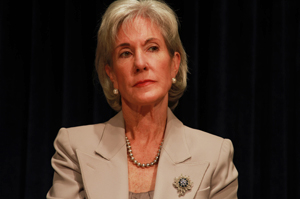
Department of Health and Human Services Secretary Kathleen Sebelius said the funds announced Wednesday will go to 219 community health centers spanning 41 states, the District of Columbia, Puerto Rico and the Northern Mariana Islands. These funds will help provide “new sites, new services and longer hours,” Sebelius said.
The grants support听community health centers’ efforts to听provide care to more than 1.25 million new patients, as well as to create approximately 5,640 new jobs for doctors, nurses, dental providers and support staff, according to Sebelius.
In total, $11 billion has been allocated over the next five years to community health centers 鈥� with approximately $1.5 billion spent on construction and $2 billion spent on operational support to date.听 The remaining $7.5 billion will fund ongoing health center activities, build new sites in medically underserved areas, and expand preventive and primary oral, behavioral, pharmacy and enabling health services at existing sites, said HHS spokesperson Richard Olague.
麻豆女优 Health News is a national newsroom that produces in-depth journalism about health issues and is one of the core operating programs at 麻豆女优鈥攁n independent source of health policy research, polling, and journalism. Learn more about .This <a target="_blank" href="/news/while-awaiting-courts-decision-hhs-awards-health-center-grants/">article</a> first appeared on <a target="_blank" href="">麻豆女优 Health News</a> and is republished here under a <a target="_blank" href=" Commons Attribution-NonCommercial-NoDerivatives 4.0 International License</a>.<img src="/wp-content/uploads/sites/8/2023/04/kffhealthnews-icon.png?w=150" style="width:1em;height:1em;margin-left:10px;">
<img id="republication-tracker-tool-source" src="/?republication-pixel=true&post=3371&ga4=G-J74WWTKFM0" style="width:1px;height:1px;">]]>