
Some California Insurance Plans Narrow Doctor, Hospital Choices
MILL VALLEY, CALIFORNIA 鈥� When Diane Shore , the small premium increase for a new plan didn鈥檛 bother her that much. What she鈥檚 really troubled by is: 鈥淢y physicians will no longer be in this network of physicians, or the hospitals won鈥檛 be as well.鈥�
Sixty-two year old Shore owned an IT consulting business in the San Francisco Bay Area, and retired when she sold her business in 2000. She says she wants to stick with the providers that she鈥檚 had for years, including the surgeon who operated on her for breast cancer in 1998.
鈥淚 have full confidence in her,鈥� she says. 鈥淎nd my primary care doctor has been my primary care doctor for 20 years.鈥�
In Shore鈥檚 case, the problem is that the Blue Shield of California plan being offered limits her choice of doctors and hospitals just to Marin County, where she lives, just north of San Francisco. But, she says, 鈥淎ll my doctors are in San Francisco. I live 20 minutes from San Francisco. In fact, it鈥檚 more convenient for me to go to San Francisco than to the hospital here in Marin County.鈥�
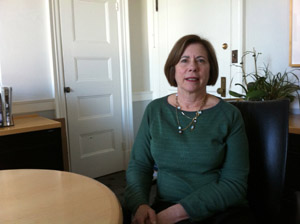
Susan Shargel is an insurance broker who has been helping clients understand the new 鈥渆xclusive provider organization鈥� plans offered on Covered California (Pauline Bartolone, Capital Public Radio).
Shore鈥檚 experience doesn鈥檛 surprise San Francisco-based insurance broker Susan Shargel, who鈥檚 trying to sort out all the new ways insurers are contracting with doctors. Some health plans will have fewer doctors and hospitals. Blue Shield, for example, says it will have half the doctors and three quarters of the hospitals next year as they have this year in the individual market.
Shargel thinks that the changes are not clear in the cancellation letters. 鈥淭here isn鈥檛 something that says: 鈥楢lert. Be aware. Take action now to be sure this works for you or to be sure you know what鈥檚 happening.鈥� There needs to be a red alert,鈥� she says.
The health plan offered to Shore was a Blue Shield of California EPO plan. EPO stands for 鈥渆xclusive provider organization.鈥� The company says it is offering these lower-cost plans for the first time next year to buyers on the individual market. Other insurers are offering similar plans. 聽
Patrick Johnston, president of the California Association of Health Plans, notes that the federal Affordable Care Act requires more benefits than most insurance plans have provided up until now. That includes free preventive care, a limit on annual out-of-pocket spending and a ban on lifetime 鈥渃aps鈥� for medical expenses. So, to keep health plans affordable for buyers on the individual market, one of the few cost variables to work with is doctor contracts.聽
鈥淚n areas where there are a lot of hospitals, some more expensive than others, and a lot of doctors, it鈥檚 only natural that a health plan will sign up some, but maybe not all,鈥� he says.
So Johnston says if you鈥檙e buying your own insurance next year and want to keep your doctors, you may have to shop around. 鈥淭ransitioning might mean looking or having difficulty signing up exactly the same doctors,鈥� he says.
Insurers are negotiating hard, according to Gerry Kominski, director of the Center for Health Policy Research at UCLA, saying to providers, for example: 鈥淲e鈥檙e willing to pay you $50 a visit. If you鈥檙e not willing to do that, we know a doctor鈥檚 group across the street that will accept that.鈥�
Kominski acknowledges the trend of narrowing provider networks pre-dates the Affordable Care Act, but has been accelerating under the law. And not just for individual policyholders; it鈥檚 been happening for people who get insurance through work as well.聽
But, he鈥檚 quick to add that it鈥檚 necessary: 鈥淚f we want to keep health care from becoming completely unaffordable for everyone, at some point something has to give. And in this case what鈥檚 giving is the ability to choose any doctor and any hospital.鈥�
And, he says, some of the plans may have a wider variety of doctor and hospital choices, but they are likely to cost more.
This story is part of a reporting partnership that includes Capital Public Radio, NPR and Kaiser Health News. Blue Shield of California Foundation helps support KHN coverage of California.


