
Conflicting Views Of Supreme Court’s Contraception Decision Cloud Other Cases
This KHN story can be republished for free. (details)
The Supreme Court鈥檚 decision last week that some for-profit corporations don鈥檛 have to comply with the contraceptive coverage mandate under the Affordable Care Act may have raised more questions than it answered. Expect confusion 鈥� and arguments 鈥� as lower court judges and the Supreme Court itself apply the decision to other cases.
This became apparent soon after the Hobby Lobby when the court granted a to , a Christian school in Illinois. The college argued in a lawsuit that the special provisions provided by the Obama administration allowing it to escape the mandate are still insufficient.
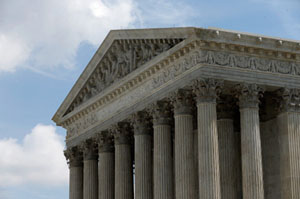
(Photo by Win McNamee/Getty Images)
But the order for the college, citing the Hobby Lobby ruling earlier in the week, created some confusion over whether Wheaton employees would still get access to contraceptives under the law. And the order provoked from Justice Sonia Sotomayor, joined by the court鈥檚 two other female members, Justices Ruth Bader Ginsburg and Elena Kagan. They argued that the majority was already breaking with the precedent it established only days earlier.
Here are some of the questions raised by the Hobby Lobby case and the remaining cases also challenging the contraceptive coverage mandate.
What is the contraceptive mandate?聽聽聽聽聽聽
As part of the Affordable Care Act, most health insurance plans are required to cover, with no cost-sharing beyond premiums, a wide array of . For women, that includes all contraceptives approved by the Food and Drug Administration, as well as sterilization procedures and patient education and counseling.
The mandate does not include coverage of RU-486 (mifepristone), the after a pregnancy has been established. But it does require coverage of emergency contraceptives and intrauterine devices, which some believe can prevent the implantation of a fertilized egg. (Newer research suggests , by the way.)
Who has sued to try to block the mandate?
There have been two separate sets of court cases challenging the contraceptive coverage requirements.
The first set comes from for-profit corporations that, under the law and accompanying federal regulations, are required to provide the benefits as part of their insurance plans. According to the , there have been 50 cases filed by for-profit firms, while the , which is representing many of those suing, counts 49. Most of those companies charged that the requirement to provide some or all of the contraceptives in question violated their rights under a 1993 federal law, the (RFRA.)
The cases filed by , a nationwide arts-and-crafts chain, and , a Pennsylvania cabinet-making firm, were the first of those to reach the Supreme Court for a full hearing.
Religious nonprofit entities, mostly religious colleges and universities and health facilities, filed the second set of cases. The NWLC counts 59 nonprofit cases; the Becket fund, 51.
The Obama administration, under , is not requiring those organizations to directly 鈥渃ontract, arrange, pay for, or refer鈥� employees to contraceptive coverage. But the organizations say the process by which they can opt out of providing the coverage, which involves filling out a form and sending it to their insurance company or third-party administrator, still violates their religious beliefs by making them 鈥渃omplicit鈥� in providing something they consider sinful.
What did the Supreme Court rule in the Hobby Lobby case?
The majority opinion written by Justice Samuel Alito said that 鈥渃losely held corporations,鈥� including those like Hobby Lobby and Conestoga Wood Specialties, can exercise religious rights under RFRA. Further, because the Obama administration was requiring those firms to directly provide the coverage, rather than offer them the same accommodation it was offering religious nonprofit groups, the requirement was not 鈥渢he least restrictive means鈥� of ensuring that women can get contraception and thus a violation of the law.
In making the case for Hobby Lobby and Conestoga Wood, Justice Alito went out of his way to praise the accommodation for religious nonprofits, saying it 鈥渄oes not impinge on the plaintiffs鈥� religious beliefs that providing insurance coverage for the contraceptives at issue here violates their religion and it still serves HHS鈥� stated interests.鈥�
What impact has the Hobby Lobby decision had on pending nonprofit cases?
A fairly substantial one. Later that same day the Hobby Lobby decision was handed down, a federal appeals court in Atlanta cited it against enforcing the mandate against the Eternal Word Television Network.聽
But the real fireworks erupted on July 3, when the Supreme Court granted its own injunction in the case filed by Wheaton College.
The unsigned order required the college to write to the Secretary of Health and Human Services, stating 鈥渢hat it is a nonprofit organization that holds itself out as religious and has religious objections to providing coverage for contraceptive services.鈥� The order specifically said the college 鈥渘eed not use the form prescribed by the government, EBSA Form 700, and need not send copies to health insurance issuers or third party administrators.鈥�
Justices Sotomayor, Ginsburg, and Kagan were furious.
鈥淭hose who are bound by our decisions usually believe they can take us at our word. Not so today,鈥� Sotomayor wrote. 鈥淎fter expressly relying on the availability of the religious nonprofit accommodation to hold that that the contraceptive coverage requirement violates RFRA as applies to closely-held for-profit corporations, the court now, as the dissent in Hobby Lobby feared it might鈥etreats from that position.鈥�
What happens now?
The court made clear that in granting Wheaton College its injunction (as it did earlier this year in a case filed by the Denver-based ), it was not prejudging the case. 鈥淭his order should not be viewed as an expression of the Court鈥檚 views on the merits,鈥� it said. 聽
But what is less clear is whether people covered by the health plans of those nonprofit organizations that are still in litigation will have access to no-copay contraceptive coverage.
The Supreme Court majority appears to think they can be covered. 鈥淣othing in this interim order affects the ability of the applicant鈥檚 employees and students to obtain, without cost, the full range of FDA approved contraceptives,鈥� the order said. 鈥淭he government contends the applicant鈥檚 health issuer and third-party administrator are required by federal law to provide full contraceptive coverage regardless whether the applicant completes EBSA Form 700.鈥�
The Obama administration, however, seems not so sure that will happen. 鈥淎n injunction pending appeal would deprive hundreds of employees and students and their dependents of coverage for these important services,鈥� the Justice Department wrote in its .
One thing that is clear: Many more of these cases are yet to be decided by many more courts. 聽


