
Scott Walker’s Medicaid Maneuver
Wisconsin Gov. Scott Walker, who appears to be for a 2016 presidential run, is getting attention for his entitlement reform. He is one of 25 Republican governors who are rejecting the health law鈥檚 expansion of Medicaid. But Wisconsin鈥檚 own Medicaid program, known as BadgerCare, was more generous than many states, and now Walker wants to transfer many of those people to the insurance marketplace created by the law. It鈥檚 a plan that allows Walker to reject Obamacare, turn down federal money on the table, but still provide health coverage to many of Wisconsin鈥檚 poor and working poor residents.
鈥淚t鈥檚 part of overall reform,鈥� Walker said, 鈥渨here our goal is to get more people out into the workplace, more people covered when it comes to health care and fewer people dependent on the government, not because we鈥檝e kicked them out but we鈥檝e empowered them to take control of their own destiny.鈥�
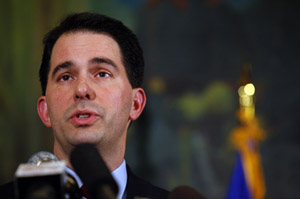
Republican Wisconsin Gov. Scott Walker (Photo by Eric Thayer/Getty Images).
Walker鈥檚 plan opens up Medicaid in Wisconsin to about 83,000 poor, childless adults.聽They were previously locked out because of a cap on the number of people who could be in the program. At the same time, Walker announced that Medicaid is being cancelled for 77,000 people who have incomes above the poverty line.聽
Walker鈥檚 maneuver is possible because Wisconsin鈥檚 Medicaid program was already one of the more inclusive ones in the country. It allowed people making up to 200 percent of the federal poverty level to be covered by BadgerCare. Now he wants to roll BadgerCare eligibility back to 100 percent of the poverty line, and put everyone making between 100 percent and 200 percent 鈥� a range of $11,490 to $22,980 for a single person 鈥� into private, subsidized coverage that they buy on the new marketplace.
Walker says everyone losing coverage will be able to buy subsidized plans under the Affordable Care Act, and many will find monthly premiums under 20 bucks.
鈥淵ou鈥檙e going to hear some detractors claim that moving people to the private market or to the exchanges isn鈥檛 affordable,鈥� Walker says. 鈥淚 think most people would find it hard to imagine that with the tax subsidies, that $19 a month is somehow not affordable. I think it is.鈥�
Jessica Jaglowski is a stay-at-home mom in Milwaukee who recently got a letter from the state saying she would be dropped from Medicaid. Her husband will be able to get coverage through his job, and their kids can stay on Medicaid. So Jaglowski鈥檚 on her own in the family trying to stay insured.
鈥淚t鈥檚 somewhat comforting to hear that there are exchange options available, but we don鈥檛 know what those will mean and what will be covered, and what doctors we鈥檒l get to see鈥� Jaglowski says. 鈥淚t is very stressful, and it鈥檚 overwhelming looking through the plans because we don鈥檛 even know really where to start.鈥�
, a health policy researcher at the Center on Budget and Policy Priorities, says Walker鈥檚 reforms put Wisconsin in a unique position. The state is bumping people off Medicaid but everyone under the poverty line still has a chance at getting coverage.
鈥淭here is a positive part of the story, which is that everybody does have a pathway to coverage,鈥� says Solomon.
She says in some states that also rejected a full expansion, there鈥檚 a group of adults who don鈥檛 qualify for Medicaid and are too poor to get subsidies on the exchange.
Solomon says Wisconsin is a longtime leader in serving the poor, and the state鈥檚 decision to reject the federal Medicaid expansion money to cover even more people is puzzling from a fiscal perspective.
鈥淚t鈥檚 ironic to me that when you have the pathway to providing a uniform system of coverage with the rest of the country that they鈥檝e decided to go in the opposite direction,鈥� she says.
Solomon cites showing states that rejected a full expansion are seeing faster growth in Medicaid spending (KHN is an editorially independent program of the foundation). And a non-partisan review will cost state taxpayers an additional $460 million through 2020 than if he’d gone for a full expansion that would have pulled more federal dollars into the state.
Last week, Walker said he would tweak his plan because of the troubled startup of healthcare.gov, the web portal for 36 states that are relying on the federal government to run their marketplaces.
Walker says he will let the those set to be dropped from Medicaid on Jan. 1 stay on three months longer, so they have more time to sign up for plans on healthcare.gov.
鈥淲e are going to take decisive action to make sure that the people of this state, particularly people in need, do not fall through the cracks,鈥� Walker said.
The reprieve is likely to clear the state Legislature in the next few weeks.
Walker鈥檚 Medicaid plan requires a waiver from the federal government, which is pending but expected to be approved.
This article was produced in partnership with . Erin Toner is a reporter with .


