
Arkansas’ Medicaid Experiment, Key To Obamacare Expansion, On Ropes
This story was produced in collaboration with 听
ALEXANDER, Ark. 鈥� Ellen Louise Fant was no fan of the Affordable Care Act.
鈥淚 don鈥檛 like to have anything shoved down my throat,鈥� said Fant, 60, referring to the law鈥檚 requirement that most Americans carry health insurance.
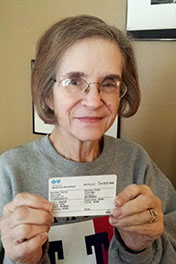
Ellen Louise Fant, 60, of Alexander, Ark., signed up for Medicaid in January under the state鈥檚 private option (Photo by Phil Galewitz/KHN).
Then last fall, the former teacher鈥檚 aide got a letter from the state of Arkansas telling her that since she gets food stamps, she qualified for Medicaid, the health insurance program for the poor, which is being expanded under the health law to cover those who make less than 138 percent of the federal poverty level, or up to $15,900 for an individual.
She signed a form, got back an insurance card Jan. 10 and days later, underwent the knee replacement surgery that she had needed for years but couldn鈥檛 afford.
Fant is one of more than 80,000 Arkansans who鈥檝e gained Medicaid coverage under the heath law this year through a unique financing arrangement designed to win over Republicans who oppose expanding a government-run program they say doesn’t work.
The Arkansas鈥� experiment, known as the 鈥減rivate option鈥� marks the first large-scale attempt to enroll Medicaid recipients into the same private health insurance plans that any consumer might buy in the health law鈥檚 online insurance marketplace. That鈥檚 different from how Medicaid typically works where enrollees must join state-operated programs or private managed care plans designed exclusively for the poor — and which pay doctors less, sometimes a lot less. As a result, private option enrollees like Fant will have access to a larger network of doctors and hospitals than is usually available through Medicaid.
The approach also offers GOP lawmakers a politically palatable way to implement a key provision of Obamacare. It has already been adopted on a smaller scale in Iowa and is gaining interest from governors and lawmakers in several Republican-led states including New Hampshire, Florida, Utah and Pennsylvania.
Medicaid Expansion In Arkansas
- Arkansas’ Medicaid Experiment, Key To Obamacare Expansion, On Ropes
- Gov. Beebe: ‘It鈥檚 Ideology Versus Pragmatism’
鈥淚n crafting the 鈥榩rivate option,鈥� Arkansas has provided a pathway for other states,鈥� said Deborah Bachrach, a partner with consulting firm Manatt Health. 鈥淭hey are truly trailblazers.鈥�
Nonetheless, Arkansas鈥� experiment could end June 30 unless its Republican controlled legislature — which reconvenes Monday — renews its support. And that is looking increasingly uncertain. Last month鈥檚 election of a Republican state senator who opposes the deal and the about-face of another GOP senator may have tipped the political balance.
鈥淚f we lose one or two votes, it鈥檚 critical,鈥� Gov. Mike Beebe, a Democrat, said in an interview, citing a state rule requiring that 75 percent of the members of both houses pass appropriations measures.
A decision to halt the program in Arkansas could leave as many as 200,000 people who are believed eligible for the program without coverage and have a chilling effect on other states weighing similar efforts.
Since the U.S. Supreme Court made this provision of the law optional for states, 25 — most of them Democrat-controlled — have听expanded Medicaid.
Plan Said To Save State Taxpayers Nearly $90M
Arkansas鈥� model was crafted by Republican lawmakers who said they opposed the health law, but were concerned that not expanding Medicaid would hurt the state鈥檚 hospitals and businesses.

Rosarita Lott, right, enrolls in the Medicaid private option with the help of outreach worker Susan Caplener at the Mid-Delta Health Systems, a community health center in Clarendon, Ark. (Photo by Phil Galewitz/KHN).
Unlike past Medicaid privatization efforts, which moved people into managed care plans that enroll only the poor, Arkansas allows the newly eligible 听to sign up for the same plans available to any consumer in the health law鈥檚 marketplace. The idea is that private plans will use Medicaid benefits more efficiently.
Beebe, a Democrat in his second term, became a big supporter, saying the plan would help save state taxpayers nearly $90 million this year, primarily from reduced uncompensated care costs. The federal government is paying the bill for the expanded program through 2016, after which states pick up some costs but never more than 10 percent.
The Obama administration听 with two major conditions: that recipients鈥� benefits and cost-sharing remain the same as in the public program and that total costs are no more than if the state had expanded traditional Medicaid.听
Some experts are not convinced they can meet the cost test because the government will have to cover the higher fees that private plans pay doctors and hospitals.
鈥淲hether this will be cost-effective is an open question,鈥� said .
But federal health officials say their assessment will be more than a 鈥渕ath equation鈥� because they also have to look at whether people get better care.
鈥淚n Arkansas the state is seeking to combine all the good aspects of both commercial insurance and Medicaid coverage鈥� said Cindy Mann who oversees Medicaid for the Centers for Medicare & Medicaid Services.
Arkansas officials believe any cost difference will be minimal because they would have had to increase payment rates to providers to entice more to participate in the traditional Medicaid program. They also hope to show that enrollees in private plans have better access to care and better outcomes.
鈥淚f we are right鈥his is potentially a game changer nationally,鈥� said state Sen. David Sanders, a Republican who helped craft the plan.
Big Impact Seen
The impact of expanding Medicaid is expected to be huge in this poor state where one in five people younger than 65 is uninsured. Until January, Arkansas had the second most restrictive Medicaid program in the nation, after Alabama. Single adults were ineligible and parents of dependent children could qualify only if their incomes were below 17 percent of the federal poverty level.
Despite the roiling politics in Little Rock, most Arkansas stakeholders are enthusiastic.
Doctors and hospitals like the plan because private insurers pay them more than Medicaid. Consumer advocates believe enrollees will have greater access to care because more doctors participate in private insurance. Insurers have embraced it because they would get premiums from many new members.
Officials running the health law鈥檚 marketplace see benefits because the larger group of enrollees buying private plans could entice new insurers to participate and improve the risk pool since many are young adults.听 One new insurer, Centene, already came in this year.
The private option also eliminates a problem known as churning, when people鈥檚 incomes change and they lose their Medicaid coverage and have to change insurers and often doctors. Under Arkansas鈥� model, people stay with same health plan whether their income goes up or down.
Opponents Still Hope To Kill Expansion
Some conservatives, however, are still fighting the effort, noting the they say means bigger government.听
State Sen. John Cooper, the Tea Party Republican who won the special election last month, argued on the campaign trail that the private option won鈥檛 save Arkansas money in the long term.
Lawmakers are also hearing complaints from medical specialists, angry that Blue Cross, the dominant insurer, announced in November it was cutting reimbursement rates by 15 percent to those participating in plans sold through the health law marketplace.听
But the view from those newly enrolled in health care is positive.听
For Fant, the private option model means 鈥減eace of mind鈥� because she can get the same care as those with higher incomes.
鈥淲hile I personally do not like Obama 鈥� I say, 鈥榯hank you for doing this for me,鈥欌�� she said, showing her insurance card from Blue Cross and Blue Shield of Arkansas.
When told the legislature could end her newfound coverage July 1, her jaw dropped. 鈥淭hat would be very upsetting,鈥� she said. 鈥淎t least I had my knee done.鈥�


