
An HIV Outbreak in Maine Shows the Risk of Trump’s Crackdown on Homelessness and Drug Use

Advocates and homeless people gather outside City Hall in Bangor, Maine, in November for a "Stop the Sweeps" rally. They asked the City Council not to clear a homeless encampment with about 100 residents. The city swept the encampment in February. (Needlepoint Sanctuary)
Penobscot County, Maine, is grappling with the largest HIV outbreak in the state’s history. Home to Bangor, a city of , the county has identified over nearly two years. That’s seven times the typical number for that length of time. Nearly all cases are among people who use drugs and are homeless.
Public health experts and local advocates say the outbreak is fueled by a confluence of on-the-ground factors: the sidelining and closing of programs that distributed sterile syringes to people who use drugs, a shortage of medical providers focused on HIV, and the clearing of the city’s largest homeless encampment, which upended care for newly diagnosed people living there.
But those issues may not remain local for long.
The Trump administration is pushing similar tactics nationwide. In a , Trump called for defunding programs that engage in harm reduction — a broad term that encompasses many public health interventions, including syringe services, aimed at keeping people who use drugs alive. Such efforts are sometimes controversial, with critics saying they enable illegal activity. The executive order also supports forcing homeless people off the street and into treatment. This comes after the administration cut or delayed funding for various and programs and federal agencies .

The administration says its approach will increase public safety, but suggest otherwise. Many advocates and researchers warn these efforts could spark more outbreaks like the one in Bangor.
“That feels inevitable,” said Laura Pegram, director of for NASTAD, an association of public health officials who administer HIV and hepatitis programs.
She said people who use drugs face a trifecta of risks: HIV, hepatitis C, and overdose. “Across the country, I think we’ll start to see those three things starting to be on the rise again.”
“That will be incredibly costly,” she added — in dollars and “in a real human way.”
Outbreaks that start among people who use drugs can easily spread to those who don’t.

An HIV Outbreak
The first HIV case in Bangor’s current outbreak , well before Trump’s return to the presidency.
Puthiery Va, director of , attributed the emergence to the opioid epidemic, housing shortages, and the greater Bangor area’s sparse health care services.
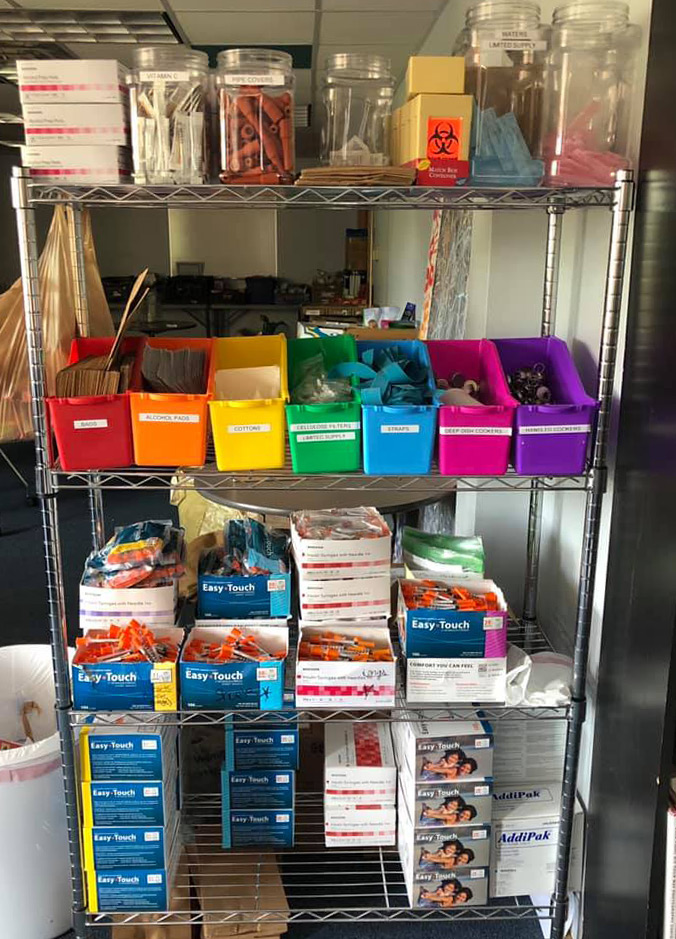
Local advocates highlighted an additional, acute factor: supply shortages at the region’s largest syringe services program and its subsequent closure.
A nonprofit that provided health care and social services to people who use drugs, Health Equity Alliance, or HEAL, distributed sterile needles annually.
Like other such programs nationwide, its goal was to prevent the spread of infectious disease that can occur if people share needles to inject drugs.
However, financial struggles and mismanagement led to severe shortages in recent years. Former HEAL executive director Josh D’Alessio acknowledged such issues, telling Â鶹ŮÓÅ Health News, “We did run out of syringes” at times or limit how many participants could take. Several of these shortages struck in the fall of 2023, leading HEAL staffers to suggest a link to the first HIV case.
The Future of Harm Reduction
Research suggests a strong connection between past HIV outbreaks among people who use drugs and lack of access to sterile needles, said , an epidemiologist at Tufts University School of Medicine.
A 2015 outbreak in , and one in the a few years later were curbed only after , he said. If such programs had existed sooner in Scott County, more than a hundred infections could have been prevented, .
Va, who leads the Maine Center for Disease Control and Prevention, said she considers the shortage of syringe services in the Bangor area to be a factor in the outbreak but not the primary cause.
Stopka said the best practice during an outbreak “is to amplify access to sterile syringes.”
But Trump’s recent executive order links harm-reduction programs to crime, saying such efforts “only facilitate illegal drug use and its attendant harm.” The order doesn’t name syringe services programs — which have been supported by both Democrats in the past — but it targets “safe consumption” sites, where people can use drugs under supervision. the attacks will be broader.
A letter from the nation’s leading addiction agency expanding on Trump’s executive order said federal funds to buy syringes or drug pipes. However, that has been true for most of the past few decades. The letter did not address supporting general operating costs for syringe services programs.
Department of Health and Human Services spokesperson Andrew Nixon told Â鶹ŮÓÅ Health News that the administration is committed to “addressing the addiction and overdose crisis impacting communities across our nation.” But he and spokespeople for the White House did not respond to specific questions about the administration’s stance toward syringe services.
In Bangor, some locals have raised concerns about harm reduction that echo the president’s. At a — shortly after a syringe services program was newly certified by the state to operate locally — residents and business owners said they felt unsafe with the growing population of people who were homeless and using drugs. They worried syringe programs were fueling the behavior.
But research suggests syringe services programs in the community and . They new HIV and hepatitis C cases, into addiction treatment fivefold, . They are also of overdose reversal medications, the use of which many communities — and the Trump administration — have said they support.
The city ultimately decided the newly certified program, , could not operate in prominent public parks or squares.


In the following months, Needlepoint ran its syringe services only at the city’s largest homeless encampment, where several people had tested positive for HIV, said the group’s executive director, William “Willie” Hurley. That ended in February when the city cleared the encampment.
This summer, Needlepoint secured a private location for its syringe services but shut it down five days later when city officials .
, director of Bangor’s health department, said the city is trying to strike a balance between “making services available and what the community wants.”
“Getting the buy-in of most of the community” is “critical to the future of harm reduction,” she said.
Other cities have seen backlash result in new laws that restrict how syringe services programs operate or shutter them.
Gunderman said she is hoping to avoid that in Bangor.
Clearing Encampments
Trump’s recent executive order also calls for clearing homeless people off the street and involuntarily committing them to treatment facilities.
The administration is enacting this policy in Washington, D.C., where it has and threatened homeless people if they don’t leave the streets.
White House spokesperson Abigail Jackson said people have the option to be taken to a shelter or receive addiction and mental health services.
Similar policies have taken hold nationwide in recent years, even in liberal hubs like and .
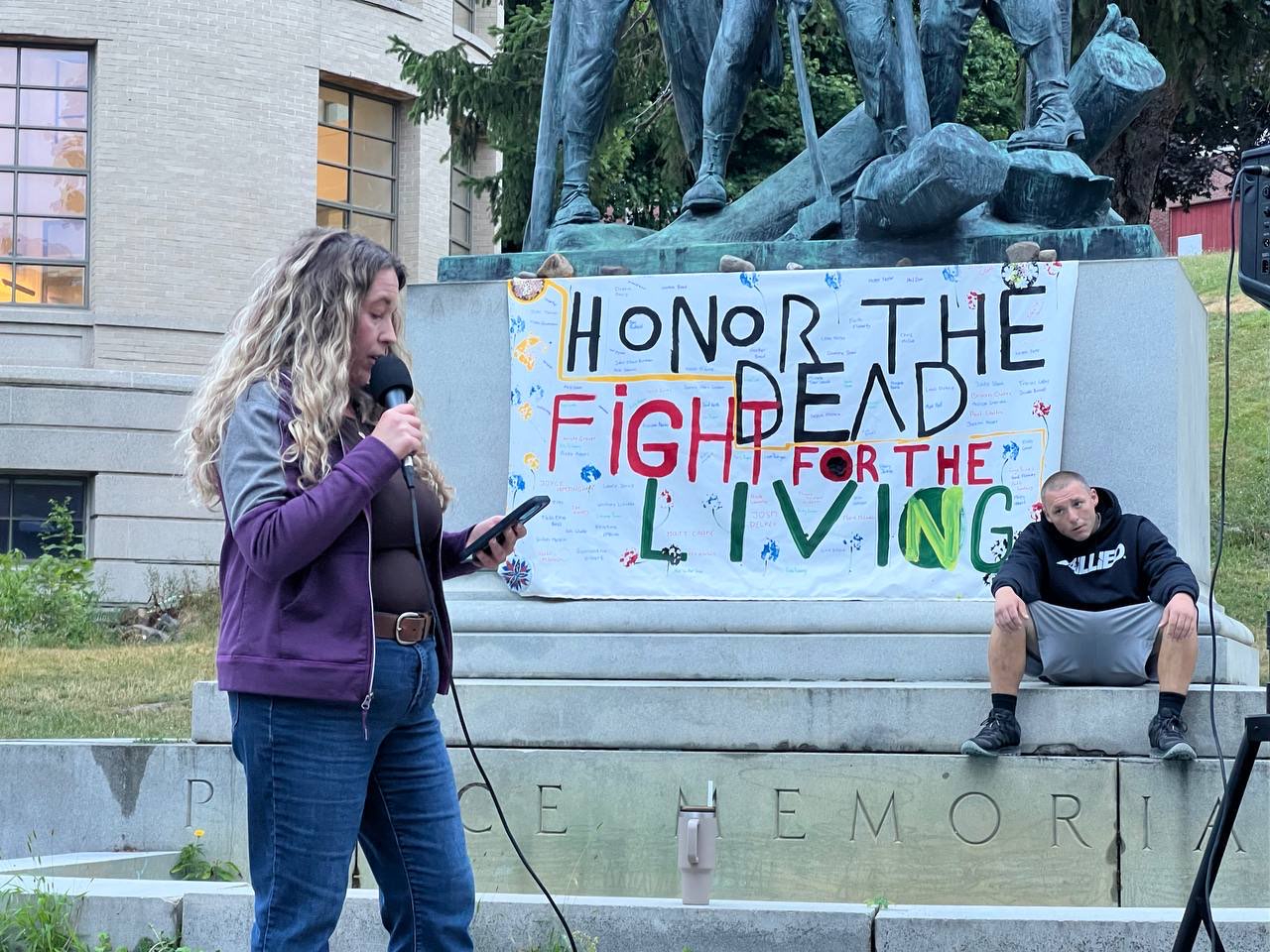
Last year in Bangor, as a homeless encampment that grew to nearly 100 residents, business owners and locals called for its clearing.
Some advocates and social service providers warned that doing so could exacerbate the HIV outbreak and overdose crisis. At two City Council meetings in November, that it would be difficult to find people they served after a clearing and that scattering newly diagnosed people HIV clusters elsewhere.
“Plenty of people said you’re going to lose track of these people,” , a board member for the Bangor Area Recovery Network, told Â鶹ŮÓÅ Health News. “They did it anyway.”
‘I’m Still Alive’
Two months after clearing the encampment, not knowing the location of more than a third of the people who had lived there.
Clark said it’s not surprising that the city couldn’t connect everyone to housing or treatment. Many people distrust these services, shelters are frequently full, and treatment services are scarce. “Where exactly are these people supposed to go?” she said.
City officials stressed in Council meetings and reports that they were taking a humane approach. They ramped up social services for months leading up to the clearing, connecting people to everything from housing to storage facilities and laundry.
Gunderman, the city health director, said she knows the sweep wasn’t ideal but that neither was crowding folks in an unsanitary encampment. “It was a situation where there weren’t a lot of great answers,” she said.
To help track folks from the encampment and keep them engaged in HIV treatment, the city is now using about to hire two case managers. (The only other local HIV medical case management program .)
“What we know from outreach we’ve been doing already is that we spend a lot of time looking for people,” Gunderman said.
Jason, who has been homeless for most of the past decade and tested positive for HIV this year, has seen that in action.
Members of what he calls his medical team have scoured the streets for hours to find his tent and remind him to take his HIV treatment shots, he said. Some picked up prescriptions and delivered them to him.
“They’ve made sure I’m taken care of,” Jason said. (Â鶹ŮÓÅ Health News agreed to use only his first name to protect his privacy.)
Jason believes he got the virus last year at the homeless encampment while using drugs that someone else prepared. He had tried to avoid the encampment for months. But whenever he set up his tent elsewhere, he said, police officers told him to move.
When he got the diagnosis, he thought of his uncle, who died of AIDS in the 1980s.
“It hurts to talk about,” Jason said, “but I’m still alive.”
After months of treatment, his viral load is . Over the summer, his team helped him find housing.
But Jason is still struggling to find sterile needles regularly. He worries about others facing a shortage.
“That’s how this outbreak has been spreading more and more,” Jason said. “Every time we turn around there’s another case.”


