
California Faces Steep Challenges As Obamacare Launches, Report Finds
As it prepares to offer coverage to its millions of uninsured residents through the Affordable Care Act, California faces daunting challenges and provides useful lessons for the rest of the nation, according to a released Wednesday in Washington, D.C.
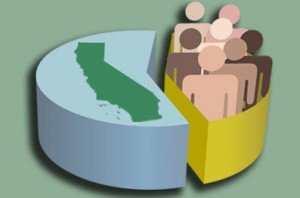
The Kaiser Family Foundation’s report, based on a survey of 2,500 adult Californians before enrollment began in October, provides a preliminary look at the roadblocks that could hinder the implementation of the law. (Kaiser Health News is an editorially independent program of the foundation.)
Among the challenges to uninsured and low-income residents are their poor connection to regular providers in the health care system, high costs, a limited understanding of the benefits the law provides, and technological problems going beyond initial computer glitches. (The survey was paid for by the , which helps fund KHN’s California coverage.)
“The [federal] startup problems I think gave everyone a sense that this was all just about making websites work and finding healthy people to balance the risk pool,” said Kaiser Family Foundation President and CEO Drew Altman.“This really is not just Travelocity or Kayak or Amazon.com, it’s a vastly more complicated, hands-on, community-based outreach challenge.”
Among the report’s key findings:
- Many uninsured people are largely disconnected from the health care system. Half of uninsured California adults have been uninsured for five or more years, and roughly 1 in 5 (22 percent) have never had insurance in their lives.
Some of these adults attempted to get insurance in the past but failed because of high cost or eligibility restrictions. According to the survey, only about a quarter of uninsured California adults say they have a regular doctor.
“These people are being asked to purchase or enroll in a new product to them,” said Rachel Garfield, the associate director of Kaiser Commission on Medicaid and the Uninsured at the Kaiser Family Foundation. “There’s going to be a great need for education about what has changed under the law.”
Linking this population to the right providers and teaching them to use their new insurance policies may require targeted outreach — communicating with people through hospitals, social service programs, and community clinics.
“Insurance, which is incredibly valuable, is not health care. Insurance may or may not enable you to gain health care,” said Mitch Katz, the director of the Los Angeles County Department of Health Services. “And just because you get health care doesn’t mean you feel cared for.”
Health officials need to take into account the various stresses in people’s lives, including housing costs, mental health issues, food security — issues that traditionally have been considered outside the realm of health care delivery, Katz said.
- Choosing an insurance plan is hard. Consumers must compare costs, services and providers. Often the differences are subtle or masked by complicated language. The survey found almost four in 10 (38 percent) of insured California adults reported having some problems making out differences in costs, services and provider networks among plans.
With the implementation of Obamacare, up to 7 million uninsured Californians will be shopping for Medi-Cal or private insurance. While the federal and state exchanges, like Covered California, were supposed to bring an Amazon.com-like experience to health care, that hasn’t quite panned out. Making it easier for consumers to choose plans that best fit their needs is an important next step in making the health law work, advocates have said.
- Insurance status is not static. Almost 2 million people may lose or gain coverage within the course of a year because of changes in employment and eligibility for public programs or changes in plans. Californians who lost their insurance had a gap in coverage for an average of just over seven months, the survey found
- Health care costs can be astronomical. Roughly four in 10 low- and moderate-income adults reported having difficulty paying their premiums, according to the survey. With the health law in place, most single adults living at or below 138 percent of poverty — roughly $16,000 annually for an individual — are now eligible for Medi-Cal, and the government has subsidies to help people who earn up to 400 percent of the federal poverty line purchase insurance on the Covered California exchange.
While this will help, many will still earn too much to qualify for these benefits and health care will continue to be unaffordable.
“Health insurance is not cheap. It’s not easy,” said Anthony Wright, the executive director of Health Access CA, an advocacy group that calls for high-quality, affordable health care for Californians. “But it’s cheaper and easier [under Obamacare]. We are mindful of that.”
- Many uninsured people are largely unaware of the benefits the health law provides, according to the survey.
More recent data indicates that nearly half of all uninsured adults aren’t aware the health law offers financial assistance to low- and moderate-income people to help pay for insurance.
“When we look at national polls that tried to gauge knowledge, we actually don’t see much movement on these measures,”said the Â鶹ŮÓÅ’s Garfield.
- Many of the uninsured adults the health law was intended to help don’t have easy access to the Internet. That’s 27 percent of those eligible for Medi-Cal and 13 percent of those eligible for private insurance subsidies. Moreover, some of those who report having Internet access may be surfing the Web through mobile devices, which advocates say isn’t optimal and may make the process more challenging than it needs to be.
Plus, the way the system is set up encourages digital payments, but for some consumers, that poses anotherchallenge because they lack bank accounts. Roughly 40 percent of Medi-Cal-eligible consumers are “unbanked,”according to the survey.


