
Clinics Go Mobile To Take Health Care To The Street
This story comes from our partner聽
鈥榮 Shots blog.
, medical director of community pediatrics at Georgetown University, calls mobile health clinics permanently temporary.
He runs聽聽in a truck that stations itself at various parking spots throughout Washington at regular hours during the week. He says the clinics like his are both a stopgap and a potential solution for聽聽for many people.
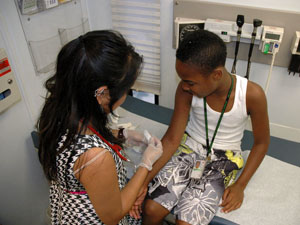
Mobile clinics have become common聽聽in the last two decades. The clinics aim to bring care to communities that are short on insurance and health care providers.
But the clinics’ focus on the uninsured has led some to question whether the mobile model will be rendered moot by聽聽under the Affordable Care Act.
, executive director of the Mobile Health Clinics Association, credits the boom of mobile health clinics in recent years to a rise in people without insurance.
But assuming more insurance coverage alone will wipe out barriers to care is overly optimistic, she says. Just because some gaps in insurance coverage are being filled, DeLorenzo says, doesn’t mean gaps in the care system have been.
She thinks the clinics are here to stay. And she’s not alone.
“Mobile works because it take down geographic barriers to health services; it takes down cultural barriers,” says Georgetown’s Levy, standing outside the van on First St. in southeast Washington on a recent Friday afternoon. “We’re here. We’ve been here. We’re part of the community.”
And that’s why Kesia Brighthaupt brought her 11-year-old son here for an聽聽before the school year starts. They’ve been coming since Jamari was 4, even though Brighthaupt is one of the few clinic clients who has private insurance.
“I’ve built up a good rapport with the doctors,” Brighthaupt says. “And besides, it’s just so much easier to get here.”


