The U.S. Food and Drug Administration has gathered scientists and tobacco policy experts to study the potential health risks and benefits of dissolvable tobacco products. The met this week and advocates from all sides lined up to give their pitch to the FDA panel.
听
Dissolvables, which are made with finely milled tobacco, aren鈥檛 new, but they drew new attention last year when R.J. Reynolds and Philip Morris introduced new flavors and varieties in a few cities across the country. Some health officials and lawmakers dubbed the flavored melt-in-your mouth orbs and tongue strips 鈥渘icotine candy鈥� and complained to the FDA.

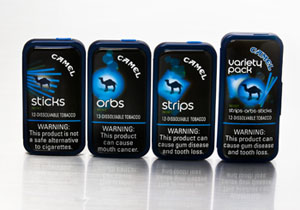
Supporters say dissolvables could help smokers 鈥渟tep down鈥� from their nicotine dependence on cigarettes. Opponents say it鈥檚 not clear how consumers actually use the products and who is using them. Will young people try dissolvables, develop a taste for nicotine, then graduate to smoking? Could dissolvables keep people hooked when some former smokers would have鈥揺ventually鈥揵ecome nicotine free?
Tobacco companies aren鈥檛 allowed to promote dissolvables as a stop-smoking aid, but there鈥檚 lots of Internet chatter from individual consumers who report that they鈥檝e given up cigarettes or cigars with the help of dissolvables.
Rutgers University law student Gregory Conley was a smoker for eight years, but quit in August. The 24-year-old used electronic cigarettes鈥攁nother smokeless product鈥攖o quit, and he says dissolvables suppress his cravings when he鈥檚 in class. He likes the tobacco-dipped toothpicks and says they give him a satisfying nicotine tingle along with a hit of mint or java flavor.
听
鈥淵ou just put it in your mouth and hold it as if you were holding a piece of straw between your teeth,鈥� Conley said.
听
He volunteers as a legal policy director for the and testified during the FDA鈥檚 meeting this week. Conley says electronic cigarettes, dissolvables and other smokeless alternatives are powerful tools to help smokers avoid the most toxic aspects of cigarettes.
听
The Centers for Disease Control and Prevention one in five deaths each year to tobacco use, about 440,000 people. Cigarette smoking costs America $193 billion a year, according to government estimates for 2000 to 2004. About half of that economic cost is direct health care spending, the other half lost productivity.
The FDA鈥檚 review of dissolvables was mandated by the 2009 . Matthew Myers, president of the , says the advisers will weigh the science and report on the consequences for population health, not just individual smokers.
听
鈥淭he FDA law recognizes that even if the product is less harmful, if it鈥檚 marketed in a way that its primary appeal is to young people, the net result will be more people becoming addicted to tobacco,鈥� Myers said.
听
鈥淲hat we鈥檝e seen is that the colorful way that dissolvables have been promoted and the talk that they have generated has led a lot of people to believe that these products are less harmful鈥攂efore there鈥檚 been an FDA review,鈥� Myers said.
听
Right now, FDA regulates dissolvables like other smokeless tobacco. They鈥檙e stocked behind the counter at convenience and grocery stores, not sold to minors and they have some of the same warning labels as snuff and chew: 鈥淪mokeless tobacco is addictive.鈥� 鈥淭his product is not a safe alternative to cigarettes.鈥�
The newer products have been available in just a handful of markets so far, including Denver, Indianapolis, Portland, Ore., Columbus, Ohio, and Charlotte, N.C. The Colorado Board of Health passed a resolution asking R.J. Reynolds to remove the products from its market, but the company with the request.
A group of U.S. lawmakers wants stricter rules for dissolvables. Some public health groups say the products should be removed from store shelves until the FDA has weighed in on the science behind dissolvables. Other advocates, sometimes called 鈥渉arm reductionists鈥� say smokeless products like dissolvables can lessen the disease, death and disability caused by smoking.
听
Jennifer Ibrahim, associate professor in the Department of Public Health at Temple University, says鈥揹one right鈥揾arm reduction is a good idea. 鈥淚 think that everyone in the business of smoking cessation is realistic that people can鈥檛 quit cold turkey, but you don鈥檛 want to send the wrong message: that nicotine is safe at any level, because it鈥檚 not.鈥�
听
鈥淭hat鈥檚 absolutely true, nothing is absolutely safe,鈥� said Conley, but he says smokers are dying while public health officials wait for definitive proof.
Psychologist Anna Tobia, director of the smoking cessation program at Thomas Jefferson University Hospital in Philadelphia, points out that the new dissolvables are not the only nicotine products meant to be ingested.
鈥淭o be fair, they are very similar to smoking cessation products that have been on the market for a very long time鈥揳 lozenge or a gum for people who are trying to get off of tobacco,鈥� said Tobia.
Kenneth Warner, a health economist at the University of Michigan School of Public Health, says there鈥檚 reason to be skeptical of the tobacco industry鈥檚 intention for dissolvables and concerned about what the new products will do.
听
鈥淭he public health community got bamboozled鈥� in the past, he said. When the tobacco makers began selling low-tar nicotine cigarettes, Warner says they were marketed as 鈥渕ild, mellow,鈥� and safer than regular cigarettes鈥攁nd it turned out they weren鈥檛.
听
The FDA鈥檚 advisers are wading in to a long-standing debate that shows up evolving and changing ideas about what鈥檚 acceptable and what鈥檚 safe. 听Health policy expert Ibrahim says electronic cigarettes and melt-in-your mouth tobacco are just the latest in a long line of novel products aimed at smokers and people trying to kick the habit.
听
鈥淚 won鈥檛 let my kids near the e-cigarettes, because I just don鈥檛 know what鈥檚 in the vaps [water vapor] that鈥檚 coming out of them. Once upon a time people thought exposure to second-hand smoke was safe and clearly that鈥檚 not the case,鈥� Ibrahim said. 鈥淚 don鈥檛 intend to expose myself or my family to things which 10, 15 years down the road, we鈥檒l say: 鈥極h, yeah, that鈥檚 not good for you.鈥欌��
听
鈥淲e will take anything to get our patients better and to get them to reduce the amount of cigarettes that they are smoking,鈥� said stop-smoking expert Anna Tobia. 鈥淚f this is a good first step, and鈥攎aybe鈥搃f they can see that they can manage with less nicotine, that would be wonderful.鈥� Many are waiting for the FDA to answer the question: Do dissolvables pose a greater or lesser risk to population health?