Updated at 3:45 p.m.
The Obama administration issued Friday governing contraception coverage in the sweeping 2010 health care law that officials said more clearly respond to concerns from religious groups that object to this requirement. But it’s unclear if the new rules will shield the administration from charges that requiring employers who oppose contraception services to pay for them for workers is a violation of employers’ religious freedom.
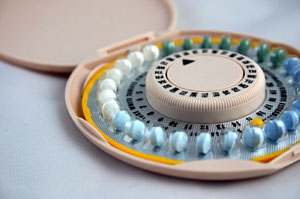

While churches and houses of worship are exempt from the requirement, other nonprofit religiously affiliated employers, such as hospitals and universities, are not. In the new regulations, “we’ve much more clearly defined how those benefits are to be delivered and how insulated the eligible organization is for contracting for, paying for or referring for the cost of the coverage for these benefits,” said Michael Hash, director of the Office of Health Reform at the Department of Health and Human Services.
The rules closely mirror those , officials said. Nonprofit religious organizations would not have to contract, arrange, pay for or refer contraceptive coverage if they object on religious grounds, but that coverage would be provided separately to women enrolled in their health plans at no cost. HHS received more than 400,000 comments on the proposed rules.
A nonprofit religious employer that did not want to cover contraceptive services would first have to provide notice to its insurer that it objects to the coverage, . Then the insurer would notify enrollees in the health plan that it is providing separate no-cost payments for contraceptive services for as long as they are enrolled in that plan.
If an employer self-insurers, meaning that it covers its own medical bills for workers rather than purchasing insurance coverage, the employer would notify the third-party administrator that handles workers’ claims of its objection, and the administrator would notify enrollees that is providing or arranging separate no cost contraception services.
To cover the cost of providing contraception coverage, insurers and third-party administrators would get a reduction in the user fees paid to participate the health law’s online insurance marketplaces, or exchanges, officials said.
While the new rules cover student health plans, they do not apply to for-profit religious groups or private employers who oppose the requirement on religious grounds. Several for-profit employers are .
Cecile Richards, president of the Planned Parenthood Federation of America, said the final policy “means that women will have access to birth control at no cost, no matter where they work.”
Cardinal Timothy Dolan, president of the U.S. Conference of Catholic Bishops, said the group is reviewing the 110-page rule. But he thanked the administration for moving its effective date to next Jan. 1 rather than the previous effective date of Aug. 1 of this year.