Like hospital leaders everywhere, the people running Valley Medical Center in Renton, Wash., talk frequently about the need to control soaring medical costs.
“We are working to reduce the overall cost of health care and to transform health care delivery,” Lisa Jensen, chairwoman of the hospital’s board of trustees, said last year.
Experts believe that’s a good prescription for the entire U.S. health industry, which costs the economy far more than systems in other developed countries, delivers mediocre results and is widely seen as unsustainable at its current growth rate.
But even as Valley officials talk about change, they’re paying hospital CEO Richard Roodman tens of thousands of dollars in bonuses for driving the kind of profits and expansion many say are no longer affordable for patients, employers and taxpayers.
Across the nation, boards at nonprofit hospitals such as Valley are often paying bosses much more for boosting volume rather than delivering value, according to interviews with compensation consultants and an examination of CEOs’ employment contracts and bonus packages. Such deals undermine measures in the 2010 health law that aim to cut unnecessary treatment and control costs, say economists and policy authorities.
“Boards of trustees in health care are oriented around top-line, revenue goals,” said Dr. Donald Berwick, a longtime reform advocate who ran Medicare and Medicaid for President Barack Obama until December 2011. “They celebrate the CEO when the hospital is full instead of rewarding business models that improve patients’ care.”
Thirty percent of what’s spent on U.S. health care is unnecessary, .ÌýU.S. hospitals spend per discharged patient as those in other developed nations without delivering much better results, according to research financed by the Commonwealth Fund.
As public and private budget pressures prompt sharper questions about how the system got so bloated, here is one answer: Hospital CEOs are paid to make it that way.
Kaiser Health News obtained compensation details for CEOs at dozens of top nonprofit and government-supported hospital systems for 2011 or 2012 via public information requests and tax filings. As many bosses noted, their incentives for growth and profits are often part of a package that also promotes clinical quality, patient satisfaction or other goals.
“More than 60 percent of my performance incentives were either in academic missions or quality measures,” said Dr. Sheldon Retchin, CEO of the Virginia Commonwealth University Health System in Richmond.Ìý “To say that I’m only interested in profits misses the entire mission.” .
Retchin’s goals for earning a bonus of $205,885 (plus a salary of $864,700) included boosting profits, surgeries, admissions and outpatient visits. For all the talk about reform, CEO incentives for traditional financial goals of boosting revenue and the bottom line still far outweigh those for rigorous quality and efficiency targets, experts say.
“What you’re seeing is incentive plans that look pretty similar to what they looked like five years ago or ten years ago,” said James Guthrie, a hospital compensation consultant for Integrated Healthcare Strategies. “They’re changing, but they’re changing fairly slowly.”
Along with those of smaller hospitals such as Valley, KHN examined CEO pay records from 30 of the largest private and public nonprofit hospital systems. Nonprofits deliver the large majority of hospital care. KHN did not query for-profit hospitals, whose leaders have long focused on growth and the bottom line.
Examples of CEO pay linked to finance and growth include:


Feinberg
Incentive targets for UCLA Hospital System CEO Dr. David Feinberg included increased profits, revenues and “further hospital system growth,” such as completing a $572 million rebuilding of the system’s Santa Monica campus. Feinberg earned a 2012 bonus of $262,534.
Growth accounts for “only a fraction” of Feinberg’s bonus, a system .

Fine
At Banner Health, a large, nonprofit system based in Arizona, CEO Peter Fine speaks of “an unwavering commitment to improve clinical quality and efficiency.” But Fine’s long-term incentive goals included profits and revenue growth, the organization’s most recent filings with the Internal Revenue Service show. Banner has been shifting incentive goals away from profits, and “the gap between financial and clinical quality is dramatically closing for us,” a spokesman said. .

Gabbe
Goals for the $84,394 bonus earned in fiscal 2012 by Dr. Steven Gabbe, CEO of Ohio State University’s Wexner Medical Center, included profits, cash, and growth in admissions, according to internal documents. .
Tarwater
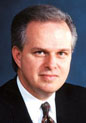
Michael Tarwater, CEO of fast-growing, Charlotte-based Carolinas HealthCare System, earned a $2.8 million bonus last year that included $1.6 million tied to targets including undisclosed financial goals. His total pay of $4.8 million that year reflects the “growth in scope and scale” of the organization, according to the system. .
Migoya
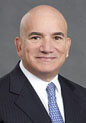
In Miami, the more profit Jackson Health System records, the bigger the bonus CEO Carlos Migoya can earn. For raising net assets past a certain point last year, he was eligible to receive a portion of the increase up to about $295,000, according to his employment contract. In March, Migoya — it came to $160,000 — to charity. .
Dean
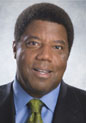
Incentive goals for Lloyd Dean, CEO of Dignity Health, a large Catholic system based in San Francisco, include unspecified “annual and long-term financial performance,” according to its most recent IRS filing. Dean’s bonus for 2011 was $2.1 million. .
Howell
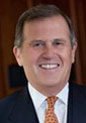
At the University of Virginia Medical Center, CEO R. Edward Howell proposed that his 2012 incentive bonus be tied partly to profits, new clinical initiatives and “expansion of the UVA Health System,” according to internal documents. His performance bonus paid in 2012 came to $199,002. .
But constant expansion at the UVA Health System and elsewhere, sought by trustees and prized as a source of jobs by community leaders, drives up insurance premiums and government spending. As health care takes up larger and larger portions of the economy, it consumes resources that might be better spent on schools, roads, corporate investment or raises for American workers, economists say.
“If the creation of jobs comes when you have overpaying systems … then growth is a reflection of screwy incentives and misalignment of payments,” said Barak Richman, a Duke University law professor who specializes in health and economics. “Ultimately we’re all paying for it. It’s coming right out of our pockets.”
Richard Umbdenstock, CEO of the American Hospital Association, defended financial goals in executive bonus packages.
“They have to include profitability or you are out of business tomorrow,” he said.
And while targets for revenue and admissions growth reflect a system that has traditionally rewarded volume, CEO incentive goals “are changing,” he added. “They are moving toward a greater balance toward quality and safety, patient satisfaction, employee satisfaction and finances.”
Growth has been the theme at Valley Medical Center almost since CEO Richard Roodman took over in 1983. Valley is a 300-bed community hospital in suburban Seattle that gets a cut of local property taxes. In a story matched at hospitals across the country, the institution has repeatedly added space, programs, amenities and technology once reserved for top teaching hospitals to become Renton’s second-biggest employer, after aircraft maker Boeing.
Patient revenue doubled over the decade ending in 2012, to $406 million, as Valley added a new surgery center; a $115 million tower that included an expanded emergency department and a joint and spine center; a birthing center with whirlpool tubs and reclining chairs for dads; and a “soothing, light-filled lobby” with pyramid skylights and waterfalls.
Roodman had extra reason to celebrate the ribbon-cutting ceremonies and expansion milestones. Often, they were tied to rewards in his paycheck.
Kaiser Health News focused on Roodman’s incentives not because they are unusual but rather the contrary; experts say they are typical. Washington’s public record laws ensure that more detail is available on executive pay at Valley than at hospitals in other states.
Roodman declined to be interviewed, but he , noting that Valley delivers millions in uncompensated care each year and stating that the best treatment and care for lower-income patients can be delivered only when hospitals are financially strong.
“Improving the health of our patients through the highest quality, safest and most effective care cannot occur in a vacuum,” he said. “For us, growth is necessary as long as the demand remains, and we are growing as responsibly as possible.”
In 2012ÌýRoodman’s pay was $1.2 million. That included a $213,000 bonus, about a third of which was related to financial goals and expansion.
Over several years his pay repeatedly included rewards triggered by specific achievements in building the hospital’s business. For example, when Valley exceeded profit goals for three consecutive years, Roodman earned a bonus each time. When patient volume increased at the hospital’s primary and specialty care clinics in 2009, he got a bonus. When urgent-care center visits grew the same year, he got another bonus.
While reformers focus on changing the “pay per procedure” incentives that induce physicians to perform excessive treatment, few seem to have noticed that incentives for the bosses like Roodman who run the hospitals and supervise the doctors point in the same direction. Because hospital officials feel obligated to put expensive equipment to use, many analysts believe the mere existence of new programs increases treatment and spending whether they are needed or not. Ìý
In 2011, Valley’s board offered Roodman a reward if the hospital increased the number of angioplasties, a procedure to clear coronary arteries that many experts believe is overprescribed. The hospital missed that target but achieved another goal on the CEO bonus menu: increasing surgeries using its da Vinci robot, a system questioned for costing much more than other methods
“Wow,” said Dr. Martin Makary, a surgeon at Johns Hopkins Medicine and author who has criticized hospitals’ promotion of robotic surgery. “It’s almost a story of what’s wrong with American medicine. You have an expensive technology with no advantage over standard surgery and we’re rewarding based on pure volume. The metrics should not be the number of procedures but how well the patients do.”
Other bonus targets included expanding Valley’s chemotherapy infusion center and recruiting doctors — a common way for hospitals to boost admissions. Valley’s incentives goals for 2013 do not include increasing robotic cases.
A high point in Roodman’s career was Valley’s 2011 alliance with UW Medicine, the health services wing of the University of Washington in nearby Seattle. The deal mimics mergers across the country blamed for giving hospitals monopoly-like power to raise prices.
The purpose of the UW marriage was “to align services so they can be provided in a more efficient manner,” Roodman told local newspapers.
Not really, said Dr. Paul Joos, an ophthalmologist and member of Valley’s board who has clashed with Roodman and other trustees.
“It’s nothing about affordable health care. It’s just about negotiating power with the insurance companies,” Joos said in an interview. “All these hospitals, they talk about quality and how to make things more affordable. But in the board meetings I’m at, they’re always talking about how to charge you more.”
Roodman’s recent incentives, like those of many CEOs, included categories for quality, patient satisfaction and charity care in addition to expansion and financial targets.
“Quality is as important as financials and really more so,” said Jensen, the head of Valley’s board of trustees. “We’re very focused on how health care in our organization is going to transition from fee for service to focusing more on value.”
Hospitals, however, tend to see satisfaction and quality scores in the same light as concierge service and luxury sheets — another way to attract patients and boost revenue. A few years ago, Integrated Healthcare Strategies why they pay executives quality and safety bonuses. “Way to grow service volumes” through publicity was one of the top reasons, along with “it’s the right thing to do.”
Valley’s quality scores as compiled and the are similar to those of other hospitals in the area. It got a “B” in the by the Leapfrog Group, an employer consortium, compared with grades of “C” and “B” in reports last year. It was one of the most-penalized hospitals in the state (eighth out of 48) for high readmission rates of Medicare patients. Ìý
“Boards tend to be comfortable with kind of average performance” in quality, Berwick said. “Whereas they might demand very aggressive performance in terms of volume and expansion, they tend to fall silent when the report shows average levels of care.”
At many hospitals, simply passing a basic accreditation survey is enough to earn the CEO a quality bonus.
Valley and its new UW Medicine partner are trying to improve. Roodman’s 2013 quality goals — reducing hospital-acquired infections and achieving other safety objectives — are “state of the art” and a big advance over his previous quality targets, said Dr. David Nash, the dean of Thomas Jefferson University’s School of Population Health in Philadelphia who also advises hospitals on incentive design.
But they still account for only 15 percent of Roodman’s potential 2013 bonus. Financial goals, construction and starting or expanding half a dozen programs such as neurosciences and a sports and spine clinic, on the other hand, make up a much bigger portion. Ìý
Compensation specialists expect hospital boards to increase quality expectations and deemphasize growth and the bottom line in future CEO bonus plans, especially as insurers and Medicare reward quality and efficiency more highly. But they predict it will take years.
“I’d say we’re just starting down that road,” said James Otto, a health care pay consultant for the Hay Group. “Until there’s more of that transition from volume to value, you’ll see [incentive] plans that aren’t dramatically different on a year-over-year basis. But if you and I had this conversation in say, eight years, what plans are measuring will be significantly different.”
For his part, Roodman is focused on expansion.
“You can look at growth purely for the sake of growth, or you can look at who the growth is intended to serve and why,” he said via email. “We plan to continue to grow and expand our clinical services because it meets the needs of our constituents.”
The problem, Berwick said, is that almost every other hospital CEO thinks the same way. Executives who talk about streamlining the industry are rarely the ones to volunteer, he said.
“We want to have growing market share and let our competitors die,” is their attitude, Berwick said. “When you’re in a market where that’s the case, guess what happens? They all continue to stand and grow — and costs go up without value.”
Kaiser Health News staff writer Sarah Barr contributed to this report.