
Leavitt Talks Prevention, But Not Politics On Bipartisan Panel
Just a few days after he to be a part of presidential-hopeful Mitt Romney鈥檚 transition team, Michael Leavitt Tuesday took on a very different mission: obesity.
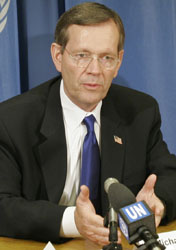
Leavitt was one of four former cabinet officials presenting a on the economic impact of the obesity epidemic at the Bipartisan Policy Center in Washington.
The former Utah governor and HHS secretary under the George W. Bush administration raised a few eyebrows on his collaboration with Romney, since he has spoken highly of the Affordable Care Act–a piece of legislation Romney says he would repeal of his first day in the White House. , who is the founder and chairman of the consulting business Leavitt Partners, has been advising states and providers on health exchanges and accountable care organizations, two key components of the health law.
Officials at the bipartisan think tank said Leavitt was not permitted to answer questions regarding his new role in the Romney campaign.
Instead, Leavitt spoke about the importance of good nutrition and physical activity to combat the country鈥檚 obesity epidemic. Leavitt co-chaired the project that led to the report with former HHS Secretary Donna Shalala and former Agriculture secretaries, Dan Glickman and Ann M. Veneman. Leavitt and Shalala both pointed out that over-regulation is not the answer to get Americans healthy.
鈥淲hen I was at HHS we put a set of physical activity guidelines out that call for 60 minutes of physical activity everyday for children. The government has a role to play here, but it is not the answer. It is a part of a larger picture,鈥� Leavitt said.
Shalala said the notion of 鈥淭winkies taxes鈥�–or taxing unhealthy foods–was a controversial part of the public health debate. The recent to ban the sale of large sodas by New York Mayor Michael Bloomberg brings awareness to the idea of reducing soda consumption and portion size, according to the panel, but treads on personal priorities.
鈥淲e have to be very careful not to think that we can do this by over-regulating the system,鈥� Shalala said. 鈥淎t the end of the day, we鈥檝e got to change people鈥檚 behavior, their heads, their sense of responsibility for themselves and their family.鈥�
The 105-page report, titled 鈥淟ots to Lose: How America鈥檚 Health and Obesity Crisis Threatens our Economic Future,鈥� highlights incentive programs focused on preventive care and their cost-saving benefits.
鈥淲e feel strongly that all of those who pay for health care–whether it鈥檚 public or private–should begin to structure incentive systems that reward effective prevention-oriented services and that have demonstrated a capacity to reduce cost over a significant time,鈥� said Leavitt.
He cited the partnership between United Healthcare and the YMCA to reduce obesity in various communities as a good example, but said that more research needs to be done on how best to measure prevention incentives.


