
Rep. Courtney Pushes Bill To Expand Medicare Coverage Of Nursing Home Stays
Congress may be聽in recess, but Rep. Joe Courtney (D-Conn.) isn鈥檛 taking a vacation just yet.聽 He went to a New London nursing home Wednesday to drum up support for legislation that would help residents such as a 98-year-old woman whose life savings were wiped out by nursing home bills Medicare wouldn鈥檛 pay.
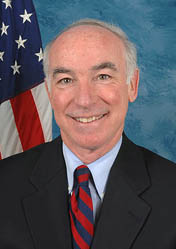
That woman’s niece, Candice Antrop, said her aunt went to the Beechwood Rehabilitation and Nursing Center several times for rehab after being discharged from the hospital. But even though the hospital and doctors recommended the rehab, Medicare did not pay for it. That鈥檚 because Medicare will cover such nursing home stays only if the patient had been admitted as an inpatient to the hospital for at least three days. Her aunt鈥檚 hospitalizations did not qualify because she was under observation聽care instead of inpatient care. The nursing home cost her aunt tens of thousands of dollars over several years.
鈥淪he couldn鈥檛 go home,鈥� said Antrop.聽 鈥淪he couldn鈥檛 walk.鈥�
Her aunt, who didn鈥檛 want her name used, is now a full-time resident at Beechwood, and the facility鈥檚 director said that Medicaid, the government health program for low-income people, is paying the聽current bill.
Medicare beneficiaries across the country by the observation exemption, since hospitals are not required to inform patients that they are receiving observation care.聽 Researchers at Brown University聽found聽that the dramatically — up 25 percent from 2007 to 2009 — even though Medicare enrollment and hospital admissions have declined slightly.聽 They also found that observation patients are staying in the hospital for extended periods of time, with 45,000 in 2009 staying 72 hours or longer — nearly double the number the number in 2007, and well past Medicare鈥檚 recommended 24 to 48 hours.
, co-sponsored by Rep. Tom Latham (R-Iowa),聽聽would change Medicare rules to allow the days in observation to count toward the required three-day hospital stay. It has bipartisan support, as does as a similar bill introduced by Sens. John Kerry (D-Mass.) and Olympia Snowe (R-Maine). 聽It has also been endorsed by AARP, the American Medical Association, and the American Health Care Association, a nursing home industry trade group, among others.
鈥淭he trend of hospitals coding patients as observation is accelerating with every passing year, and the impact on families is financially catastrophic,” said Courtney.
But according to the initial feedback he鈥檚 received from Medicare officials, Courtney said the legislation鈥檚 impact on Medicare spending 鈥渨ould have a miniscule additional cost, because you鈥檙e not creating a new benefit.鈥�
鈥淭his isn鈥檛 a clinical issue or a care issue,鈥� said Kathy Pajor, Beechwood鈥檚 president and executive director. 鈥淚t鈥檚 all about coding and paying the bill. It鈥檚 a technical issue that can easily be adjusted by the flip of a code.鈥�
Observation status also affects Medicare patients while in the hospital, because Medicare won鈥檛 pay for their routine daily medications for conditions that may be unrelated to the problem that brought them to the hospital.聽 Because there are no limits on what hospitals can charge for these drugs, some observation patients 聽聽$18 for one baby aspirin and $71 for one blood pressure pill that costs 16 cents at a local pharmacy.
A Medicare spokesman said officials could not comment, because the issue is under litigation. The Center for Medicare Advocacy, based in Connecticut, has filed a class-action lawsuit against the federal government on behalf of Medicare patients seeking to eliminate the observation designation.
Contact Susan Jaffe at Jaffe.KHN@gmail.com


