As Vice President Joe Biden and congressional lawmakers look for ways to trim federal spending as part of a deal to raise the federal debt ceiling, Democratic Sen. Jay Rockefeller has issued a clarion call on Capitol Hill to protect Medicaid, the shared federal-state health care program for the poor and disabled.

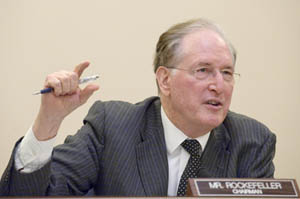
Photo by NASA via Flickr
A former VISTA volunteer, Rockefeller served two terms as governor in West Virginia before being elected to the Senate in 1984.听 Because Medicaid beneficiaries tend to be less politically powerful than seniors on Medicare, Rockefeller fears that they may be less able to fend off spending cuts as Congress looks for ways to reduce the federal deficit. 鈥淢y worry is that Medicare is now considered untouchable by Democrats and therefore we鈥檒l turn to Medicaid,鈥� he says. 鈥淭here isn鈥檛 the passion to defend Medicaid because the Medicaid population doesn鈥檛 represent a political threat.鈥�
In a recent letter to President Barack Obama, Rockefeller and other Democrats warned that Medicaid block grants or proposals to place caps on federal spending would require 鈥渦nprecedented and draconian cuts鈥� that over time would force 鈥渞adical changes鈥� to Medicaid.


In an effort to head off Medicaid cuts, Rockefeller on Thursday introduced legislation that would require drug makers to pay the Medicare program rebates for enrollees who are eligible for both Medicare and Medicaid, also known as dual eligibles, as well as for other low-income Medicare beneficiaries who receive Medicare drug coverage.听 Requiring such rebates would raise $112 billion over the next decade, Rockefeller said in a statement.
Rockefeller sat down this week with KHN鈥檚 Mary Agnes Carey to discuss his efforts to defend the Medicaid program. This is an edited excerpt of that interview.
Q:听 In a recent Senate floor speech you talked about 鈥渁n unsettling silence around Medicaideven from members of my own party.鈥澨� Why aren鈥檛 your Democratic colleagues talking about Medicaid?
A: 听Medicaid tends to cover people who are less likely to vote.听 They certainly dont have a lot of money.听 They may be disabled. They don鈥檛 have any lobbyists.听听They have some terrific people in town and in each state who fight for them.听 But they don鈥檛 have the power.听
My worry is that Medicare is now considered untouchable by Democrats and therefore we鈥檒l turn our attention to Medicaid, which has more money, more people who aren鈥檛 lobbying and who don鈥檛 contribute to campaigns.
Most everybody in Congress has a friend who was or has some family member who has been on Medicaid. But there鈥檚 just this little bit of turning of the head away from Medicaid enrollees and I resent that. I come from a state where a lot of people (are on Medicaid), but on the other hand, you know what? Forty percent of all people born in the United States, their births are paid for by Medicaid. Does that mean that they鈥檙e less people in God鈥檚 eyes or in our eyes or in public policy鈥檚 eyes or in good health care policy鈥檚 eyes? It should not, but I鈥檓 afraid it does.
Q: Republicans don鈥檛 appear to be making much progress in their effort to change Medicaid to a block grant program. Is the biggest threat to Medicaid that Democrats will agree to cuts as part of the deficit reduction negotiations?
A: I worry about everybody when it comes to Medicaid. There isn鈥檛 the passion to defend Medicaid because the Medicaid population doesn鈥檛 represent a political threat. It represents an enormous moral values threat for public officials, I think, to honor in public service these people, but it doesn鈥檛 represent a political threat or a financial threat. I don鈥檛 mean to be too cynical about that, but I鈥檓 afraid I am just a bit.
Medicaid covers 68 million people and it treats them more efficiently, at a lower cost per beneficiary, than anyone in the private sector.
Q:听 Medicaid is also expensive. If there鈥檚 a comprehensive deal to lower spending across the board as part of a debt ceiling increase, why shouldn鈥檛 Medicaid be included?
A: It鈥檚 expensive because there鈥檚 so much chronic illness. A 10-year-old boy is out playing on his bicycle on a street and he gets hit by a car. He鈥檚 in a wheelchair for the rest of his life. Is Medicare going to take care of him? No. Is private insurance going to take care of him? No. Medicaid is the ultimate American safety net. Medicaid will take care of him.
So as you come to an agreement about the nation鈥檚 debt, you have to decide how to weigh Medicaid compared to all the tax cuts for the rich, the tax cuts for the oil companies and all these others and all these people and corporations who pay no taxes whatsoever.
Q: 听You used to be a governor. Many governors are asking Washington for more flexibility on Medicaid, particularly a repeal of the health law鈥檚 maintenance of effort requirement for Medicaid. Do you think there鈥檚 any merit to their arguments?
A: If you relax the maintenance of effort standards 鈥� that states or the governors have to make sure eligibility remains the same for people who are receiving Medicaid health services 鈥� then one thing will happen: Within weeks, the Children鈥檚 Health Insurance Program will disappear. And millions and millions of children will lose their health insurance and will be put into the exchange market.
There are some governors, Republican and Democrat, who try to do the right thing and the best thing. But there are also some governors, both Republican and Democrat, who do not operate like that. And they look to make cuts where it hurts them least politically. Therefore Medicaid becomes a very attractive target, which is why I am fighting to the end for Medicaid.