OAKLAND, Calif. 鈥� With a Starbucks coffee cup in her hand and a half gallon of milk under her arm, Florence Owens let herself into Carol Crooks鈥� apartment on a Monday morning, announced herself with a cheery 鈥渉ello,鈥� walked through the book-filled living room, and got to work in the kitchen.
鈥淚 see you went popcorn-crazy this weekend,鈥� Owens teased as she brushed kernels off the counter into a garbage can. Crooks, who relies on a walker or wheelchair, can steady herself against the counter while waiting for corn to pop. But back, knee, and foot problems have left the 77-year-old silver-haired retired teacher incapable of most food preparation and cleanup.
Like nearly 800,000 other Californians, Crooks depends on aides from In-Home Supportive Services, a program funded through Medi-Cal, California鈥檚 version of Medicaid. Owens has worked as Crooks鈥� aide for almost three years. In addition to cooking and cleaning, she helps her shower, shops for groceries, drives her to medical appointments, and runs other errands.
For more than 50 years, low-income seniors and disabled people have been able to stay in their California homes 鈥� and out of 鈥� with help from government-paid aides. But in their latest bid to renew President Donald Trump's tax cuts, House Republicans released a plan on May 11 that would over 10 years from Medicaid, and could threaten funding for Owens and other In-Home Supportive Services workers.
While a major structural overhaul of Medicaid appears increasingly unlikely, with how to cut the budget. Several proposals would disproportionately target California, according to Larry Levitt, 麻豆女优鈥檚 executive vice president for health policy. Federal cuts, coupled with the state鈥檚 existing budget woes, could inflict a 鈥渄ouble whammy for California and trigger reductions in Medi-Cal and other state programs,鈥� he said. 麻豆女优 is a health information nonprofit that includes 麻豆女优 Health News.
Although federal law compels states to offer certain services, such as nursing home care, they鈥檙e to cover home-based care for low-income seniors and disabled people like Crooks, leaving the in-home services program to cuts, said Amber Christ, managing director of health advocacy for the nonprofit legal group Justice in Aging.
In the wake of the Great Recession, California made a series of funding cuts to in-home support aides. Lawsuits temporarily stopped the bulk of the cuts, but a led to an 8% reduction in 2013 and an additional 7% cut in 2014.
Further reducing these services would inevitably force more people to move into nursing homes, Christ said. 鈥淚t would be an enormous setback from the progress we have made to provide care in the home and the community to support older adults and their families,鈥� she said. 鈥淚 think it will cost people鈥檚 lives.鈥�
Owens supports herself and her teenage son with what she earns working 136 hours a month for Crooks. She鈥檚 confident she can figure out another way to make a living, so she鈥檚 less worried about losing her $20-an-hour income than she is about Crooks鈥� losing her independence.
鈥淚 absolutely adore Carol,鈥� said Owens, 36, as she chopped onions for Crooks鈥� breakfast. 鈥淚 look at her as a grandma.鈥�
From a makeshift desk where she鈥檇 been scrolling through emails, Crooks affectionately eyed Owens and announced, 鈥淵ou鈥檙e adopted.鈥�
In his May 14 , Gov. Gavin Newsom trimmed funding for In-Home Supportive Services, most notably by putting weekly caps of 50 hours on provider overtime and travel, reinstating an asset limit, and eliminating the service for immigrant adults without legal status who aren鈥檛 already enrolled.
The proposed changes are unlikely to affect Crooks, but if congressional Republicans slash Medicaid spending, the Democratic governor , California could not afford to backfill all the proposed federal cuts. Almost two-thirds of the $28.3 billion California has budgeted for the in-home support program is supposed to come from endangered federal Medicaid funding. The state legislature must pass a balanced budget by June 15, regardless of the status of federal funding negotiations.
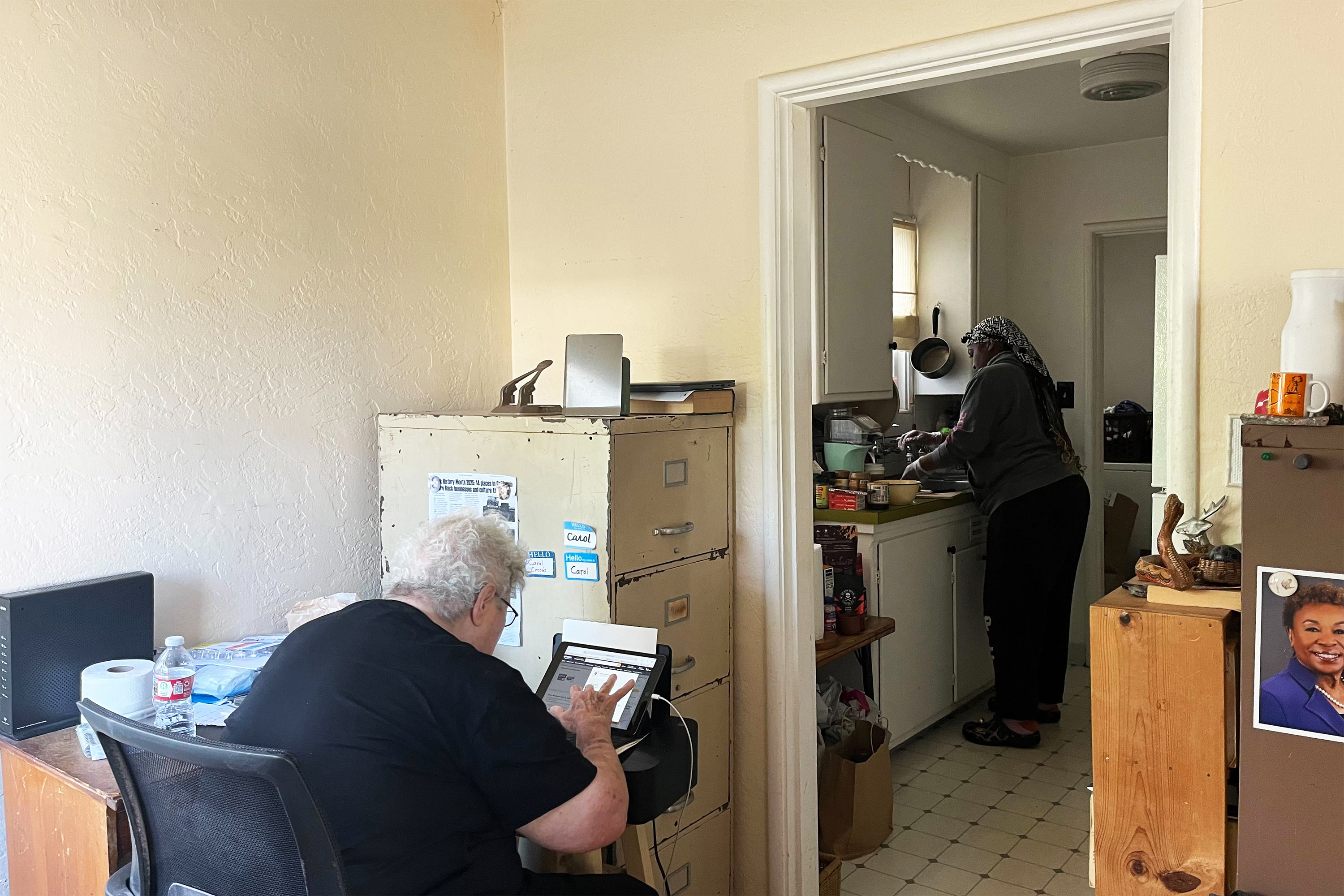
Owens delivered an omelet and a mug of coffee to Crooks. 鈥淚 know these are politicians,鈥� she said, 鈥渂ut they still have to understand the elders are our roots. And I鈥檓 sure they have to have some kind of heart.鈥�
Crooks is less certain, more anxious. 鈥淚f they start messing with my programs,鈥� she said, 鈥淚鈥檓 in trouble.鈥�
Burt Conell, 64, is also worried. A paraplegic, he鈥檚 been confined to a wheelchair for 30 years, since, despondent after his girlfriend left him, he jumped in front of a train. He relies on in-home aides to help him bathe and clean his San Francisco apartment.
When he heard the government might cut his funding, he imagined being unable to shower, getting rashes and bedsores, and having to move into a nursing home. Again, he contemplated suicide.
鈥淚t made me feel like I was using so much resources that I shouldn鈥檛 exist,鈥� he said.
At an of San Francisco鈥檚 Disability and Aging Services Commission, Commissioner asked about the fate of In-Home Supportive Services, on which she relies. 鈥淲e don鈥檛 know what鈥檚 going to happen,鈥� Executive Director Kelly Dearman replied, adding that Medicaid cuts could result in a decrease in the number of hours San Francisco beneficiaries, like Conell and Bittner, who is quadriplegic with a speech disability, receive. 鈥淚t鈥檒l be dire,鈥� Dearman concluded.
Every day, around 30 people contact California Advocates for Nursing Home Reform seeking advice on how to get in-home help, said Maura Gibney, the nonprofit鈥檚 executive director. These days, the group frequently hears from recipients who have achieved a semblance of normalcy in the aftermath of a major setback, such as a stroke, but fear they鈥檒l lose their benefits, she said.
鈥淚t鈥檚 hard to really give people reassurance at this time because I don鈥檛 think any of us know what will happen,鈥� Gibney said.
Lately, when she hears from people looking for in-home help for the first time, Gibney wonders if their efforts will end up being pointless. 鈥淚t feels a little bit like trying to show somebody how to get into the building as the top floor is on fire,鈥� she said.
Paul Dunaway, who directs Sonoma County鈥檚 Adult and Aging Division, described the dearth of information he and his staff have to offer older and disabled people about future services as 鈥渁nxiety-provoking.鈥�
鈥淭here鈥檚 a lot of chaos happening and not much to really grab onto yet about the funding on the federal level,鈥� Dunaway said.
Uncertainty and fear about service cuts, coupled with weaning off pain medicine from a back surgery, left Crooks 鈥� who retired from teaching after being diagnosed with bipolar disorder 鈥� unable to sleep, she said, and she spiraled into her first manic episode in more than a decade.
Owens was sweeping the living room but stopped to listen as Crooks talked about being tired, worried, and feeling out of control. 鈥淚 told her, 鈥楻egardless, I鈥檓 gonna always be here for you, no matter what,鈥欌�� Owens said.
Crooks, wearing a T-shirt picturing the Statue of Liberty with her hands covering her face, nodded. 鈥淚t helped a lot,鈥� she said.
Nonetheless, without an in-home aide, Crooks said, she would have no choice but to move into a nursing home 鈥� a fate she cannot bear to consider.
鈥淚t wouldn鈥檛 be a home,鈥� she said. 鈥淚t鈥檚 where people go to die.鈥�
This article was produced by 麻豆女优 Health News, which publishes , an editorially independent service of the .听
麻豆女优 Health News is a national newsroom that produces in-depth journalism about health issues and is one of the core operating programs at 麻豆女优鈥攁n independent source of health policy research, polling, and journalism. Learn more about .