


LOGAN, W.Va. 鈥� Sitting on a bench laughing with a co-worker during a morning smoke break, Debra Orcutt quickly raises her hand when asked if she knows anyone dealing with depression.
鈥淚 am,鈥� she tells a visitor to the roadside market where she bakes brownies and peanut butter fudge.
Orcutt, 63, has used medication to manage her depression for more than two decades since her son, Kyle, died at age 4 from a congenital illness. 鈥淭here were days I couldn鈥檛 leave the house,鈥� she said.
After a long marriage that ended in divorce, she said, she lives happily with her 鈥渉illbilly鈥� partner near this small town in the heart of Appalachia, an hour鈥檚 drive south of the state capital, Charleston. But certain things, such as the sound of an ambulance siren or the death of her potbellied pig, can trigger lingering feelings of sadness.
Orcutt is hardly alone in this county, where almost everyone knows someone with depression 鈥� or experiences it themselves. And that鈥檚 not an exaggeration.

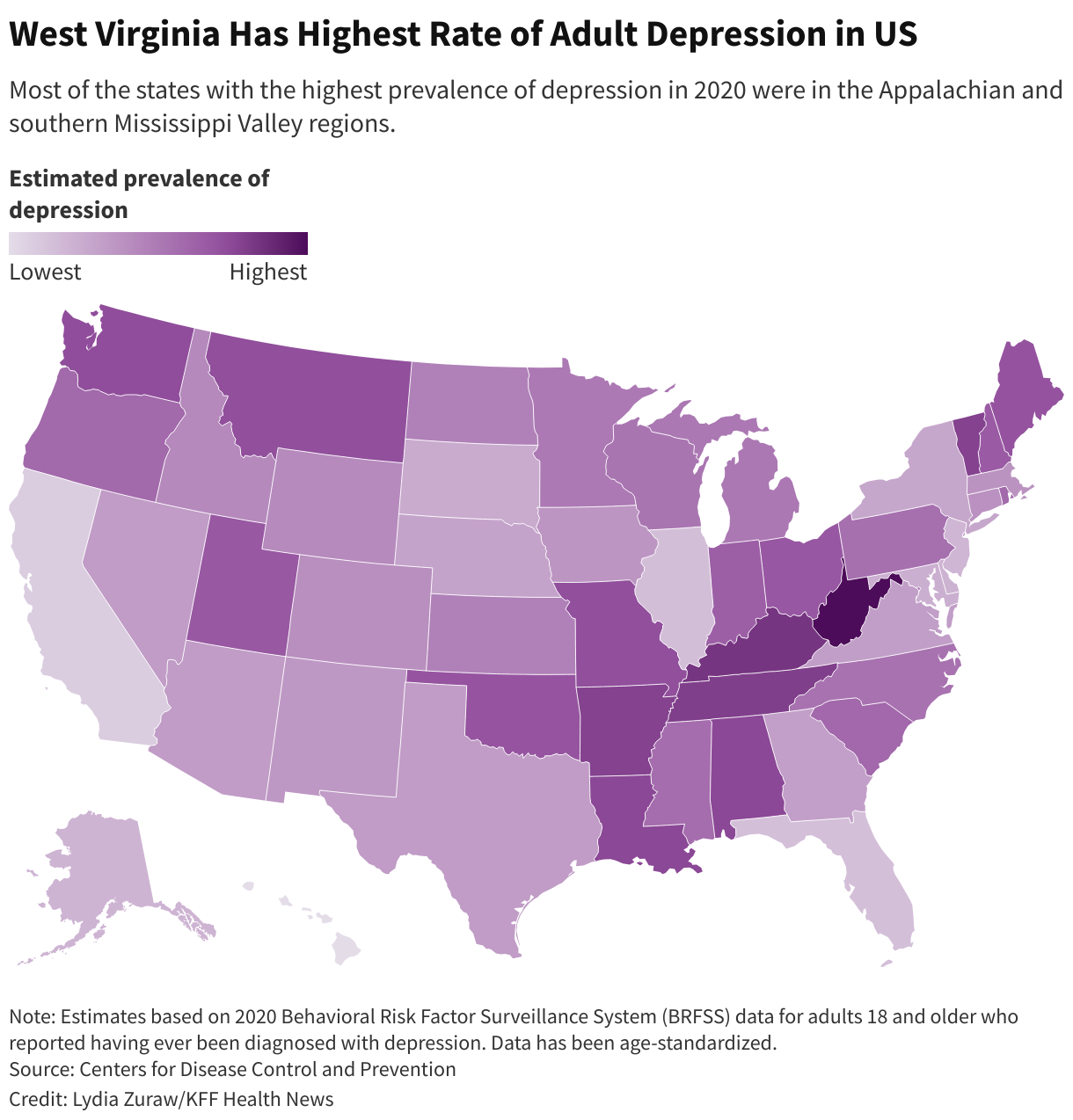
An estimated 32% of adults in Logan County, West Virginia, have been diagnosed with depression 鈥� the highest rate in the United States and nearly double the national rate, according to a by the Centers for Disease Control and Prevention.
The study, which provided estimates by county based on a national survey of nearly 400,000 people conducted in 2020, showed depression rates varied widely by region and even within states. Most counties with the highest rates were in a 13-state swath of Appalachia; the southern Mississippi River Valley, particularly Arkansas, Louisiana, and Tennessee; and Missouri, Oklahoma, and Washington.
The states with the lowest rates included California, Illinois, Alaska, and Hawaii.
West Virginia, which also has some of the nation鈥檚 highest and , is home to eight of the 10 counties with the highest estimated rates of adult depression, the CDC survey found.
Overall, 18% of adults in the United States reported having been diagnosed with depression in their lifetimes, the CDC survey found.
Health experts say depression has risen to epidemic levels in the U.S. in recent decades, and the covid-19 pandemic exacerbated the problem with its isolating public health measures, threat of serious illness, lingering health effects, and sobering death toll.
With heightened awareness of rising depression rates, the Biden administration to expand access to mental health care.
The CDC findings correlate with that show depression rates at alarming levels.
More than a simple case of the blues, depression is a mood disorder that causes a persistent feeling of sadness and a loss of interest in things once enjoyed. It affects eating, sleeping, and concentrating, as well as activities such as working or going to school.
鈥淒epression is often a chronic illness, and if you stop treatment, it eventually comes back,鈥� said Mark Miller, a psychiatry professor at West Virginia University in Morgantown.
He said of poor overall health, low education levels, and poverty 鈥� as well as the opioid epidemic, which has 鈥� takes a punishing toll on residents鈥� mental health.


In Logan County, nearly a quarter of whose 31,000 residents live in poverty, few expressed surprise in interviews with 麻豆女优 Health News when told their home tops the list of most depressed counties.
鈥淵ou鈥檝e come to the right place for depression,鈥� said Marie Tomblin as she worked the front desk of the Holiday Inn Express & Suites in Logan, noting her sister, daughter, and other family members have faced it. 鈥淚 see it a whole lot, and people think it鈥檚 a normal feeling and don鈥檛 want to admit they have a problem,鈥� she said.
Logan County is in the Appalachian coal-mining region, now a shadow of its former self, as the industry has economic and regulatory pressures, taking many jobs with it. In Logan, the county seat, the downtown has numerous closed stores and office buildings, and few people were out walking its sidewalks on a recent weekday morning.
The county鈥檚 like diabetes and obesity also make it a breeding ground for depression, health experts say.
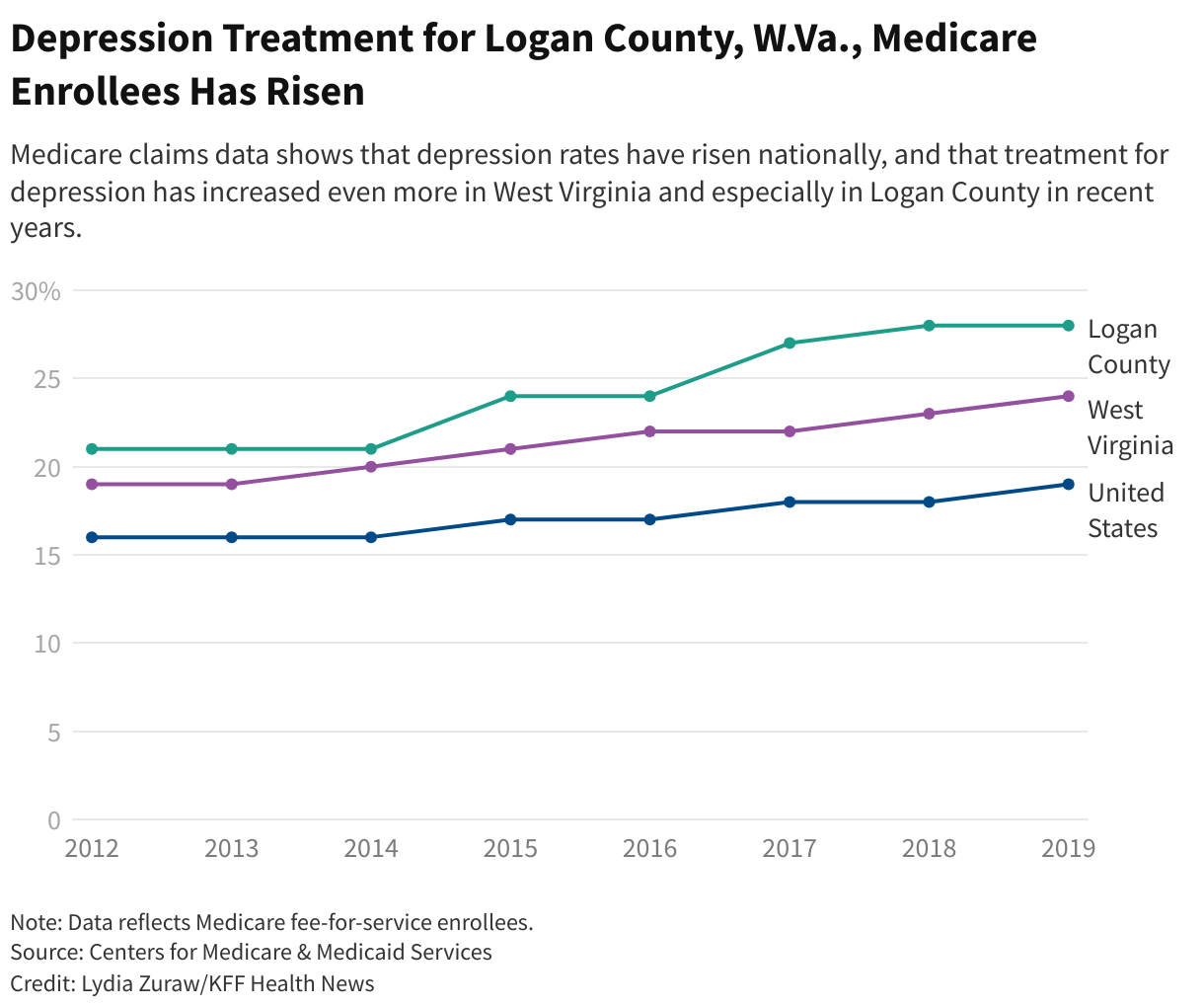
While depression rates have risen nationally, Medicare claims data shows treatment for depression has increased more in West Virginia and especially in Logan County in recent years. Nationwide, 18% of enrollees in original Medicare received care related to depression in 2020, up from 16% in 2012 鈥� despite an overall drop in care as the pandemic struck.
In Logan County, it was 28% of Medicare enrollees in 2020, up from 21% in 2012. As in the CDC study, Logan County鈥檚 numbers were among the highest in the country.
Yet, health professionals here say they are not overwhelmed by people seeking help for the condition.
Robert Perez, an internist in Logan, estimates more than half of his patients have depression. But he said few want to talk about it or accept a referral to a psychiatrist and he is limited in what he can do for them.
鈥淚t鈥檚 hard to convince people who don鈥檛 want to be helped,鈥� he said. 鈥淚 don鈥檛 have that much time to treat their depression.鈥�
David Brash, the chief executive of Logan Regional Medical Center, which sits on a hill overlooking the town, said he鈥檚 not surprised by the area鈥檚 high depression rates.
The medical center doesn鈥檛 have psychiatrists on staff, but its primary care doctors try to treat depression as part of their practice, he said. The center recently started offering telepsychiatric consultations for its physicians to help treat patients in its emergency room.
鈥淲hen you come from this area, you know what the challenges are,鈥� Brash said. 鈥淎nd the economic challenges affect the depression 鈥� it鈥檚 not a new phenomenon.鈥�
Diana Barnette, the county鈥檚 top elected official as president of the Logan County Commission, said doctors are often too quick to give patients medicine when they are feeling down. 鈥淚鈥檓 not saying we do not have a lot of depression in the area, but culturally it鈥檚 become so accepted to have a doctor give you a pill to make you feel better.鈥�
Barnette, who owns several businesses in the county, including a movie theater, also blames the region鈥檚 rainy, cloudy weather and how its mountains limit residents鈥� sun exposure.
鈥淭here鈥檚 still a lot of stigma around it,鈥� said Michael Baker, a pharmacist at Aracoma Drug Company, a pharmacy in Chapmanville, the county鈥檚 largest town after Logan.
Indeed, Chris Palmer, an assistant professor of psychiatry at Harvard Medical School, said the notion that overprescribing or cloudy weather explains high depression rates does not help the problem.
That viewpoint 鈥渟trikes me as a hopeless and nihilistic attitude, that we are drowning and there is nothing we can do about it,鈥� he said.
There are glimmers of hope here.


The pandemic is considered over by most residents; the state has leaned into its tourism motto, 鈥淎lmost Heaven,鈥� inspired by ; and the region鈥檚 economy is slowly shifting from coal as the county to all-terrain vehicle enthusiasts.
In June, the same month the CDC released its findings, Coalfield Health Center, a federally funded clinic in the county, announced it had hired its first psychiatrist, David Lewis.
Lewis, who grew up in Logan County and taught high school math here, said he has seen about 50 patients so far and knows he has room to see more.
鈥淧eople are not used to having the option of going to a psychiatrist here, and doctors still refer out to bigger institutions, which could be in Charleston,鈥� he said.
Coalfield is struggling to overcome the stigma and other treatment obstacles around depression. In this region, Lewis said, people often view going for mental health help as being 鈥渨eak in faith.鈥�
鈥淥nly a small percentage of people who need help for depression are getting it,鈥� said Kristin Dial, the executive director of Coalfield Health Center. 鈥淲hat we have found is that we can refer them to Dr. Lewis, but we have a high no-show rate.鈥�
鈥淲e have to be here when they are ready,鈥� she said.
Lewis said the best treatment for depression includes improving diet and exercise and avoiding drugs and alcohol. But when patients are asked how they want to manage their illness, they tend just to want pills, he said.
Coalfield also has a nurse practitioner, Elice Hinkle, who recently finished training to offer counseling at the clinic.
Because patients know Hinkle from her having treated their physical ailments, she said, they are more likely to come for counseling, and she can coordinate efforts with a patient鈥檚 other providers at the clinic.
Back at the market, Orcutt says it鈥檚 been many years since she went to counseling. These days, she copes with her depression and anxiety by keeping busy with hobbies such as sculpting and painting.
鈥淚t helps not to dwell on it,鈥� she said.


