


Here’s the question making the rounds in Colorado:听Is the state听asking for enough听start-up money from the federal government for its online health insurance marketplace?
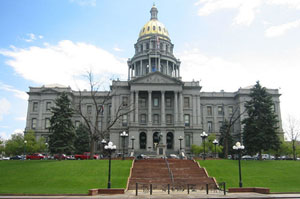
The Colorado State Capitol (Photo by Alexander Meins via Flickr).
Consumer advocates are worried the answer is “no.”
Statehouse Republicans, on the other hand, think it鈥檚 asking for far too much.
Colorado exchange CEO is playing Goldilocks, saying the $125 million federal grant request she wants to send to Washington is just right.
Colorado is bumping up against a May 15 deadline to apply for its third and final federal grant to launch its insurance exchange, recently re-branded as .
The $125 million request, if granted, would push total federal funding for Colorado鈥檚 exchange over $185 million.
Consumer advocacy groups, including the broad coalition known as the , think the request should include more than听the current $10.5 million line item for a customer assistance network to help people buy policies in the exchange and figure out if they鈥檙e eligible for premium subsidies. Nationwide, funding for the online marketplace’s consumer assistance will vary widely between states.
If Colorado鈥檚 network is underfunded, “frustration and withdrawal from a few will lead to withdrawal from the enrollment process by many as word spreads about long wait times or impersonal or inadequate assistance ultimately leading toward bad press for the exchange,” in one of three the state鈥檚 received from consumer groups criticizing proposed听navigator funding levels. Navigators are the people who will provide help to听individuals seeking to buy insurance through the exchange.
鈥淭he long-term viability of the exchange strongly depends on its success in the first year when Coloradans initial experiences will shape their impressions of the exchange for years to come,鈥� echoed a that includes AARP, Boulder County and safety net health care provider Denver Health.
Exchange CEO Fontneau responded that Connect for Health Colorado is budgeting more for navigators than the $10.5 million in the federal grant request. She expects an additional $4 million to $6.5 million will be channeled to the exchange听from administrative fees assessed on each policy sold,听about $22 per year per policyholder. The exchange has also requested more than $2 million for the program from private foundations.
GOP Concerned About Tax Burden
Some Republicans have the听opposite concern: that Colorado is requesting too much federal money.
Colorado鈥檚 exchange, “should be funded through operating revenue, it鈥檚 not fair to put the burden on the federal taxpayer,” says , a physician-entrepreneur Republican lawmakers appointed to Colorado鈥檚 exchange board. He鈥檚 angry that Colorado increased its grant request after learning in January that the grant could be used to fund operations beyond 2014.
鈥淲hat we were going to pay for ourselves we鈥檙e now asking the feds to pay for,鈥� he said.
Fallon doesn鈥檛 have enough allies on the board to modify its very pro-White House bent, but his opposition to the pending grant request this week stirred the body鈥檚 most fiery debate yet.
Other board members, including the who serves in an ex-officio role, said the state should err on the side of asking for more money than it estimates it will need and return any unused funds.
But guessing the amount the state will need is difficult. If a relatively high number of people use the exchange immediately after it opens, a lot of revenue听will be generated听that can be used for operations.听But if enrollment numbers are initially low, the state will need to lean on federal funding more to maintain the new infrastructure.
Fallon scoffed at suggestions that Colorado should ask for a high number and then pay back any unused federal funds.
鈥淚 believe your intentions are genuine,鈥� he told a fellow board member, 鈥渂ut I鈥檓 cynical any government body will not spend鈥� every dollar it has.
Fallon鈥檚 anger was echoed by Republican state lawmakers on a special exchange oversight board who reviewed the grant request Tuesday.
State Rep. said the size of the request听鈥渓eaves me fairly speechless.”
鈥淲e were given to understand that we were running the leanest, most cost-effective exchange in the country,鈥� Gardner said, 鈥渟o it鈥檚 disappointing.鈥�
Other members of the committee seemed incredulous that the exchange would need another nine-figure sum after Colorado鈥檚 legislature had only days earlier approved the $22 per policyholder per year fee, as well as agreeing to send it any remains from the state鈥檚 now-disbanding high risk insurance pool.
鈥淚f [the exchange] were a private concern I think you鈥檇 be looking for a job,鈥� Republican Senator told exchange leaders Tuesday. He and other oversight committee members were under the impression that the exchange wasn鈥檛 planning to request additional funding beyond that in the measures approved by the state legislature. Democrats on the committee said they never heard that as those bills moved through the legislative process.
Republican Senator was angry that the committee鈥檚 sole meeting this legislative session came just one day before the session ended. And being asked to sign off on an 80-page federal grant request just days before its submission deadline clearly displeased her.
鈥淭he timing is horrible,鈥� she said, 鈥淚鈥檓 almost without words.鈥�
Republicans on the oversight committee are essentially powerless to thwart exchange board decisions this year. The state law that created the oversight committee allows its co-chairs to approve exchange board actions.听This year, with Democrats controlling the state House and Senate, that means both of those seats are held by Democrats.
And Democrats on the committee stood up to defend the grant request.
鈥淲e as Colorado taxpayers are paying鈥� to fund exchanges nationwide, said Senator , 鈥渁nd if we choose not to use it, one of our neighboring states can apply for and receive those funds to set up their own exchanges, and then we鈥檒l have an increasing cost for access to health care for our own residents.鈥�
Colorado鈥檚 $125 million exchange grant request to Washington is still in draft form. The exchange board will hold a phone conference Friday to work out any details before submitting it in time to meet the May 15 deadline.
This story is part of a collaboration that includes , and Kaiser Health News.听


