
Employer Health Costs Rise 4 Percent, Lowest Increase Since 1997
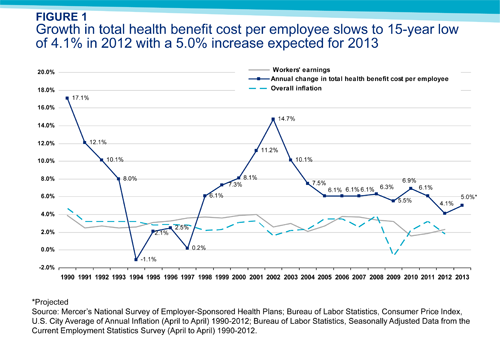
Furnishing new evidence of聽slower growth in health costs,聽consulting firm聽Mercer that employers spent 4.1 percent more on health benefits this year than in 2011. It was the smallest increase in 15 years.
One reason, but聽probably not the only one:聽Employers shifted costs聽to workers through higher deductibles. Nearly 60聽percent of very large聽employers (more than 20,000 workers) offer , according to Mercer’s survey. The portion of all employers offering consumer-directed plans rose from 17 percent last year to 22 percent in 2012, Mercer said.
顿别诲耻肠迟颈产濒别蝉听for consumer plans decrease premium costs for employers and workers but raise聽out-of-pocket expenses.聽High-deductible coverage is supposed to prompt patients to seek聽less-expensive care, but critics say consumers don’t have the knowledge or tools聽to shop for surgery the way they buy cantaloupes and shampoo.聽A growing number of companies offer such plans as their only coverage.
Total enrollment in consumer plans rose from 13 percent to 16 percent of covered employees. If the industry hasn’t already reached the tipping point for such coverage, “at this rate of growth it’s coming soon,” said Sharon Cunninghis, Mercer’s U.S. business leader for health and benefits.
The survey was conducted from July into September and聽included government聽and private employers, of whom 2,809聽supplied data.
The portion of employers offering聽health plans rose聽for the first time in several years,聽Mercer said, perhaps because聽cost increases have moderated. Employer plan expenses averaged $10,558 per employee this year.聽The聽4.1 percent increase for 2012 was substantially smaller than 2011’s rise of 6.1 percent and way down from the double-digit growth of the early 2000s.
Economists behind聽slower聽medical inflation,聽which has roughly coincided with聽poor聽economic performance聽beginning in 2008.聽One factor is that tight聽budgets and high unemployment聽have kept consumers from getting聽care they otherwise would seek, many believe. There has also聽been a proliferation of聽accountable care organizations and similar arrangements聽that reward caregivers for efficiency and quality. But high-deductible聽plans, which ,聽are also seen as playing a role.
In another Mercer finding, which could dismay聽supporters of the Affordable Care Act, the portion聽of small employers reporting they are “likely” or “very likely” to cancel health plans in the next five years rose from 19 percent to 22 percent.
Of all employers, small companies are to terminate coverage聽and聽leave workers to find insurance聽on state health exchanges once they open in 2014. The slice聽of聽employers with more than 5,000 workers reporting they would probably shut down plans聽rose聽from 4 percent聽to 5 percent. Among all large employers (those with 500 or more workers), however,聽the portion likely to drop聽plans fell from 9聽to 7 percent.


