


The Obama administration, stung by fierce opposition from Catholic leaders to a new rule requiring that insurance plans offer free contraception, announced it is revising the regulations so that religious-affiliated groups don鈥檛 have to pay for the coverage. But President Barack Obama insisted that all women must still be covered. “No woman’s health should depend on who she is or where she works or how much money she makes,” he said in making the announcement.
Here are some common questions and answers from KHN that help explain the policy.
Q: What action did the president take and how is it different from earlier policy?
础:听罢丑别 announcement聽shifts the responsibility for providing insurance coverage of birth control expenses for religious-affiliated organizations opposed to contraception. Last month, the administration announced that all insurance plans would be required to cover contraception as part of the list of free preventive services mandated by the 2010 federal health law. That regulation exempted houses of worship, like churches,聽from the requirement to provide contraceptive services at no cost to employees, but religious-affiliated institutions, such as universities and hospitals, would have to provide coverage for contraception.
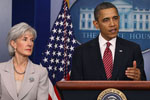
Some religious groups, including the United States Conference of Catholic Bishops, objected on the basis that it violated their religious freedom. The resulting furor聽quickly engulfed the White House聽and even聽some Democrats聽and聽Catholic groups聽that had supported the health law, such as the Catholic Health Association, turned against the policy.
The compromise聽detailed by the president聽stipulates that insurers 鈥� not the religious-affiliated employers — would have to contact individuals directly about how to obtain contraceptive services, which would be provided at no cost, in accordance with the health care law. The administration will submit a regulation detailing specifics of the policy.
Q. What was the nature of the opposition to the initial rule?
A. Catholic religious leaders and Republican presidential candidates characterized the rule聽as an attack on religious liberty and another example of an overreach by the Obama administration. The U.S. Conference of Catholic Bishops , with dozens of bishops all over the country making statements against it. Several bishops said that they would have no choice but to stop insuring employees altogether if the contraception mandate goes into effect.
How We Got Here
The following documents reflect imporant milestones as the issue moved from proposal, to regulation, to eventual compromise:
-
Fact Sheet: Women鈥檚 Preventive Services and Religious Institutions
— The White House, Feb. 10, 2012 -
The HHS Mandate For Contraception/Sterilization Coverage
— United States Conference Of Catholic Bishops, Feb. 2012 -
Key Facts On Birth Control Coverage Benefit
— Planned Parenthood, Feb. 2012 - — Catholics For Choice, Feb. 8, 2012
- — Department Of Health And Human Services, Jan. 20, 2012
- —聽United States Conference Of Catholic Bishops, Jan. 20, 2012聽
- — National Council of State Legislatures, Aug. 2011
- —聽Institute of Medicine, July 19, 2011
The Catholic opposition is rooted in a tenet of the faith that holds that life begins at conception and therefore anything that prevents conception is a sin. Though surveys have shown that as many as聽 have used birth control at some point, a more recent聽 found that voters are split over the question of whether employers such as Catholic hospitals and universities should be required to provide contraceptive insurance coverage for employees.
Q: Wouldn’t this mean that the religious institutions would still pay for birth control as part of the聽insurance they provide to their workers?聽
A: Administration officials say no.聽While birth control will be covered,聽by not requiring employers to pay anything additional or to tell employees how to get the services, the administration believes it has brokered a satisfactory compromise.聽 White House officials said actuaries they consulted said that covering contraceptive services would not increase costs for employers and could actually save insurers money by preventing pregnancy. “Covering contraception saves money for insurance companies by keeping women healthy and preventing spending on other health services,” according to the administration fact sheet. The document聽states that there was “no increase in premiums when contraception was added to the Federal Employees Health Benefit System and required of non-religious employers in Hawaii.” The administration聽 noted that one study found covering contraception lowered premiums by 10 percent or more.
The trade association for insurers, America’s Health Insurance聽Plans, issued this statement from聽Press Secretary Robert Zirkelbach: 鈥淗ealth plans have long offered contraceptive coverage to employers as part of comprehensive, preventive benefits that aim to improve patient health and reduce health care cost growth. We are concerned about the precedent this proposed rule would set. As we learn more about how this rule would be operationalized, we will provide comments through the regulatory process.”
Q. How does the new federal rule and religious exemption compare with contraceptive coverage laws currently on the books in states?
A. The big difference is that under the federal rule birth control will be available without the employee being responsible for a copayment.聽That is currently true in just a handful of states. Some of birth control, and 20 of those have some sort of exemption for religious employers. According to a , the state exemptions range from very narrow definitions, such as only for churches, to broader exemptions, including religious elementary and secondary schools. The most expansive state exemptions allow religiously-affiliated colleges and hospitals not to provide birth control coverage.
The federal compromise announced Friday cleaves closely to laws on the books in Hawaii, Connecticut and West Virginia. In all of those states, insurers must cover contraceptives for employees of institutions who choose not to do so for religious reasons. The federal rule, though, is unlike state laws that require the religious employers to tell workers where contraception coverage is available.
Q.聽What聽is the聽reaction to this proposal?
After initially聽 the decision a “first step in the right direction,” the聽United States Conference of Catholic Bishops later released a聽 that said that the rescission of the mandate was the only “complete solution.” The statement聽said that the president “has decided to retain HHS’s nationwide mandate of insurance coverage of sterilization and contraception, including some abortifacients. This is both unsupported in the law and remains a grave moral concern. We cannot fail to reiterate this, even as so many would focus exclusively on the question of religious liberty. Second, the President has announced some changes in how that mandate will be administered, which is still unclear in its details. …聽the lack of clear protection for key stakeholders鈥攆or self-insured religious employers; for religious and secular for-profit employers; for secular non-profit employers; for religious insurers; and for individuals鈥攊s unacceptable and must be corrected.”
Meanwhile: “The Catholic Health Association is very pleased with the White House announcement that a resolution has been reached that protects the religious liberty and conscience rights of Catholic institutions,” the group鈥檚 president, Sister Carol Keehan, said in a statement. The Catholic Health Association broke with the U.S. Conference of Catholic Bishops two years ago to support the health law, but had opposed the Jan. 20 rule.
Planned Parenthood President Cecile Richards said the administration had “reaffirmed its commitment to ensuring all women will have access to birth control coverage, with no costly co-pays, no additional hurdles, and no matter where they work.”
Congressional Republicans said the compromise fell short, however. “This is about religious freedom, and anything short of a full exemption is no compromise,” said Sen. Orrin Hatch, Republican of Utah. “The White House has shown time and time again that nothing will stand in the way of politics, and their actions on this mandate reflect that.”
Concerned the fight would continue, several birth control advocacy groups said they planned to closely monitor implementation. “These groups and their allies in Congress want to take away contraceptive coverage from nurses, janitors, administrative staff and college instructors 鈥� and that agenda is out of touch with our country鈥檚 values and priorities,” said NARAL Pro-Choice America鈥檚 Nancy Keenan.
Q: On Capitol Hill, Republicans have been pushing legislation to overturn the regulation. How might聽Obama’s聽announcement affect those efforts?
A: Republicans in both chambers called the administration鈥檚 move a “gimmick” and said the policy still interferes with religious groups鈥� constitutional rights to refuse to pay for coverage of contraceptive services and they have promised legislative action to repeal it.
“Today鈥檚 announcement is not a compromise on policy 鈥� it simply pretends to shift costs away from religious employers, but it doesn鈥檛 fix the problem and is another call for individuals and institutions to compromise on principle,” House Energy and Commerce Committee Chairman Fred Upton, R-Mich., said in a written statement. Upton had聽previously announced聽plans to introduce legislation to reverse the contraception rule.
In the Senate, Roy Blunt of Missouri, a member of the GOP leadership, said “it鈥檚 still clear that President Obama does not understand this isn鈥檛 about cost 鈥� it鈥檚 about who controls the religious views of faith-based institutions. President Obama believes that he should have that control. Our Constitution states otherwise.” Sen. Joe Manchin, D-W.Va., who opposed the Jan. 20 rule, has with Sen. Marco Rubio, R-Fla., to repeal the health law鈥檚 requirement that employers cover contraception for employees.
While efforts in the House are still likely to pass, in the Senate Majority Leader Harry Reid has already聽 legislation to reverse the initial Jan. 20 rule. Today, he said “I will oppose Republican efforts to move the goalposts on this issue, including their extreme legislation that would allow any employer to deny coverage for a range of critical health services for women based on vaguely defined personal objections. American women have a right to make their own health decisions, and Democrats will fight to protect that right.”
KHN’s Diane Webber, Lexie Verdon, Carol Eisenberg and Karl Eisenhower contributed to this story.


