


Pardit Pri had insurance until she decided to quit her job as a legal administrative assistant and stay home with her newborn son 20 months ago. And she expected to have it again. But it didn鈥檛 work out that way.
“I thought, kind of, ‘OK, fingers crossed. Nothing will happen during that time,'” she says as she plays with her son in their Orange County, California apartment. She planned to return to work when her son was about eight months old. 聽“I thought that the best way to get insurance was through an employer.”
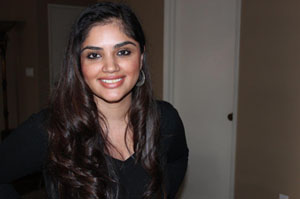
Pri (Photo by Sarah Varney/KHN)
What she found instead was an economy still sputtering toward recovery, and employers willing to hire workers on a contract basis with no benefits. As a result, the 29-year-old Pri has been without insurance for nearly two years. Her partner, who runs a local pharmacy, provides insurance for their son. But she and her seven-year-old daughter from a previous relationship have no health coverage.
They are part of the legions of the uninsured, including 5 million in California alone, roughly 20 percent of the state鈥檚 population. The on the eve of the opening of health care exchanges that were created by the ACA and plans to follow the group over the next two years. (Kaiser Health News is an editorially independent program of the Kaiser Family Foundation.)
Recently her daughter asked Pri about school activities. 鈥淪he asked me the other day, 鈥� I thought I was supposed to be in tennis?鈥� And I鈥檓 like, 鈥楿h oh. There鈥檚 no insurance yet鈥欌�hey won鈥檛 let you play sports unless you have proper insurance.鈥�
Even though she and her daughter are healthy, the fact that they don鈥檛 have health coverage is always in the back of her mind: What if there鈥檚 a car accident? Or she catches pneumonia? These are poor people鈥檚 problems, Pri once thought 鈥攏ot the problems of a solidly middle-class family aiming for success.
鈥淚f I ever mention it to someone,鈥� she says, 鈥渨hich I wouldn鈥檛 want to hide, they鈥檇 be like, 鈥極h, ok. Well, what kind of a job does she have where she鈥檚 not able to get health insurance?鈥欌��
Pri says she would like to look into shopping for insurance on the health care exchange, and she has a vague notion that under the Affordable Care Act she will have to buy health coverage soon or pay a fine. But she鈥檚 concerned about the costs. And as of late September, she hadn鈥檛 seen ads yet or even heard of 聽Covered California, the state鈥檚 online insurance marketplace created by the health law.
A crucial question for Pri and many uninsured people is: ?
鈥淚f you can get insurance for $95, $100 [a month], it鈥檚 worth it. I鈥檇 rather get the insurance than be fined. But if the insurance is like $400, I might just think about getting fined then,鈥� she said. 鈥淩ight now it feels like a lose-lose situation for me.鈥�
In fact, based on what she thinks she will earn in 2014, just under $40,000 a year, and the subsidy she might qualify for, a fairly minimal plan for her and her daughter starts at about $260 a month, but with lots of out-of-pocket costs.
Something else weighs on her. 鈥淭hat鈥檚 my projected income, and I go and buy insurance based off that projected income, then I lose my job. What happens then?鈥�
One of the uncertainties for people like Pri is that her income will likely fluctuate over the coming year. That means how much she has to pay for health insurance鈥攁nd how big or small of a government subsidy she鈥檒l receive鈥攊s hard to predict. If she pays too much, she could receive a refund when she files her taxes for 2014.
The process seems a little dizzying, and the dawning awareness of the law鈥檚 intricacies and monthly costs raise Pri鈥檚 anxiety about the new requirements.
Hopefully, she says, 鈥淚鈥檒l figure it out before January 1.鈥�
That鈥檚 when the ACA鈥檚 requirement that almost everyone have health insurance kicks in.
This story was produced in collaboration with . 聽


