


The panel hasn’t had a meeting聽and no one鈥檚 even been nominated for it yet, but the Obama administration鈥檚 says the health law鈥檚 , also known as IPAB, could save the government triple what officials estimated last year.
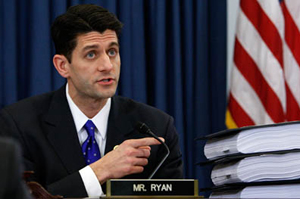
Rep. Paul Ryan at a hearing on health care in 2010 (Photo by Alex Wong/Getty Images).
On Wednesday, Rep. Paul Ryan, R-Wis., 聽asked Department of Health and Human Services Secretary Kathleen Sebelius how the agency determined that IPAB savings would be聽$12.9 聽billion over the next decade and why it was so much higher than the estimate, which was $4 billion. 鈥淭he question is, where does it come from?鈥� Ryan asked.
In testimony before the House Ways and Means Committee, Sebelius attributed the increase to actuarial estimates that Medicare costs will rise more rapidly in the later years of the budget鈥檚 10 year window. Nonetheless, she said, HHS officials are not convinced that those estimates are correct since Medicare spending growth 聽in recent years聽and Sebelius said she was hopeful that trend would continue.
One of the most contentious provisions of the health law, IPAB is a 15-member panel charged with making recommendations to reduce Medicare spending if the amount the government spends grows beyond a target rate. If Congress chooses not to accept the recommendations, lawmakers must pass alternative cuts of the same size or the IPAB recommendations go into effect.
Some Republicans argue that the board’s efforts would聽amount to health care rationing, and some Democrats have said that they think the panel would transfer power that belongs on Capitol Hill to the executive branch. The House has voted to repeal IPAB but the Senate did not consider the measure.
Ryan, who also chairs the House Budget Committee, 聽asked Sebelius when Congress would get more details about who the president has in mind to serve on IPAB. 鈥淚 think the president intends to submit names,鈥� Sebelius said.


